Ghana Culture

Ghana Culture: Traditions, Community, and Modern Innovation

Ghana culture is a living, breathing system that shapes how people live, work, and support one another every single day. Instead of being trapped in a museum, ancient traditions are woven directly into modern city life, corporate offices, and local neighborhoods. For anyone thinking about traveling to West Africa, getting to know this culture means moving past the standard tourist sights and seeing how a modern nation keeps its soul intact by using the wisdom of its ancestors to handle the challenges of today.
Ghana Culture

Two Systems of Leadership Working Together

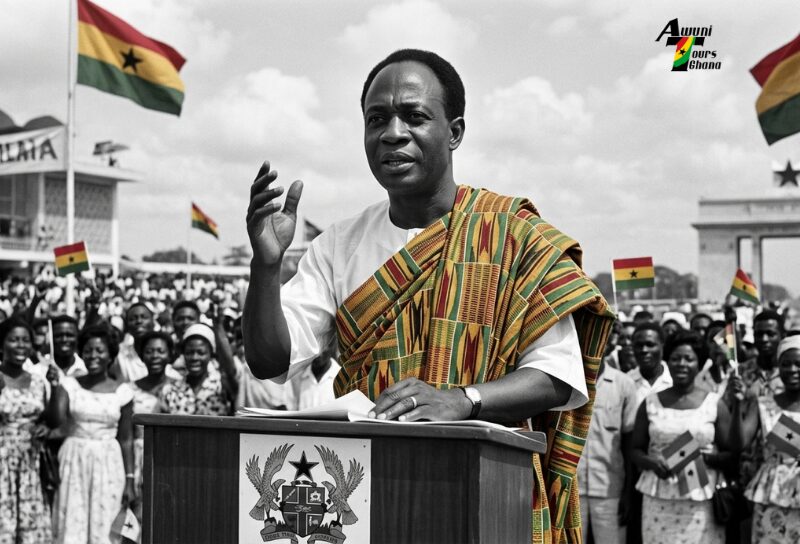
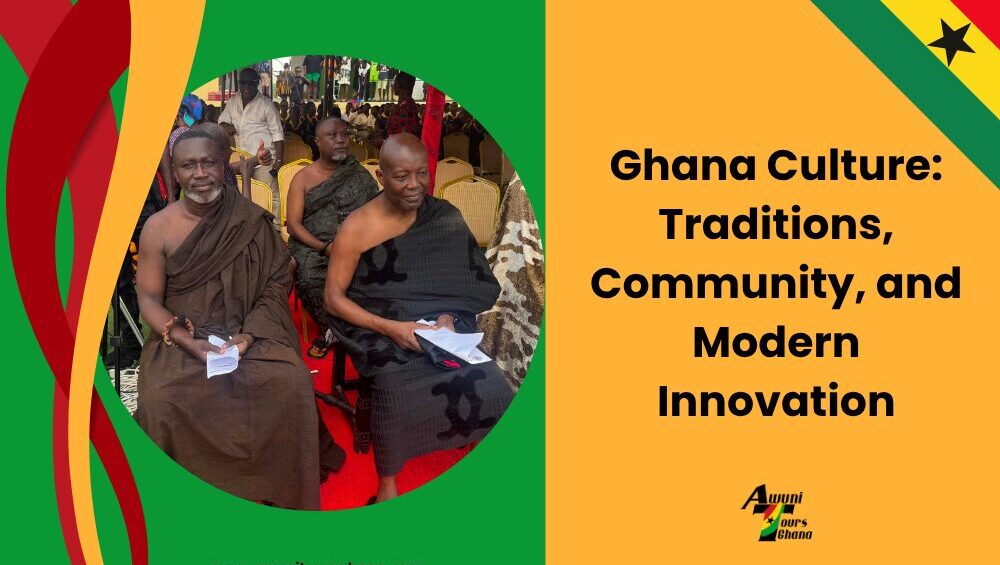
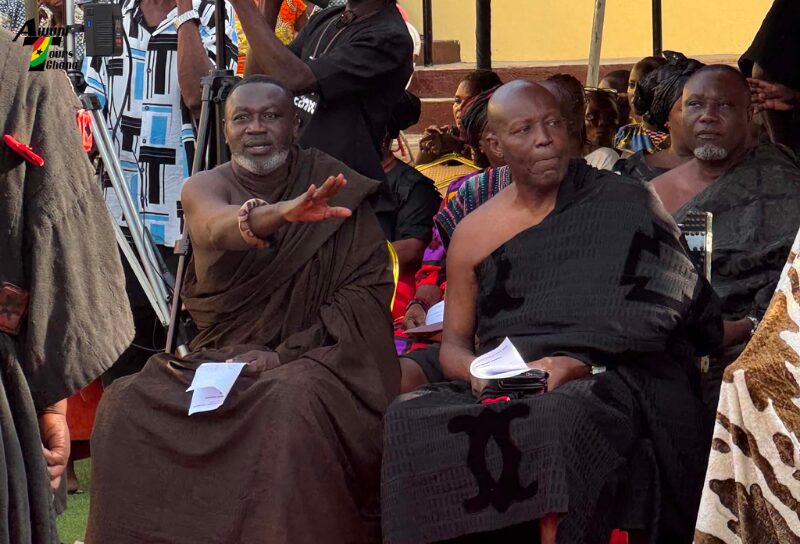
One of the most fascinating parts of Ghana culture is the way everyday life is guided by two different systems of leadership: the modern government and traditional tribal rule. While the central government handles national laws, economy, and foreign affairs, traditional leaders like chiefs and Queen Mothers handle local community life. They don’t fight for power; instead, they work side by side to keep society stable.

In Ghana culture, a chief or Queen Mother holds a deeply respected, active office. They don’t just wear ceremonial regalia for special events; they hold regular court sessions to settle local land arguments, help families resolve personal disputes, and organize community projects. Because people deeply respect these customary leaders, communities have a built-in safety net that maintains peace and order, even in small villages far away from formal government courts.
Ghana Culture

The Historic Castles Along the Coast

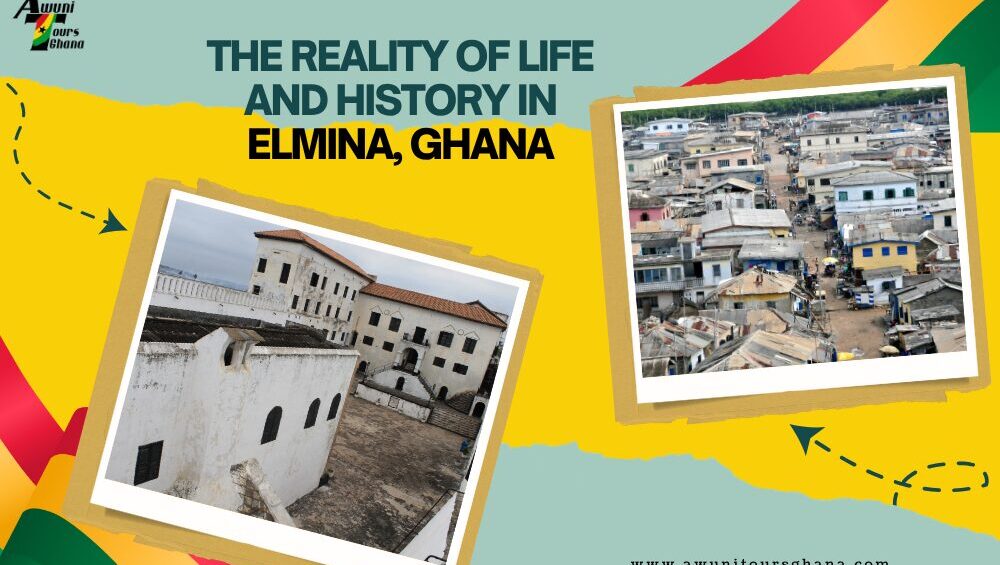
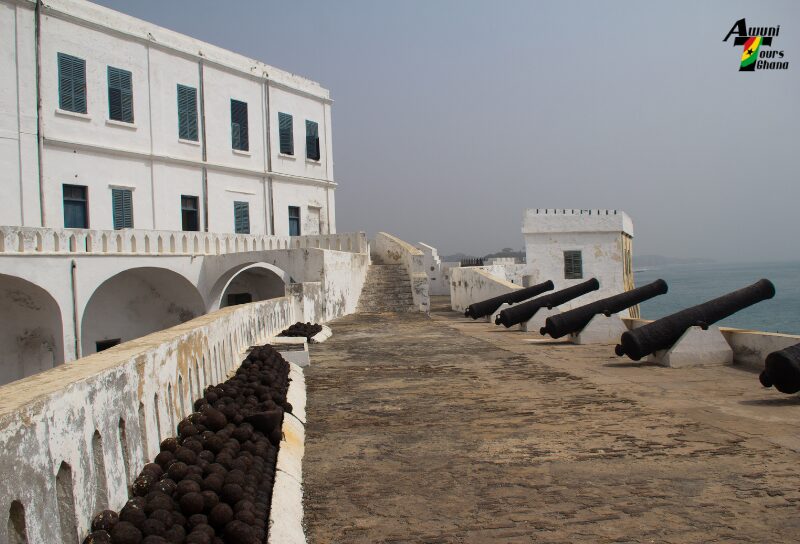
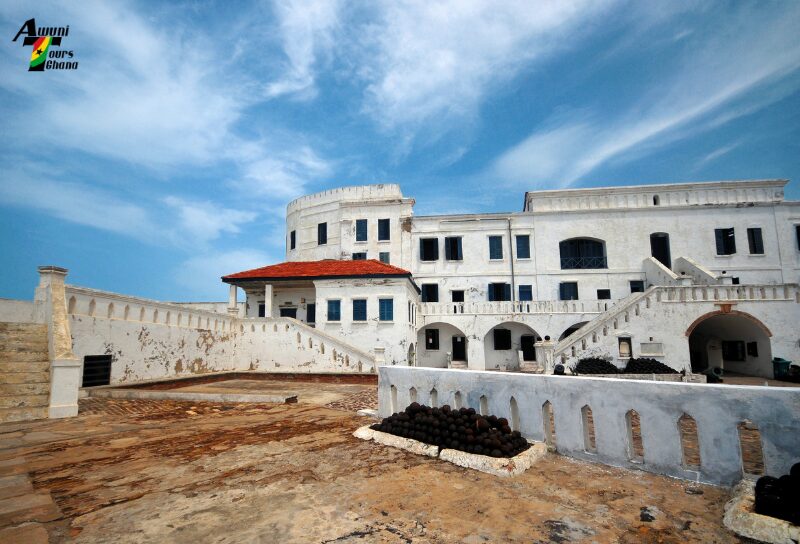
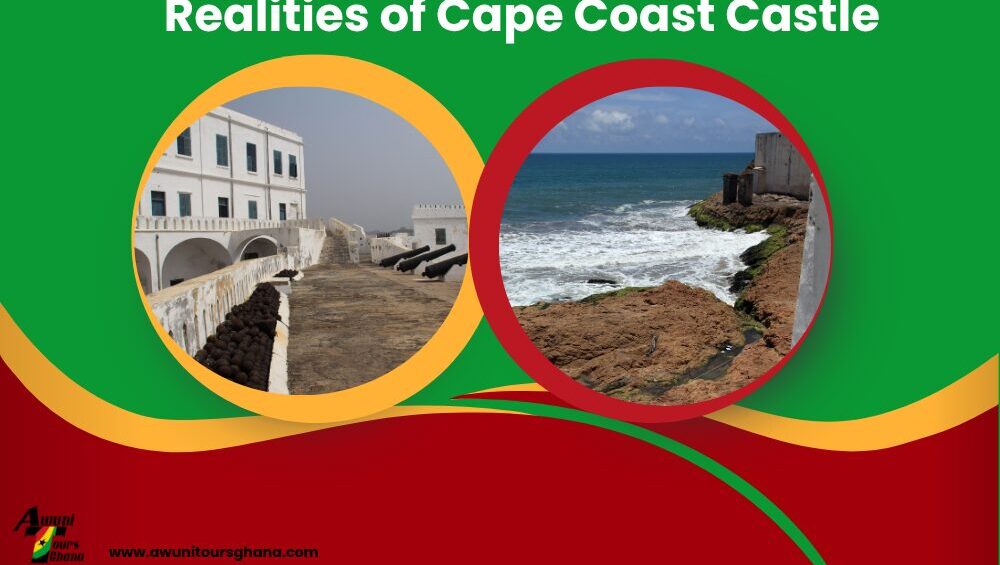
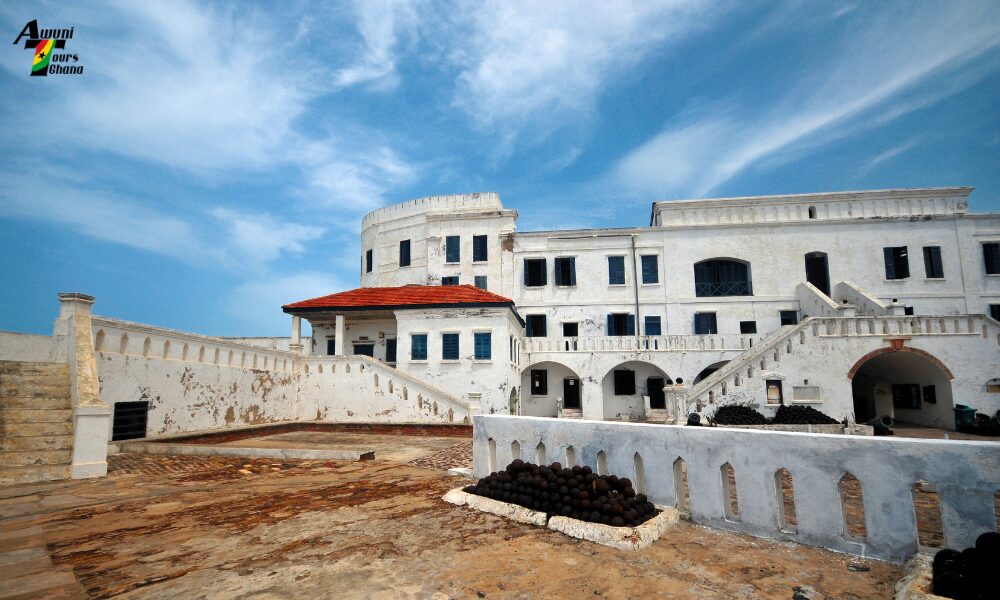
The physical coastline holds a heavy but crucial piece of Ghana culture. Towering white stone fortresses and castles, like Elmina Castle and Cape Coast Castle, stand right on the Atlantic ocean. Built centuries ago starting with the Portuguese, these structures were eventually used by European powers to run the transatlantic slave trade.

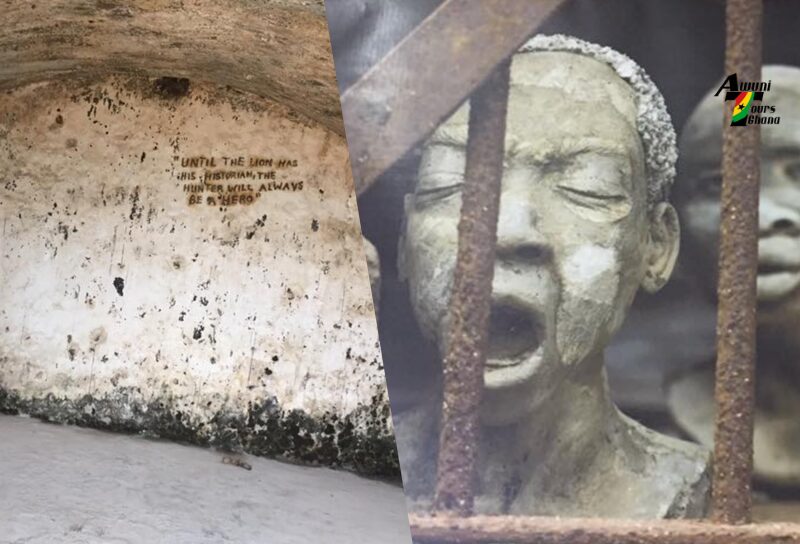
Today, rather than tearing these painful buildings down or hiding from the past, the nation keeps them open as powerful places of learning and reflection. Within Ghana culture, these castles serve as vital connection points for people traveling from all over the world, especially the African diaspora, to honor their ancestors. Visiting these sites gives you a direct, honest look at history and shows the incredible resilience of the people who moved forward to build the nation we see today.
Ghana Culture

Festivals that Bring History to Life

Festivals in Ghana culture are not staged shows put on for tourists; they are massive, highly anticipated annual celebrations that serve as a community’s living history book. Major events like the Homowo of the Ga people, the Hogbetsotso of the Ewe, and the Akwasidae of the Ashanti kingdom take months of careful planning by local traditional councils.

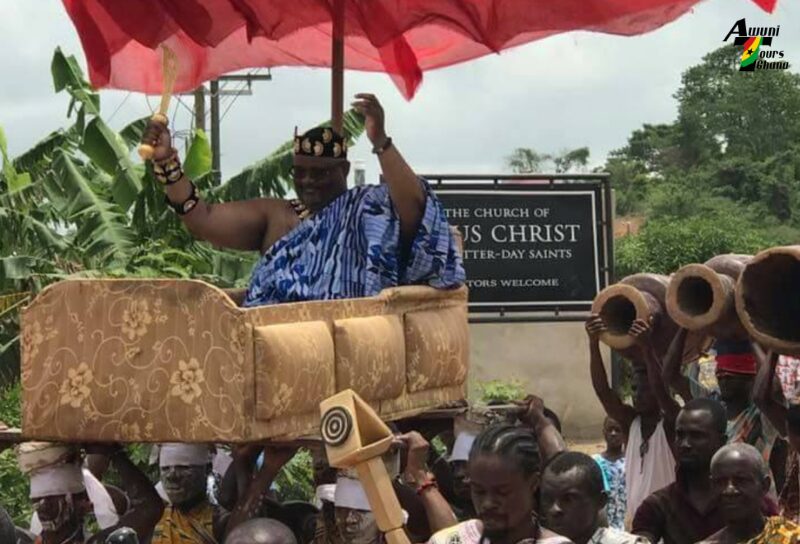
During these festivals, history comes alive in the streets. Chiefs are carried through cheering crowds in elaborate palanquins, dressed in brilliant, handwoven clothing, while sub-chiefs publicly pledge their loyalty to the community. But these festivals are also practical. They give communities a dedicated time to settle old political disagreements publicly, honor those who came before them, and talk about how to pool resources for new local development projects like building schools or clinics.
Ghana Culture

Reading the Secret Meanings in Fabrics and Symbols

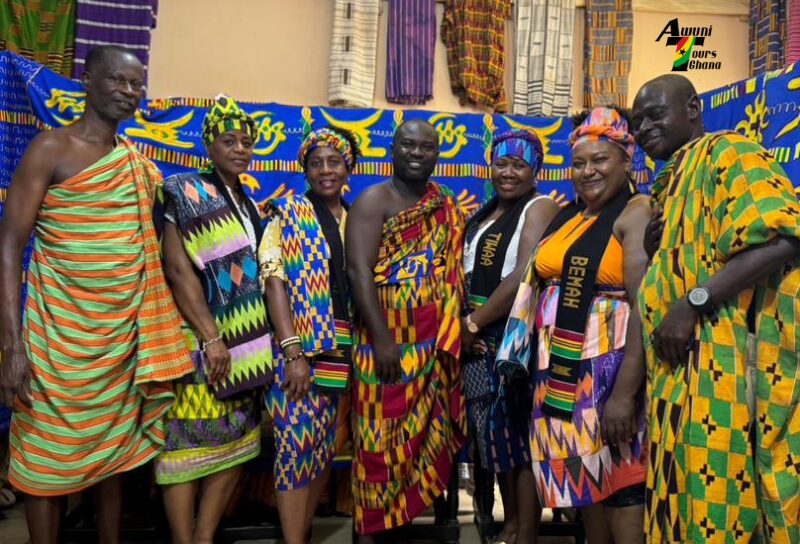
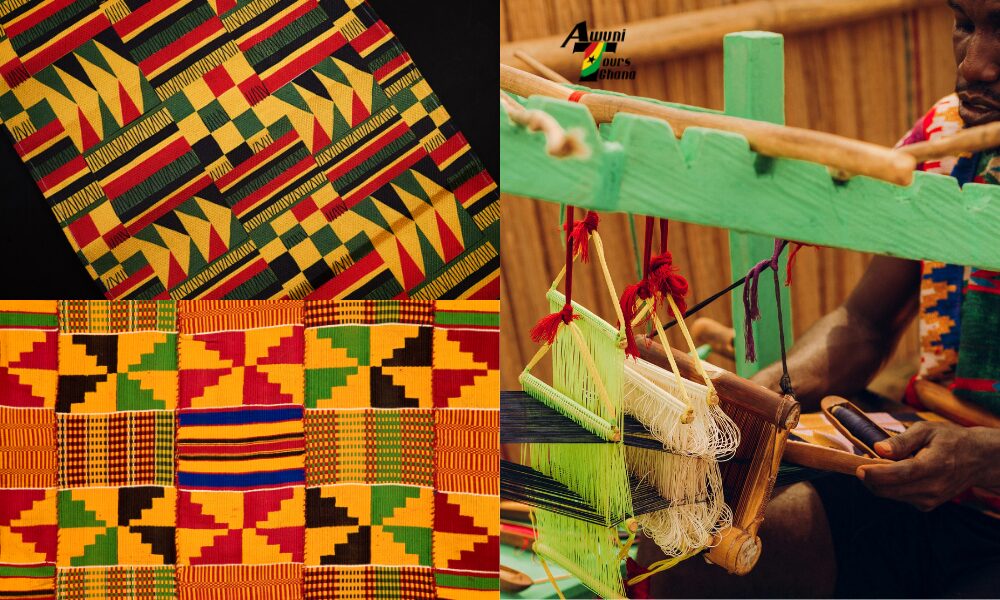
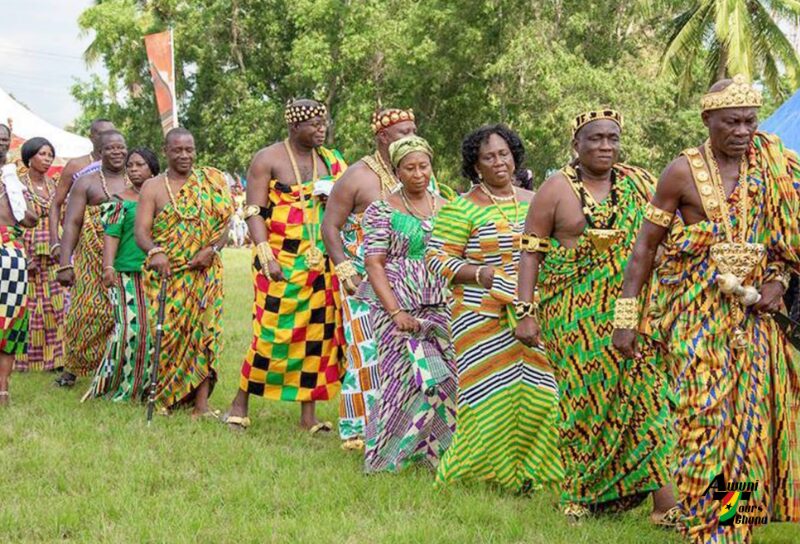
The material arts in this society are filled with brilliant visual languages. Take Kente cloth, the world-famous, brightly colored geometric fabric woven on traditional wooden looms by Ashanti and Ewe weavers. In Ghana culture, Kente is actually a coded language. Every single color choice and geometric pattern tells a specific story, represents a historical event, or carries a distinct philosophical message. While it was once reserved only for kings and queens, today people wear it to celebrate life’s biggest milestones, from weddings to graduations.

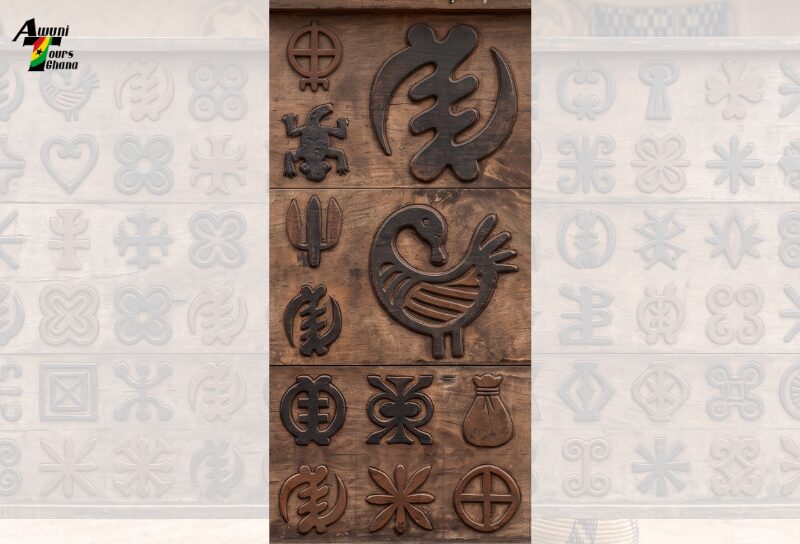
Alongside Kente, you will see Adinkra symbols everywhere you look. These historic visual icons are stamped onto clothing, carved into wood, and welded into modern buildings. Each symbol stands for a famous proverb or piece of wisdom. For example, the Sankofa bird symbol teaches that you must look to the past to build a better future, while Gye Nyame represents the ultimate power of the divine. Seeing these symbols on everything from corporate logos to everyday gates shows how traditional wisdom stays relevant in a modern world.
Ghana Culture

The Financial Powerhouse of the Local Markets

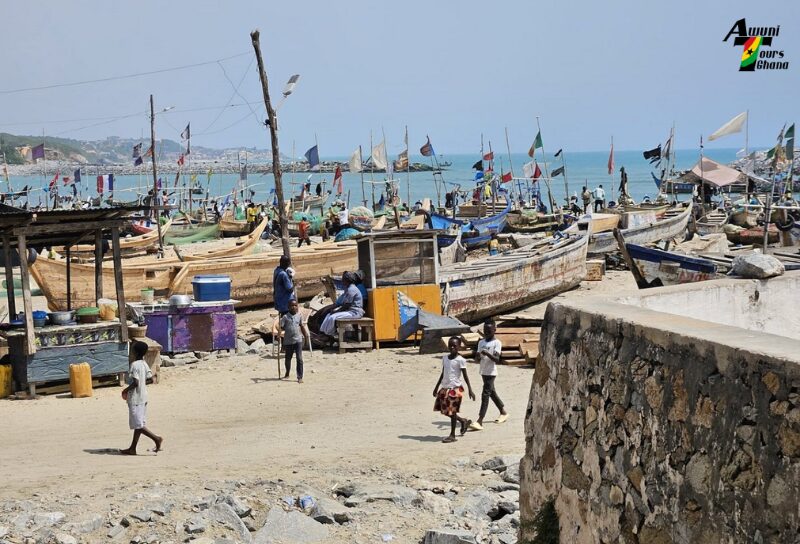
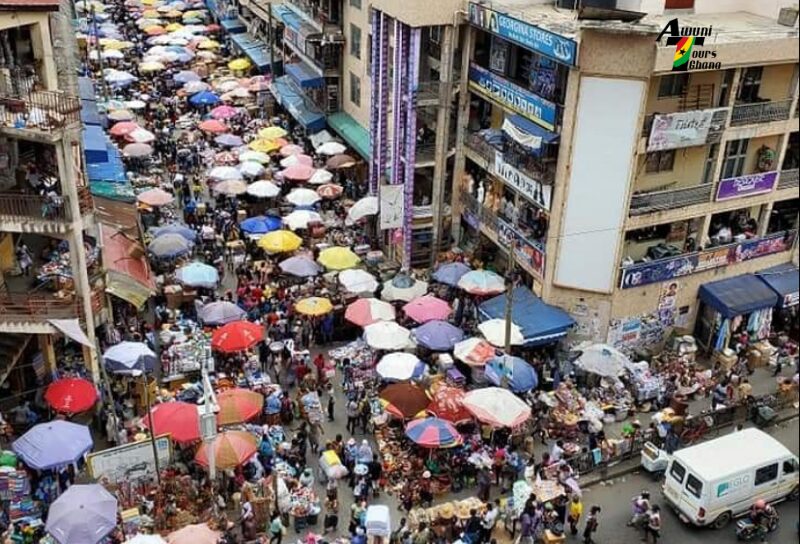
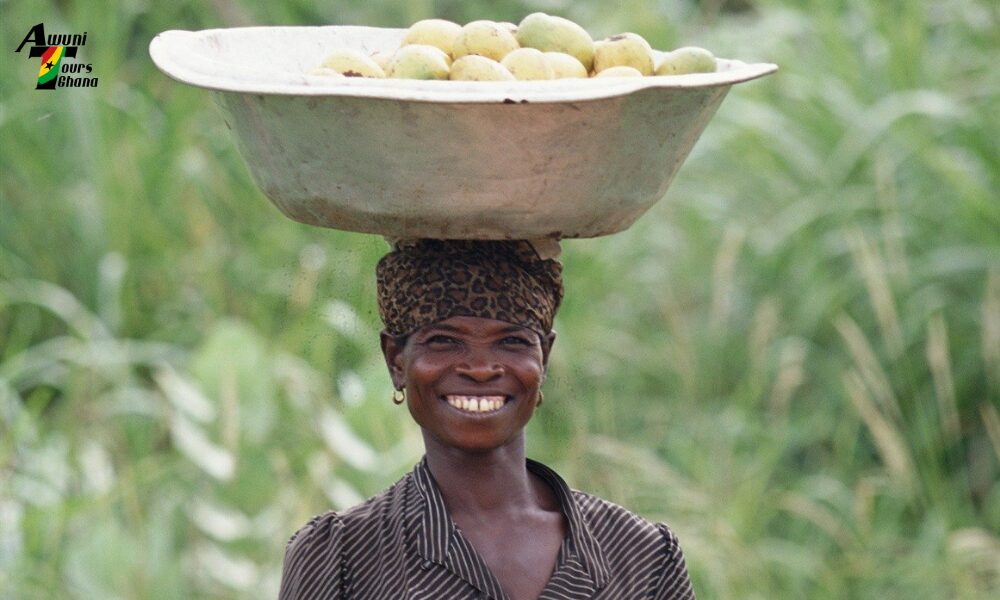
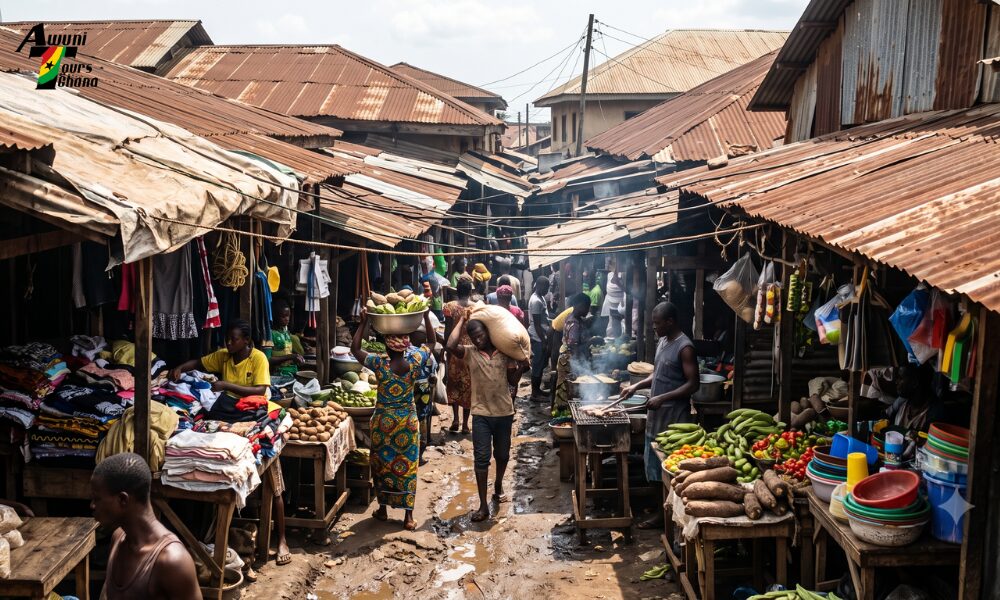
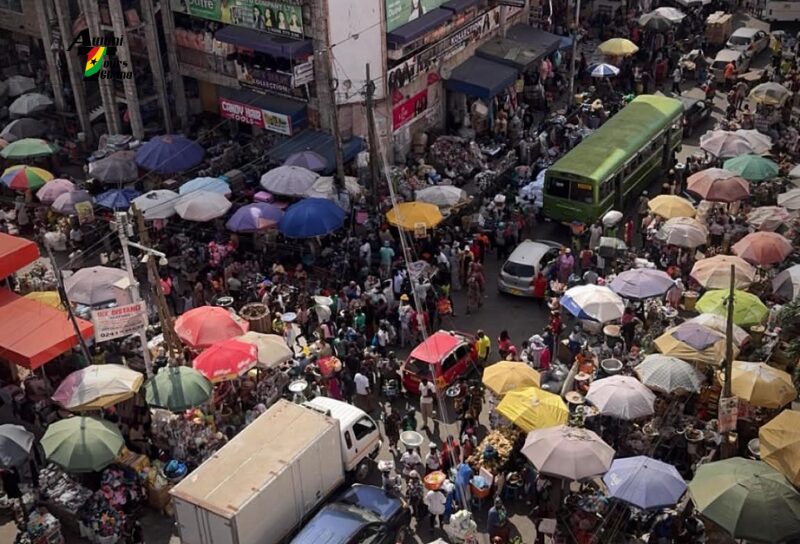
If you want to see the true energy of the domestic economy, you have to look at the massive open-air marketplaces like Makola Market in Accra or Kejetia Market in Kumasi. These giant hubs are the economic engines of the country, moving food, clothes, and goods across the region. These markets are organized, managed, and run almost entirely by powerful networks of women led by elected leaders known as Market Queens.
Ghana Culture

These Market Queens have incredible influence within Ghana culture. They negotiate transport routes, settle business arguments on the fly, and set fair prices for commodities. Because formal bank loans can be tough to get, these market women invented and perfected their own community banking system called susu. Members of a marketplace pool their money together regularly and give the total sum to one woman at a time, allowing her to make major upgrades to her shop or take care of family needs without drowning in bank debt. This grassroots financial system keeps local communities stable and thriving.

Food as a Way to Connect

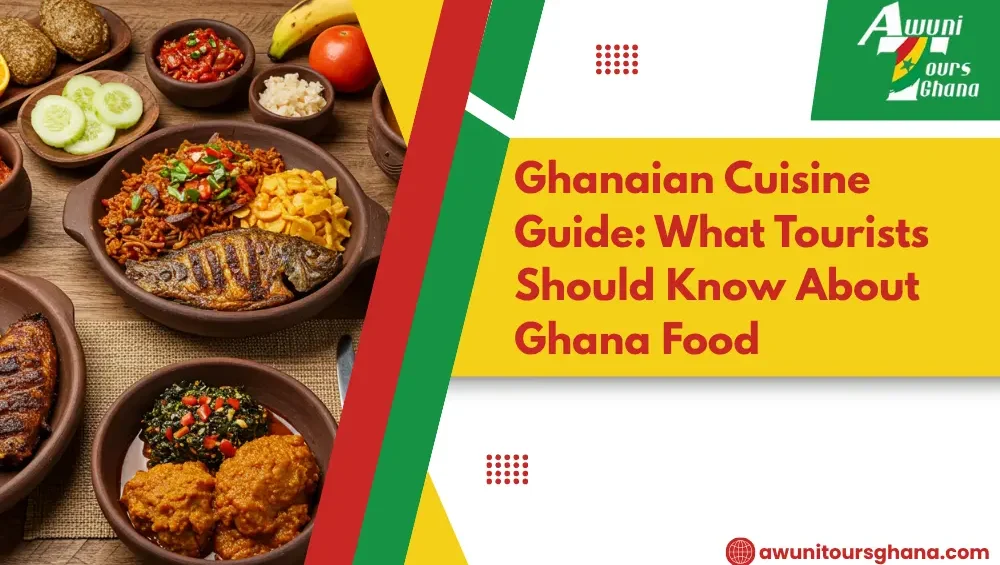
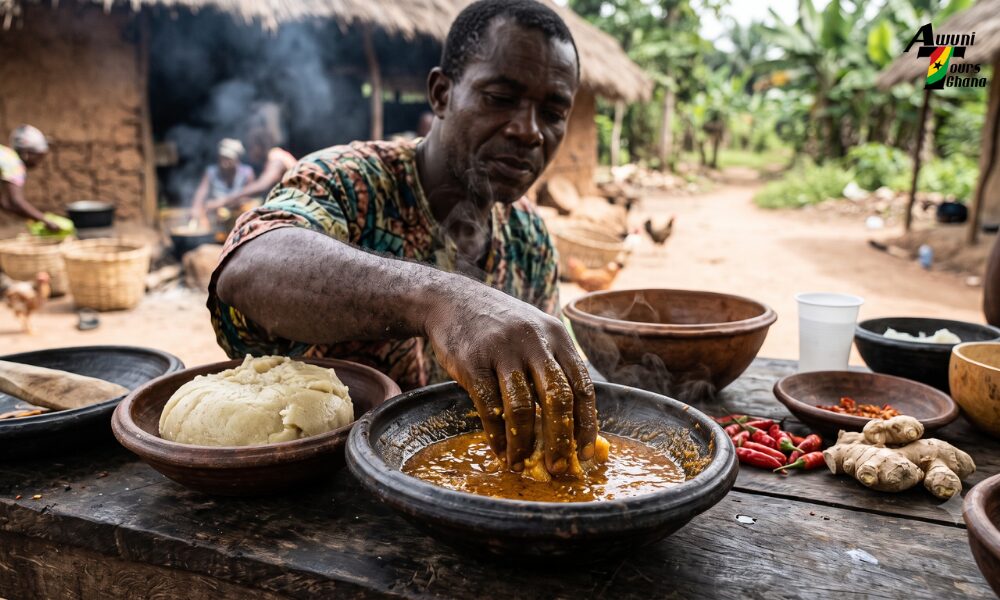
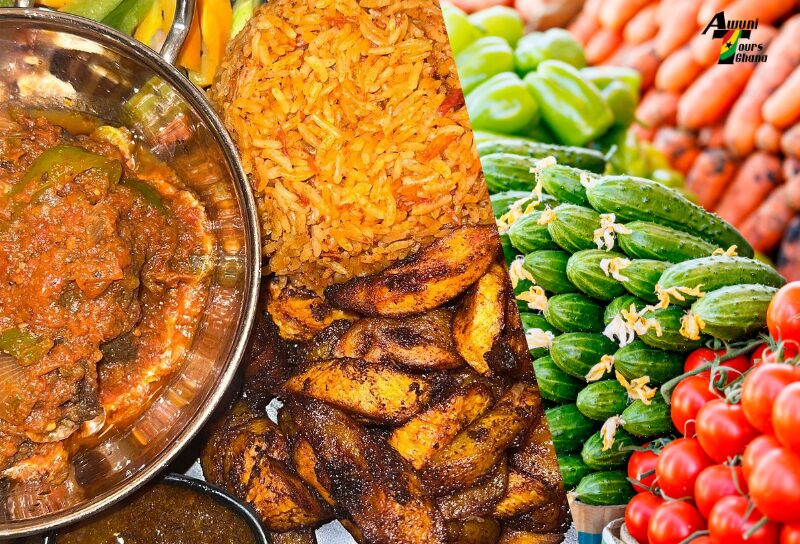
The food within Ghana culture reflects the diverse land and farming traditions of the country. Primary staples like fufu (pounded cassava and plantains) and banku (fermented corn and cassava dough) take hours of heavy, collaborative physical work to prepare. Because making these meals is such a big job, cooking is naturally a social, family-centered event.

These dishes do more than just feed people; they connect communities to their roots. For instance, during the Homowo festival, traditional leaders walk through the streets ritually scattering a special festive cornmeal dish called kpokpoi. This acts as a symbolic way to thank the ancestors for a good harvest and celebrate victory over past hardships. Trying the local food gives you a direct seat at the table of a deeply communal way of life.
Ghana Culture

Why You Should Travel to Experience it Yourself

For an intentional traveler, the real magic of going to West Africa is getting to see this active, supportive social system in person. Immersing yourself in Ghana culture means stepping off the generic resort paths and spending time in the spaces where real life happens—whether that means sitting in on a lively chief’s court session, visiting a family weaving workshop, or navigating the bright lanes of a local market.

Seeing how people comfortably balance smartphone technology and digital apps with historic custom, and how they prioritize looking out for their neighbors, is an incredible eye-opener. Traveling here shows you a society that doesn’t view its heritage as something old and dusty, but as a practical, brilliant toolkit for living a meaningful, connected life today.

FAQs

How do the two different leadership systems in Ghana work together to keep society stable?

The central government handles national laws, the economy, and foreign affairs, while traditional leaders like chiefs and Queen Mothers manage local community life. Instead of competing for power, they work side by side, with traditional leaders holding regular court sessions to settle local disputes and organize community projects.

What role do the historic coastal castles play in contemporary Ghana culture?

Rather than tearing down structures like Elmina Castle and Cape Coast Castle, the nation preserves them as powerful places of learning and reflection. They serve as vital connection points for visitors from all over the world, particularly the African diaspora, to honor their ancestors and reflect on the history of the transatlantic slave trade.

Why are festivals considered practical events rather than just staged shows for tourists?

Festivals serve as a community’s living history book and provide a dedicated, open forum for practical governance. During these events, traditional councils publicly settle old political disagreements, honor historical ancestors, and discuss how to pool resources for local development projects like building clinics or schools.

What is a “susu” system, and how does it support marketplace traders?

A susu system is a grassroots community banking method where market women pool their money together regularly and give the total collected sum to one member at a time. This rotating credit allows traders to make major upgrades to their shops or cover family needs without relying on formal bank loans or accumulating debt.

Articles You May Like:

Accra, Ghana

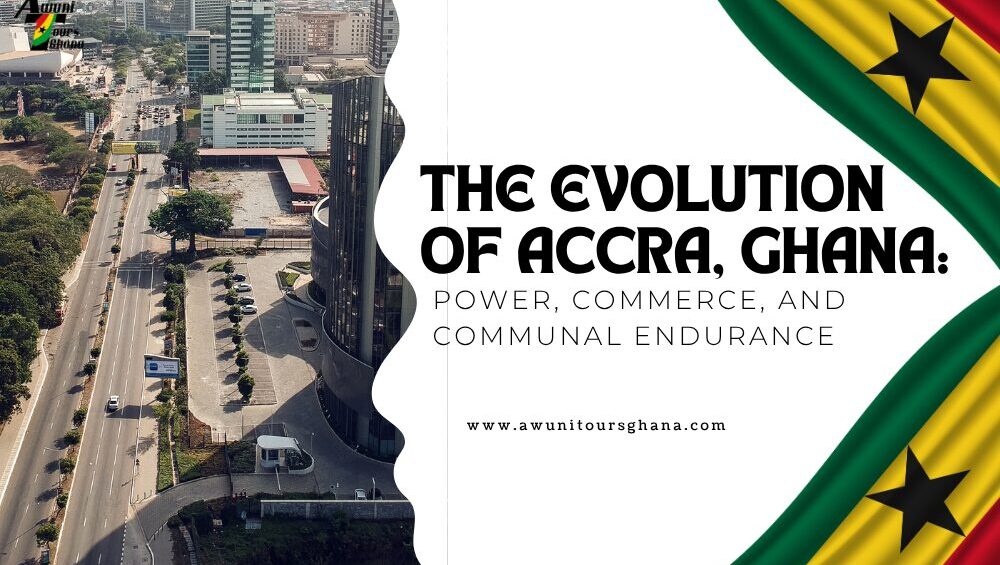
The Evolution of Accra, Ghana

Accra, Ghana operates as a major political and economic hub on the West African coast, defined by a history of rapid urbanization and structural transformation. The city developed from a collection of coastal fishing villages into a colonial capital, eventually becoming the focal point of the nation’s independence movement. In the modern era, the municipality handles the pressures of globalization, infrastructure expansion, and a massive informal economy, all while maintaining the traditional social frameworks established by its indigenous population centuries ago.
Accra Ghana

The Indigenous Foundations and Early European Contact

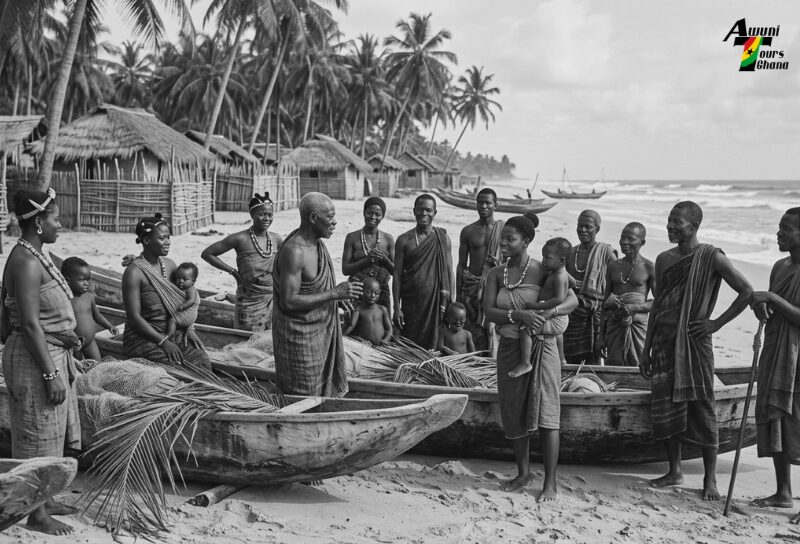
Before the arrival of European fortresses, the geography that comprises modern Accra, Ghana was populated by the Ga people. The Ga established agricultural and fishing settlements organized into distinct traditional states, utilizing the coastal terrain for regional trade. By the sixteenth century, the strategic coastal position of the area attracted European maritime powers seeking access to gold and local markets.

The Portuguese, Dutch, English, and Danish each constructed fortified trading posts along the immediate coastline of Accra, Ghana. These fortifications, including Fort James, Crêvecoeur (later Ussher Fort), and Christiansborg Castle, fundamentally altered the local economy. The presence of these competing European empires forced the Ga people to navigate complex trade alliances, gradually shifting the local focus from regional barter to international maritime commerce.

Accra Ghana (Ga People)

The Transatlantic Slave Trade and Urban Shifting

As European economic priorities shifted from gold extraction to agricultural cultivation in the Americas, the fortresses of Accra, Ghana were modified to support the transatlantic slave trade. Christiansborg Castle, Fort James, and Ussher Fort became high-security holding facilities for human beings captured from the interior regions. The architecture of these forts was optimized for incarceration, featuring underground holding chambers designed to store captives securely until slave ships anchored offshore.

Accra Ghana

This period of forced migration and human trafficking permanently altered the demography and social structure of Accra, Ghana. The local economy became entangled with European trade goods, firearms, and currency introduced through the fortresses. Despite the violence and destabilization caused by the slave trade, the local population maintained its core social institutions, adapting their defensive strategies and political structures to survive the colonial pressures operating directly on their shoreline.

Accra Ghana

Colonial Consolidation and the Capital Shift

Following the abolition of the slave trade, Great Britain consolidated its authority over the coastal region, eventually establishing the Gold Coast colony. In 1877, the British colonial administration moved the institutional capital from Cape Coast to Accra, Ghana. The decision was driven by the drier climate of the area and the strategic advantage of having multiple established fortresses to house administrative offices.

The shift to a colonial capital introduced systematic segregation and deliberate urban planning choices. The British built distinct administrative zones, such as the Ministries and Victoriaborg, designed strictly for European officials, while leaving indigenous neighborhoods like Jamestown and Usshertown to develop with minimal infrastructural investment. This dual urban structure created a permanent disparity in local resource allocation, forcing the local working-class population to rely on self-organized community networks for basic survival.

Accra Ghana

Kwame Nkrumah and the Independence Movement

By the mid-twentieth century, Accra, Ghana became the primary staging ground for anti-colonial political mobilization. The socioeconomic frustrations of returned World War II veterans, local traders, and educated professionals culminated in the 1948 Accra Riots, sparked by the colonial police firing on a peaceful march of veterans. This event accelerated the demand for immediate self-governance.

Kwame Nkurmah Accra Ghana

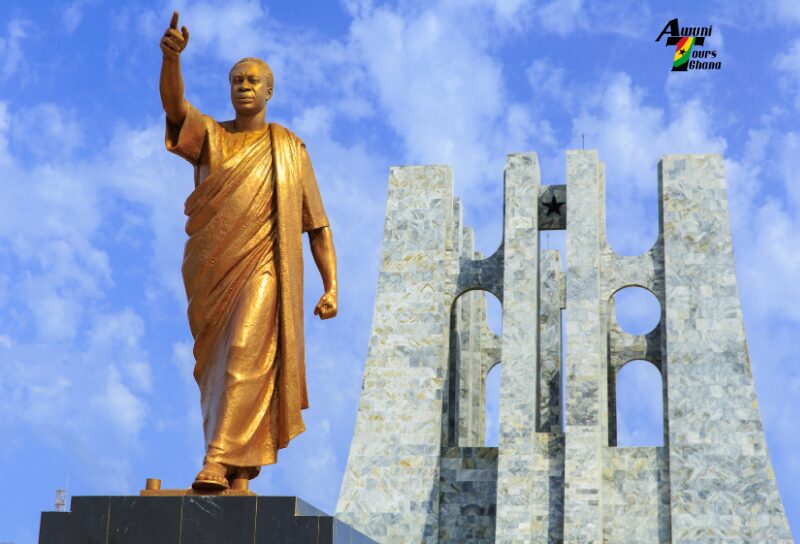
Kwame Nkrumah emerged as the central figure of this political transition, organizing the Convention People’s Party (CPP) within the urban centers of Accra, Ghana. When independence was achieved in 1957, Nkrumah utilized the capital city to project a new vision of industrialization and pan-African unity. He commissioned monumental infrastructure projects, including Independence Square (Black Star Square), the State House complex, and the Kwame Nkrumah Mausoleum park, permanently altering the physical landscape of the city to reflect a break from colonial subordination.

Kwame Nkrumah Accra Ghana

The Structure of the Modern Local Economy

The contemporary economy of Accra, Ghana is driven by a massive, highly organized informal sector operating alongside expanding financial and corporate industries. The primary engine of domestic trade in the city is the Makola Market. This vast commercial zone is managed predominantly by local market women who control the wholesale distribution, pricing, and supply chains for textiles, fresh agricultural produce, and manufactured goods across the region.

Accra Ghana Makola Market

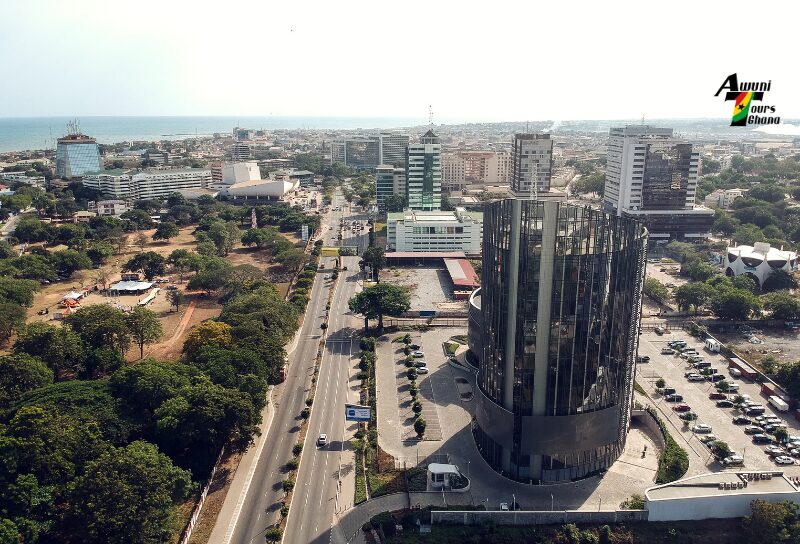
Alongside traditional marketplaces, Accra, Ghana has developed into a regional center for corporate offices, real estate development, and technology firms, centered in neighborhoods like Airport Residential Area and Ridge. The city also handles significant international commerce through its proximity to the Tema industrial port. This dual economic structure means that while multinational corporations expand their presence in corporate high-rises, the daily survival of the majority of the population relies on artisan labor, petty trading, and informal transport networks like the trotros.

The Resilience and Social Fabric of the Population

The rapid population growth of Accra, Ghana has created severe urban challenges, including traffic congestion, housing deficits in informal settlements like Old Fadama, and strained municipal sanitation systems. However, the social fabric of the city survives due to the persistence of traditional communal structures. The Ga Mashie ancestral leadership still exercises significant authority over land disputes and cultural preservation within the historic core of the city.

The resilience of the population is demonstrated by their ability to self-regulate and maintain community safety nets without relying on state infrastructure. Neighborhood associations, market unions, and extended family networks manage local dispute resolutions and financial mutual-aid groups, known as susu. This collective organization ensures that despite economic volatility and inflation, working-class communities retain a high degree of social stability and mutual support.

Accra, Ghana

Urban Expansion and Geographic Transformation

Modern Accra, Ghana has expanded far beyond its original colonial boundaries, transforming into an expansive metropolitan area that connects with neighboring municipal districts. Neighborhoods like East Legon, Cantonments, and Labone have become centers for high-end real estate, catering to expatriates, real estate investors, and the Ghanaian diaspora. This expansion has created a stark geographic contrast between affluent residential enclaves and dense, low-income quarters.

The physical growth of the metropolis requires ongoing infrastructure modifications, including the construction of complex highway flyovers, like the Kwame Nkrumah Interchange, to manage heavy traffic flows. These modern transport developments sit directly alongside historical landmarks, creating an urban landscape where twentieth-century political monuments, nineteenth-century colonial forts, and twenty-first-century commercial developments exist within the same space.

Strategic Importance of Accra, Ghana

Accra, Ghana remains a critical focal point for understanding the trajectory of urban West Africa. The city has evolved from an entry point for European colonial penetration into a self-governing metropolis that manages its historical trauma through active economic growth and cultural preservation. The endurance of its local marketplaces, the persistence of its traditional leadership, and the continuous adaptation of its working class ensure that the city functions as a stable center for regional commerce and political administration.

FAQs

Which indigenous group originally settled the coastline of Accra, Ghana, and how did European contact alter their local economy?

The Ga people originally settled the area, establishing agricultural and fishing communities. The arrival of European powers who built fortified trading posts shifted the local economy from regional barter to international maritime commerce as the Ga navigated complex trade alliances.

Why did the British colonial administration decide to move the capital of the Gold Coast colony from Cape Coast to Accra, Ghana in 1877?

The decision was driven by the drier regional climate of the area and the strategic advantage of utilizing multiple pre-existing European fortresses to house administrative offices.

How did the urban planning choices made by the British administration establish long-term economic disparities within the city?

The British implemented systematic segregation by building separate administrative and residential zones strictly for European officials, while leaving indigenous neighborhoods to develop with minimal infrastructural investment. This forced the working-class population to rely on self-organized community networks for survival.

What economic engine drives domestic trade in contemporary Accra, Ghana, and how does it operate alongside corporate industries?

The informal sector, specifically Makola Market, serves as the main engine of domestic trade and is managed by local market women who control the wholesale distribution and supply chains. This expansive informal economy operates directly alongside high-end real estate, technology firms, and corporate offices centered in affluent municipal districts.

Articles You May Like:

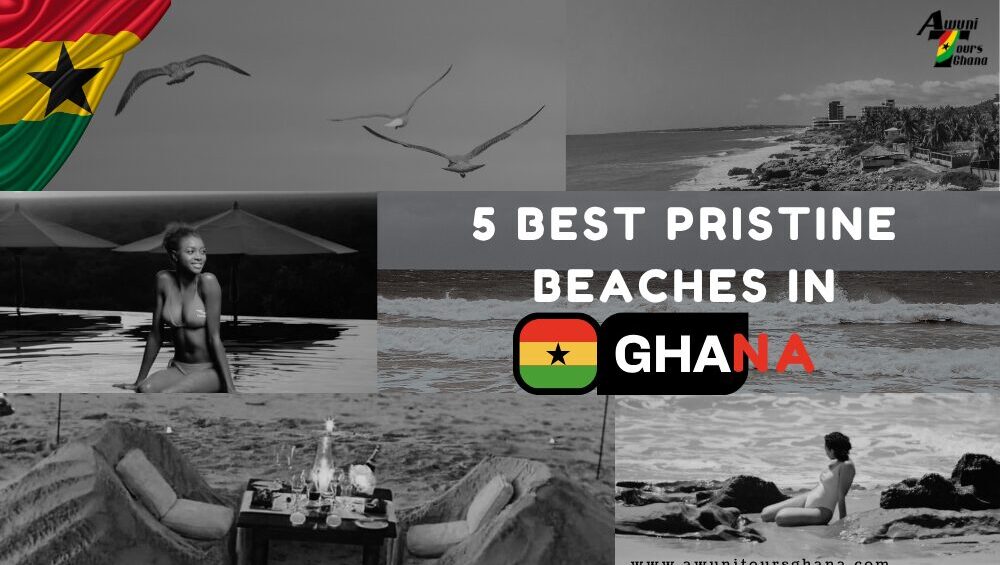
5 Best Pristine Beaches in Ghana

5 Best Pristine Beaches in Ghana

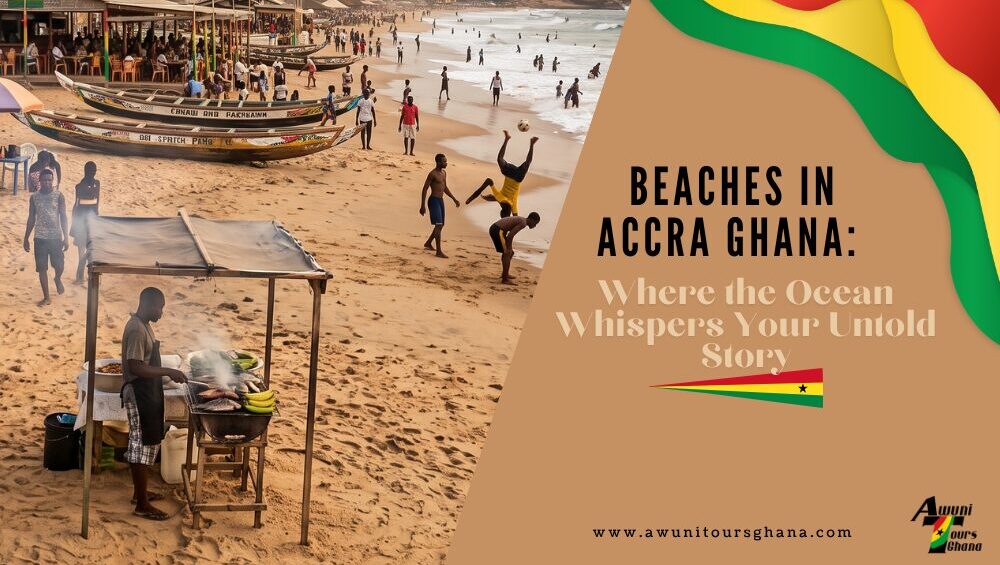
Finding the best beaches in Ghana means looking past the usual crowded city shores and heading toward the quiet edges of the coastline where the ocean actually has room to breathe. For anyone who uses travel as a way to hit the reset button, the coast here is less of a standard vacation backdrop and more of a sanctuary. The real magic happens when you get away from the traffic of the main towns and find the spots where the palm trees bend low over the surf and you can actually hear the Atlantic rolling in.

These five pristine beaches in Ghana are curated for anyone looking to trade the noise for a genuine, quiet connection to the coast.

BEACHES IN GHANA

1. Lou Moon Beach (Axim)

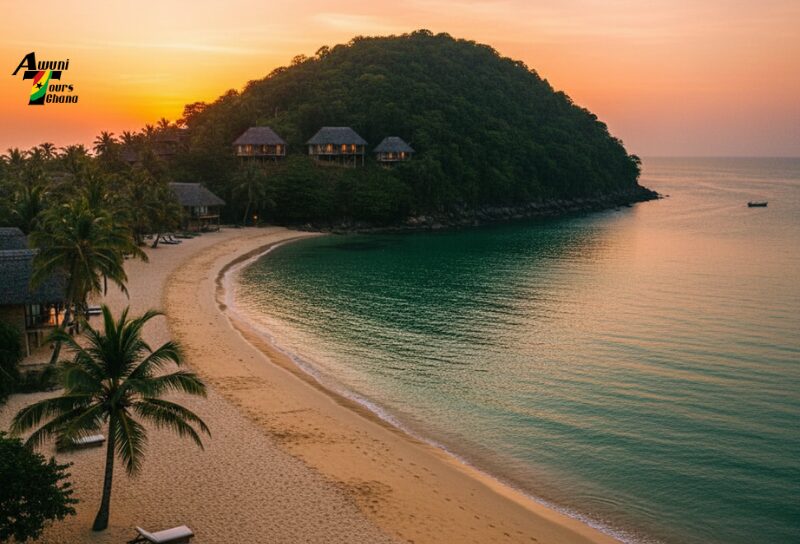
If you look at a map of the coast, Lou Moon sits in a private cove down near Axim, completely tucked away from everything else. It has a way of making you feel like you accidentally stumbled into a quiet corner of the South Pacific, even though you are firmly planted in West Africa.

The coastline here forms a natural, calm bay surrounded by green hills, creating emerald waters that are actually gentle enough for swimming—a rarity along much of the Atlantic surf. It is the kind of place where you can wake up in a small bungalow on the edge of the rocks, watch the morning light hit a tiny offshore island, and just listen to the water without any city noise cutting through. When people talk about finding truly peaceful beaches in Ghana, this cove is usually the exact kind of hidden spot they are searching for.

Beaches in Ghana: Lou Moon Beach (Axim)

2. Anomabo Beach (Central Region)

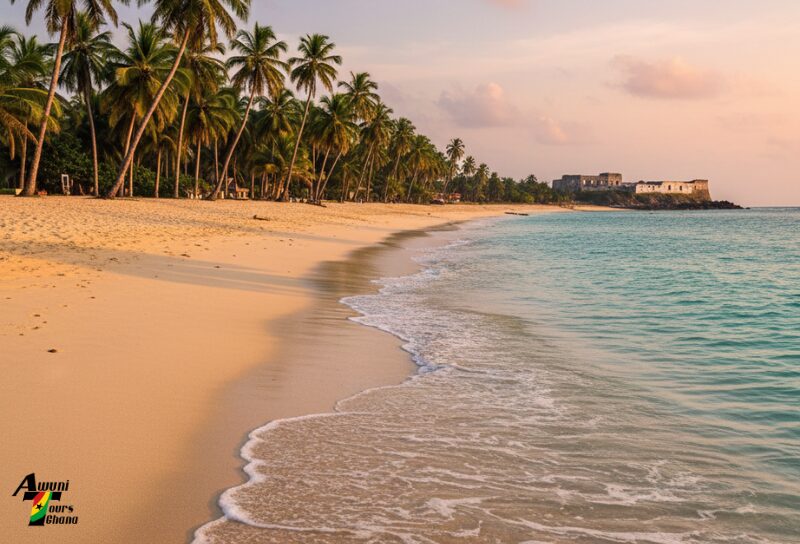
Anomabo carries a heavy sense of history, having spent centuries as a major trading port before transforming into the quiet coastal retreat it is today. Located in the Central Region, it offers a remarkably clean stretch of pale, fine sand framed by thick groves of palm trees that provide deep shade when the midday sun gets too intense. Because of its location, it works perfectly as a resting point if you are traveling between the nearby historic castles at Cape Coast or Elmina.

Stepping onto the shore here after a long afternoon spent exploring those sobering heritage sites gives you a much-needed space for quiet reflection. It is one of those beaches in Ghana where the pace slows down entirely, allowing you to sit by the water and enjoy incredible seafood that local fishermen pulled out of the Atlantic just a few hours before.

BEACHES IN GHANA: Anomabo Beach (Central Region)

3. Busua Beach (Western Region)

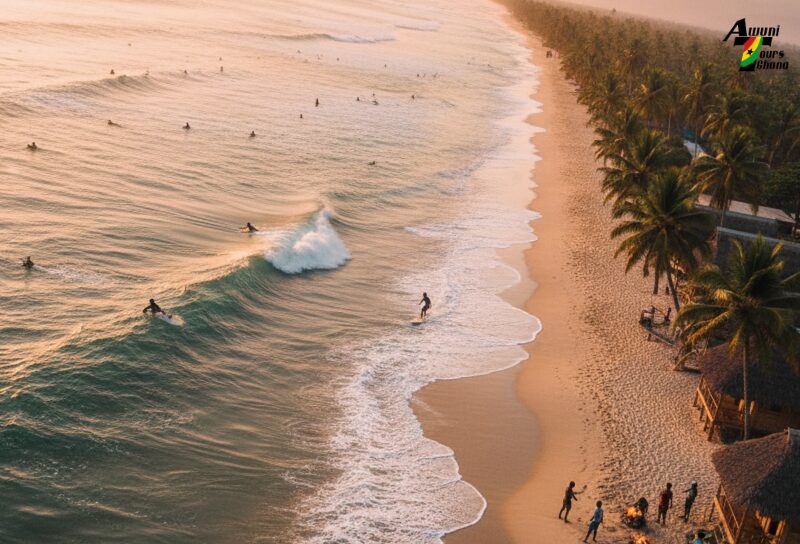
Busua is a coastal village that moves to a completely different rhythm, balancing a steady energy with a totally laid-back attitude. Widely known as the surfing capital of the region, it manages to avoid the commercial feel of typical resort towns, keeping its local roots intact while welcoming travelers who find peace in the motion of the ocean.

The bay here opens up into a wide, sweeping stretch of sand that is perfect for long, quiet walks when the sun starts to go down. Because the water stays warm and the waves break relatively gently across the shallow bottom, it is an inviting spot whether you are trying to catch your very first wave on a longboard or just want to float under the sun. Out of all the active beaches in Ghana, Busua does a great job of offering a sense of community without forcing you to sacrifice your personal space.

You can easily spend an afternoon eating fresh lobster at a wooden table right on the sand, then retreat to a quiet eco-lodge just outside the village center to fall asleep to the sound of the jungle meeting the sea.

BEACHES IN GHANA: Busua Beach (Western Region)

4. Ada Foah (Greater Accra Region)

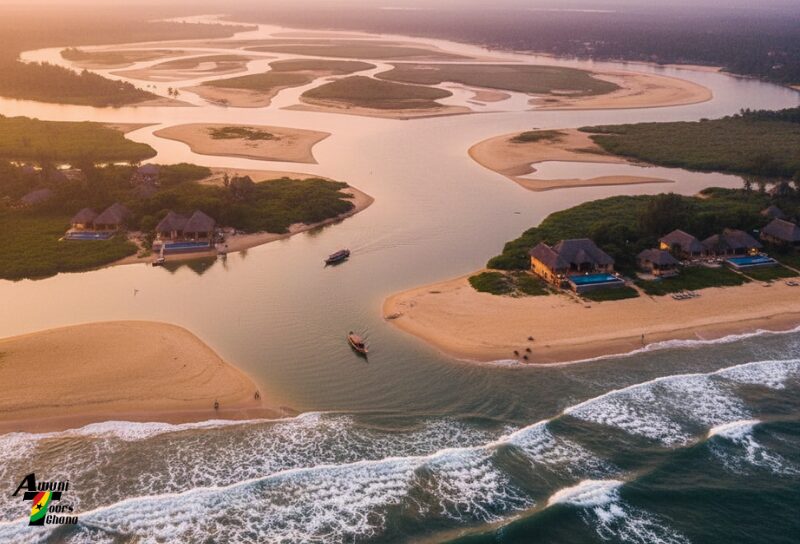
Ada is a unique coastal landscape shaped entirely by the meeting point of the massive Volta River and the Atlantic Ocean. Because of this constant mixing of freshwater and seawater, the scenery here is always shifting, marked by low-lying islands, dynamic sandbars, and a different kind of quiet beauty than you find along the standard coastline.

The real draw of the area is the ability to get out on the water. You can rent a small boat to navigate through the quiet mangrove channels and head toward Cocoloco Beach, a protected stretch of sand that serves as an important nesting ground for sea turtles. It stands out from other beaches in Ghana because of how seamlessly it blends two completely different environments.

Private homes and small, thoughtful resorts sit right along the edge of the riverbank, meaning you can spend the first half of your afternoon swimming in the completely calm, still river waters, and then walk just a few paces across the sand to watch the heavy ocean waves crash against the outer shore.

BEACHES IN GHANA: Ada Foah (Greater Accra Region)

5. Butre Beach (Western Region)

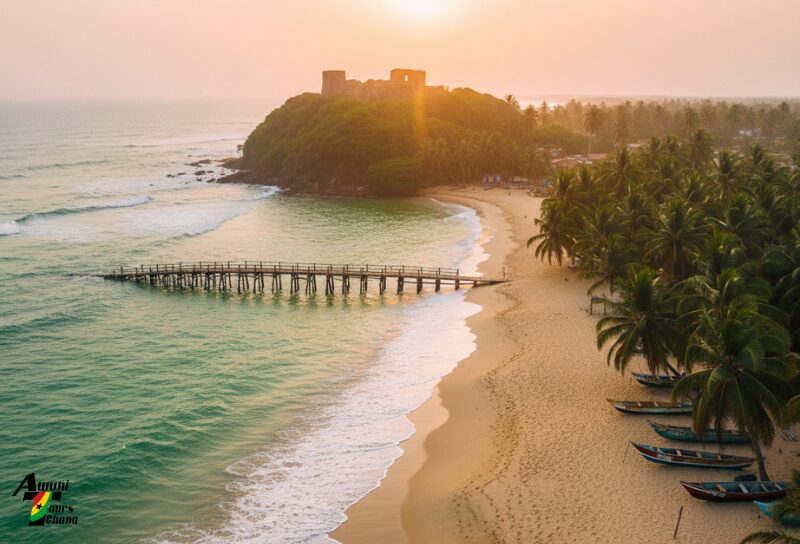
If your goal is to completely unplug and leave the modern world behind for a few days, Butre is the kind of place that feels entirely lost in time. To even get to the sand, you have to cross a small wooden footbridge that spans a quiet, slow-moving coastal lagoon, instantly letting you know that you are stepping into a different pace of life.

The landscape here is striking, framed by the old ruins of Fort Batenstein sitting quietly up on a hill that looks straight out over the Atlantic. The adjacent fishing village is small and genuinely welcoming, but the stretch of shore itself is vast and wide, meaning you will often find yourself walking along the water without seeing another tourist in sight.

When travelers look for isolated beaches in Ghana to find actual solitude, this is the exact spot they mean. You can take a slow hike up the hill to the old stone ruins to catch a panoramic view of a coastline that looks exactly as it did centuries ago, making it the perfect spot to sit in the grass, enjoy a quiet lunch, and just take in the salt air.

BEACHES IN GHANA: Butre Beach (Western Region)

The entire coastline offers a remarkable variety of landscapes, with each stretch of sand having its own distinct personality and rhythm. It is a part of the world that forces you to slow down, offering natural sanctuaries for anyone who simply needs to get away from the constant noise of daily life.

Whether you find yourself tucked into the quiet, green hills surrounding the emerald waters of Lou Moon, or walking along the wide, pale sands of Anomabo where centuries of history sit right at the edge of the surf, these shores give you the space to clear your head. Ultimately, the best beaches in Ghana do not just offer a place to sit under a palm tree—they give you a quiet, enduring backdrop to reflect, reset, and genuinely connect with the land.

FAQs

What makes the swimming conditions at Lou Moon unique compared to much of the West African coast?

Lou Moon is tucked away in a private cove near Axim, creating a calm, emerald-green bay with gentle waters that are safe and ideal for swimming, which is rare along the typically heavy surf of the Atlantic.

Why is Anomabo a logistically and emotionally ideal stop for travelers exploring the heritage of the Central Region?

It is perfectly positioned as a peaceful midpoint between the historic Cape Coast and Elmina Castles, offering a quiet stretch of shaded, pale sand where travelers can sit and reflect deeply after visiting those sobering heritage sites.

How does Busua cater to both active sports enthusiasts and travelers looking for a quiet retreat?

As the surfing capital of the region, its wide bay offers warm waters with waves suitable for both beginner surfers and swimmers, while the outskirts of the village feature quiet eco-lodges where visitors can escape into nature.

What distinct geographical feature separates the landscape of Ada from standard coastal beaches?

Ada is located precisely where the Volta River estuary meets the Atlantic Ocean, creating an ever-shifting landscape of low-lying islands, sandbars, and mangrove channels where visitors can see sea turtles nesting at Cocoloco Beach.

What physical boundary must travelers cross to reach Butre beach, and what historic landmark overlooks its shoreline?

To reach the beach, visitors must cross a small wooden footbridge over a quiet coastal lagoon, where they will find a vast, isolated shore overlooked by the hilltop stone ruins of Fort Batenstein.

Articles You May Like:

Republic of Ghana

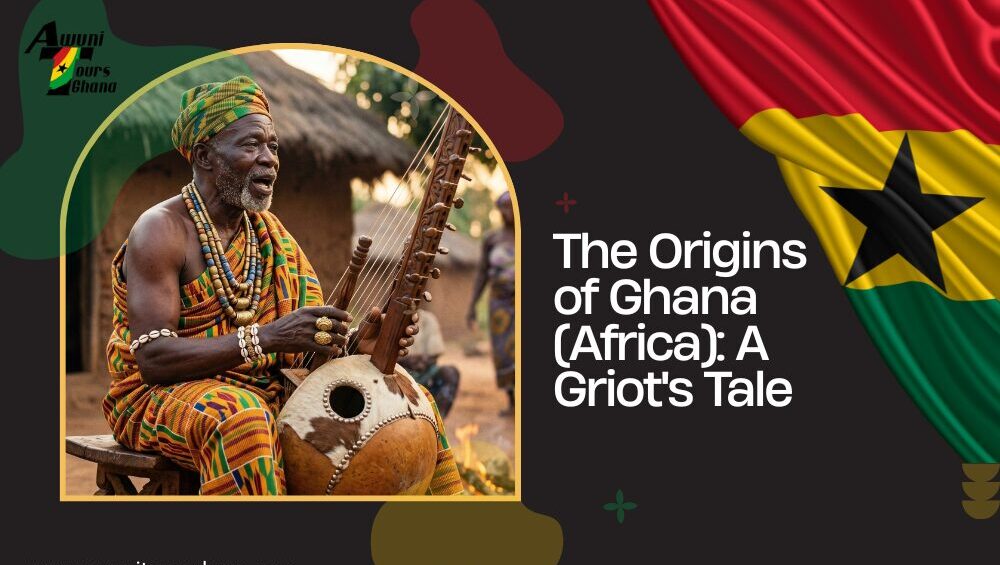
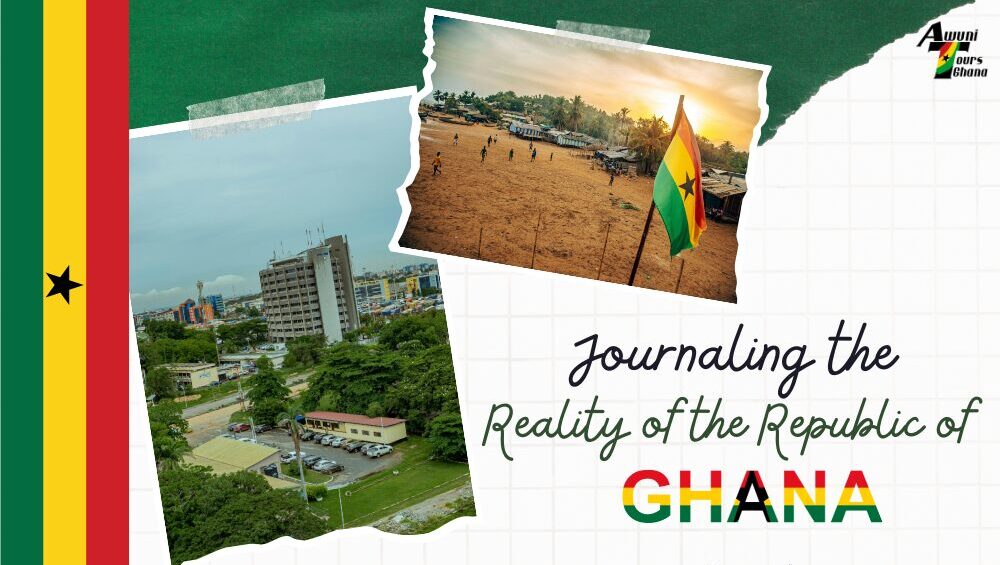
Journaling the Reality of the Republic of Ghana

There is a specific frequency to the Republic of Ghana that no guidebook can prepare you for. People are everywhere, moving with a definitive purpose. The colors aren’t just bright; they are aggressive. The yellow and blue paint of the kiosks, the deep red of the clay dust kicked up by old tires, and the cloth headbands worn by local women carrying massive trays of fruit. It forces you out of your head immediately. You can’t be a passive observer here; the country demands that you pay attention to the dirt, the noise, and the undeniable grit of everyday life.

Republic of Ghana

(June 15th) Republic of Ghana: The Weight of the Dirt

I spent today away from the main roads, walking through a small village where the pavement ends and the raw earth begins. The soil in the Republic of Ghana has a distinct, deep orange-red hue that clings to everything—your socks, your skin, the bottom of your bags. It feels old. When you sit under a massive neem tree and listen to an elder explain the lineage of the local stool lands, you realize that history here isn’t stored in a museum. It is carried in the memory of the people who walk these paths every day.

We ate together from a communal bowl. No silverware, just your right hand, pulling apart thick, sticky fufu dipped into a steaming palm nut soup that burns the back of your throat with raw ginger and local chili. Your fingers stay stained yellow from the oil, and your mouth tingles for hours afterward. It is a slow, heavy meal that makes you sit still and talk. The hospitality isn’t performed; it is an unspoken obligation. You are here, so you are fed, and you are expected to look people in the eye when they speak to you.

Republic of Ghana

(June 19th) The Rhythms of the Inland Marketplace

The Republic of Ghana has a market in the center of the town where there is a maze of corrugated zinc roofs and narrow mud alleys. It smells of dried fish, sharp ginger, fermented cassava, and damp fabric. If you stop moving for a second, the crowd swallows you. Traders scream out prices in Twi and Ga, their voices competing with the metallic clink of a blacksmith hammering out old car parts into farming tools nearby.

I watched a woman weave a strip of Kente cloth on a narrow wooden loom stretched out across the dirt. The sound is a constant, rhythmic clack-clack, slish-slish as her feet pump the pedals. She didn’t look up when I approached. Her hands moved strictly by muscle memory, pulling thick threads of indigo and gold into patterns that represent specific family histories. It is exhausting just to watch, a reminder that the culture here is built on hard, physical labor and centuries of repetition. It makes your own daily routine back home feel incredibly distant and small.

Republic of Ghana

(June 22nd) The Silence of the Stone

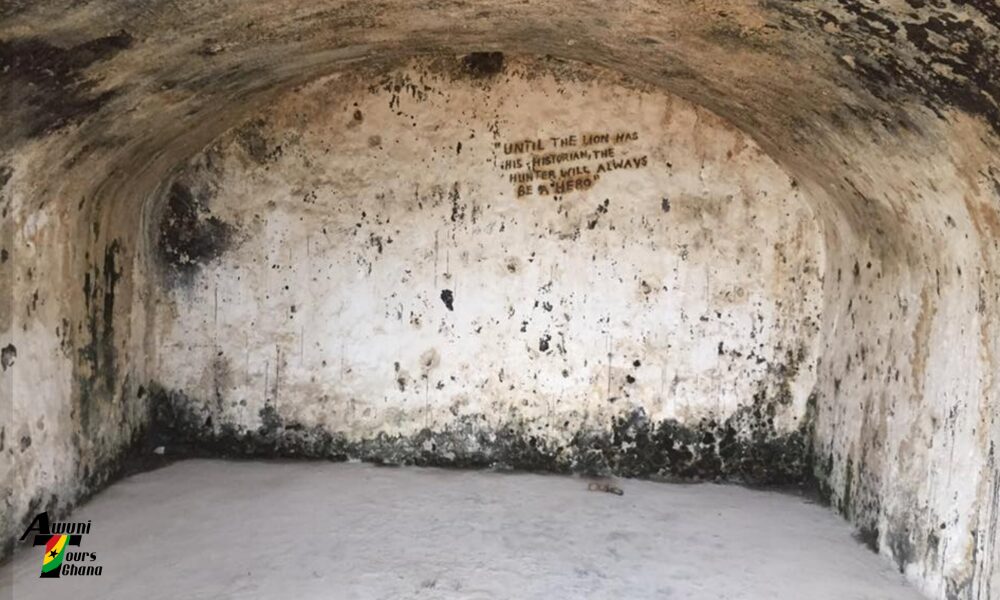
You can’t understand the Republic of Ghana without sitting in the absolute silence of its oldest structures. Today was spent inside the thick, whitewashed stone walls of the historic forts. The air inside is cold, damp, and smells faintly of old lime and stagnant water. It feels completely separated from the chaotic energy of the markets outside.

Standing in a dark room with only a tiny slit of light cutting through the stone, the silence is deafening. You can hear the heavy thud of the ocean hitting the rocks below, a constant, indifferent background noise that has been going on for hundreds of years. It is a heavy, uncomfortable place to be alone with your thoughts. There are no plaques or fancy displays to distract you—just the raw, cold reality of what happened on this floor. It strips away any romantic ideas you had about travel and leaves you with a profound, sobering respect for the sheer endurance of the human spirit.

Republic of Ghana

(June 26th) The Final Shift

My boots are ruined, covered in a layer of red dust that will probably never fully come out of the leather. My skin feels dry from the sun, and my ears are still ringing from the constant noise of the streets. But something shifted in me over the last two weeks. The Republic of Ghana doesn’t change you by giving you a relaxing break; it changes you by breaking down your comfort zones and forcing you to see life through a completely different lens.

If you are waiting for a perfect, convenient moment to cross the ocean, you are missing the point. The beauty here isn’t in the convenience—it is in the raw, unfiltered truth of the land. Stop watching other people live out these stories on your phone. Put your feet on this red dirt, taste the spice, feel the weight of the stone, and let this country shake you awake. The next tour is leaving, and your spot is open. Stop hesitating and book your journey today.

FAQs

What should a traveler expect immediately upon arriving in the Republic of Ghana?

Arrival is an immediate, unfiltered experience that completely shocks the senses. Instead of a quiet or manicured tourist destination, you are dropped straight into a loud, intense, and hardworking reality. The streets are a moving machine filled with the heavy sounds of traffic and music, busy roadside kiosks, and street vendors carrying massive trays of goods through the crowd. It forces you to adapt to its fast speed right away.

How is the traditional food and dining experience described in the diary?

Dining is a communal and deeply personal experience, far removed from a standard restaurant setting. In local villages, meals like fufu and steaming palm nut soup are eaten directly from a shared bowl using your right hand. The food is heavily spiced with raw ginger and local chilies that burn the back of your throat, and the hospitality is treated as an unspoken, genuine obligation to take care of anyone sitting at the table.

What does the article reveal about how history and culture are preserved in the country?

In the Republic of Ghana, history is a living presence rather than something confined to a textbook or a museum. It is physically carried in the memories of the village elders who can recite centuries of ancestral lineages, and it is preserved in everyday objects like decades-old, hand-carved wooden stools. Similarly, cultural traditions like weaving Kente cloth on outdoor looms are passed down through generations, requiring intense physical labor, muscle memory, and absolute focus.

Why does the diary suggest that visiting the historic stone forts is a necessary part of the journey?

Visiting the historic stone forts strips away any romanticized or superficial ideas about travel. The dead silence inside the damp, windowless stone walls offers a harsh and jarring contrast to the chaotic energy of the outdoor markets. Standing in the dark and listening to the ocean waves creates an uncomfortable, sobering space for reflection, leaving visitors with a profound, necessary respect for the sheer endurance of the human spirit.

Articles You May Like:

Ghana Country

The Soil Remembers You: A Personal Invite to Ghana Country

Ghana country does not ask for your curiosity; it calls directly to your soul. The moment you step off the plane into the thick, warm air, you are greeted by the deep, rich scents of woodsmoke, sea salt, and red earth.

This is not a vacation spot you just cross off a list. This is a living, breathing land that reaches into your chest and forces you to feel. It is the home of Akwaaba—a word that means welcome, but feels like an old friend pulling you into a tight, tearful hug. If you have been sitting on the fence, wondering if this is the right place for your next big journey, let the doubt go. This land is waiting for you, ready to show you what it truly means to belong.

A Deep Reckoning at Ghana Country’s Ocean’s Edge

For those looking to connect with their roots, traveling through Ghana country is a powerful, quiet awakening. When you walk through the old stone archways of the Cape Coast castle along the coast, placing your hands on the cool walls, you are touching living history. Standing in the dimness of the old rooms, breathing in the quiet air, a deep realization hits you: you are the continuation of a beautiful story that refused to end.

The Soil Remembers You A Personal Invite to Ghana Country 3

When you step back out into the bright sun and look at the crashing waves, you realize you did not just travel to a new place on a map. You brought a long line of dreams back to the water’s edge. Your family line survived, the earth knows your face, and Ghana country is the sacred place where you finally heal the spaces left by time.One Heartbeat, Many Tribes

Ghana Country Has One Heartbeat, Many Tribes

If you are drawn to culture, Ghana country offers a beautiful tapestry of human life that will change how you see the world. You cannot stay detached when the ground under your feet vibrates with the powerful, steady beat of traditional drums. You will find yourself invited to sit with local weavers, watching their hands fly across the looms as they create beautiful gold-threaded Ghana Kente cloth, turning ancient philosophies into patterns you can hold.

The Soil Remembers You A Personal Invite to Ghana Country 6

One of the most beautiful parts of exploring Ghana country is learning about the different tribes that make up the nation. From the rich, royal traditions of the Ashanti Kingdom to the coastal fishing communities, each group holds its own sacred wisdom, unique music, and deep stories. 

You will taste the incredible depth of the local food, from spicy, comforting jollof rice to rich stews that taste like home. The history here is real and heavy, but the joy is absolute. The incredible warmth of the people ensures you are never just an outsider looking in; you are family.

The Call to Taste, Dance, and Discover in Ghana Country

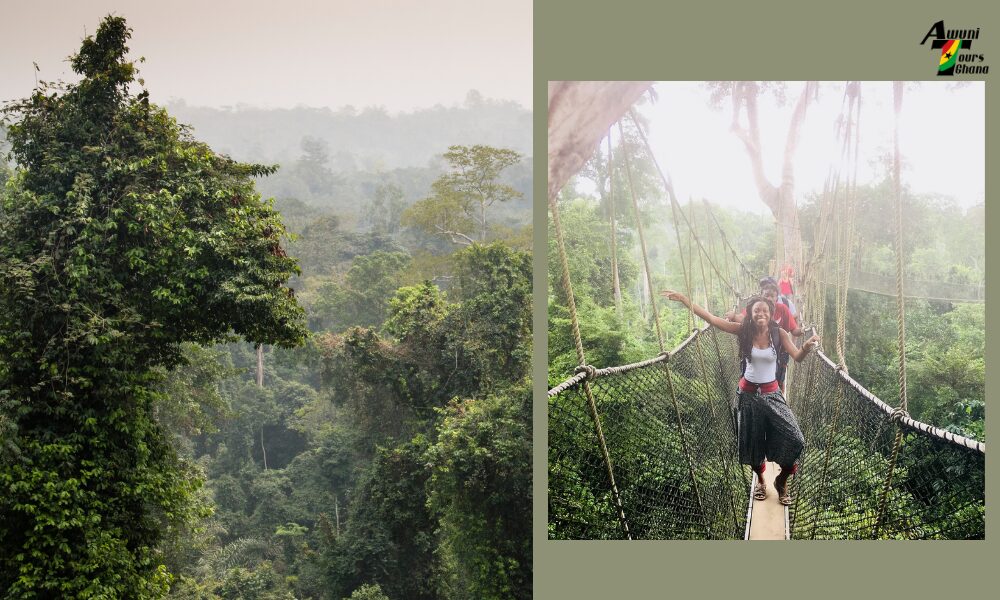
Beyond the quiet reflection of history, there is a loud, joyful energy pulsing through Ghana country right now. You can feel it when you walk high above the green rainforest on swaying canopy bridges, looking out at an ocean of trees. You feel it in the bright colors of the local fashion markets and the incredible music playing in the streets.

The Soil Remembers You A Personal Invite to Ghana Country 5

This is your sign to stop watching from a distance and book your journey. Come to the source. Let the red dirt stain your shoes, let the ocean wind clear your mind, and let yourself be healed, moved, and completely awakened by the timeless spirit of Ghana country. The soil is waiting to welcome you home, and your seat at the table is already prepared. Do not let another moment slip away—secure your spot on our next upcoming tour today and step directly into your own story.

FAQs

What makes visiting Ghana country different from a typical tropical vacation?

A typical vacation often stays on the surface, but a journey to Ghana country forces you to connect on a deeply emotional and spiritual level. From the moment you arrive, the warmth of the local culture—known as Akwaaba—makes you feel like a long-lost family member rather than a simple tourist. It combines breathtaking natural beauty, like rainforest canopy walks, with deep historical reflection and a vibrant, modern energy that actively engages your soul instead of just offering a place to relax.

How does the article describe the experience for members of the Diaspora returning to Ghana country?

For the Diaspora, traveling to Ghana country is described as a powerful, quiet birthright pilgrimage and a healing homecoming. Walking through the stone archways of the historic coastal castles allows visitors to physically touch living history and stand exactly where their ancestors once stood. It is a sacred space where the abstract idea of family lineage becomes real, cool earth beneath your feet, allowing you to honor their survival and bring their dreams back to the water’s edge.

What can cultural seekers and food lovers look forward to experiencing during their visit?

Visitors interested in culture will experience a beautiful tapestry of traditions woven across the nation’s different tribes, from the royal history of the Ashanti Kingdom to coastal fishing communities. You can sit with local artisans to watch them weave gold-threaded Kente cloth, listen to the powerful beat of traditional drums, and learn the unique music of different regions. Food lovers will get to taste the incredible depth of local flavors, including iconic dishes like spicy, comforting jollof rice and rich, home-cooked stives.

If I am feeling unsure about booking a tour, how does Ghana country welcome hesitant travelers?

The article emphasizes that you are never left feeling like an outsider looking in when you explore Ghana country. The legendary hospitality and openness of the people ensure that every traveler, regardless of their background, is invited to sit at the table, break bread, and join the dance as part of an extended global family. It is the perfect destination for anyone looking to replace doubt with a true sense of belonging, human connection, and absolute joy.

Top Ghana Tours

5 Top Ghana Tours for First-Time Visitors

Traveling to Ghana for the first time? You’re about to uncover a country filled with warmth, history, and adventure. Whether you’re interested in cultural heritage, natural beauty, or vibrant city life, Ghana tours offer a rich introduction to West Africa.

To help you plan, we’ve highlighted five top Ghana tours that are ideal for first-time visitors. These are more than just sightseeing routes; they’re immersive journeys through some of the country’s most meaningful places.

5 Top Ghana Tours to Take on Your First Visit

Joining guided tours is one of the best ways to explore Ghana, especially if it’s your first time. Our local guides offer cultural context, language support, and safe navigation through historical, natural, and urban attractions.

Let’s take a closer look at where to begin your journey.

1. Explore the City of Accra

Accra is the heartbeat of Ghana, and starting with a Ghana city tour is a great way to get settled. You’ll see how modern life blends with deep-rooted traditions from the coastal forts and colonial architecture to open-air markets and public squares.

 Explore the City of Accra

Highlights often include:

  • Independence Arch & Black Star Square
  • Jamestown fishing district
  • Makola Market
  • Kwame Nkrumah Memorial Park

This offers a first-hand look at how Accra reflects Ghana’s journey from colonization to independence and into modern-day life, Explore it in more detail through our Accra City Tour.

2. Cultural and Heritage Tour

Ghana’s role in the transatlantic slave trade makes it one of the most historically significant countries in West Africa. For many, traveling to Ghana for the first time is about reconnecting with ancestral roots and understanding Ghana’s place in world history. This tour focuses on heritage sites that tell emotional and powerful stories.

Ghana Cultural and Heritage Tour

Some highlights include:

  • Elmina and Cape Coast Castles (UNESCO sites)
  • Assin Manso slave river site
  • Cultural visits to Kumasi and the Ashanti Kingdom

If you’re interested in cultural tours in Ghana, our Cultural Heritage Tour is one of the most eye-opening journeys you can take.

3. Wildlife Safari Experience

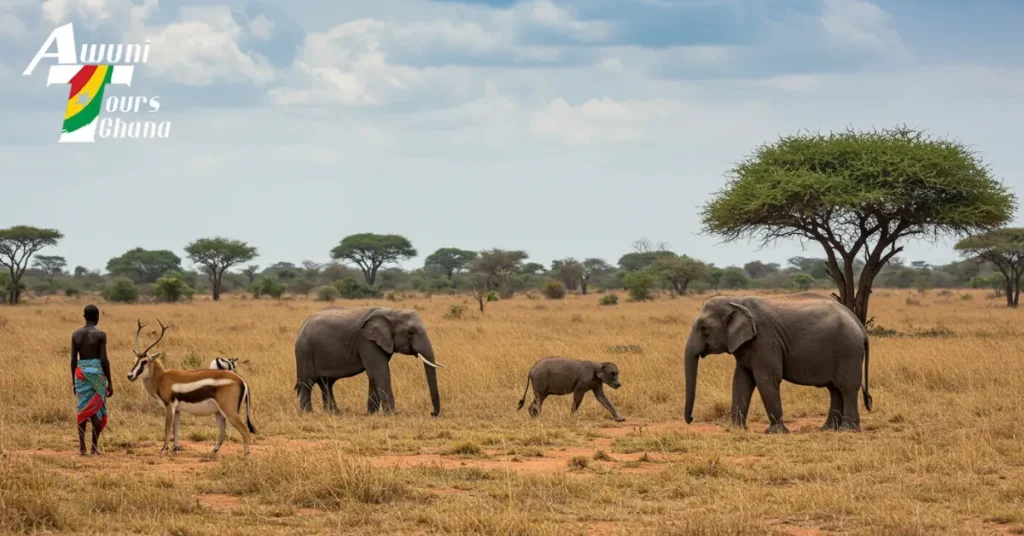
Ghana may not be the first place you think of for a safari, but it should be. The northern regions are home to Mole National Park, where you can see elephants, antelopes, and beautiful birds in their natural habitat.

Ghana 
Wildlife Safari Experience

This tour offers:

  • Wildlife viewing without the crowds
  • Visits to traditional communities
  • Local guides who explain the ecological importance of the parks

This tour blends environmental awareness with adventure and is perfect for travelers who enjoy nature, photography, or off-the-beaten-path experiences, explore it further through our Wildlife Safari Tour.

4. Waterfalls and Natural Landscapes

Ghana’s Volta Region is one of the most scenic parts of the country. Lush hills, tropical forests, and flowing waterfalls make it a refreshing escape for those looking to unwind and connect with nature.

Ghana Waterfalls and Natural Landscapes

This nature-focused tour includes:

  • Wli Waterfalls – One of West Africa’s tallest
  • Forest hikes and scenic trails
  • Monkey sanctuaries and hidden waterfalls

It’s the perfect add-on to your Ghana travel package if you’re looking to balance history with nature. Take a closer look at our Waterfalls and Nature Tour.

5. Visit Key Cultural Heritage Sites

Some tours in Ghana are focused on specific heritage sites that hold historical, spiritual, or architectural value. These locations are not just about the past, they are still part of living traditions today.

Visit Ghana Key Cultural Heritage Sites

Expect to see:

  • Shrines, palaces, and sacred forests
  • Art and architecture of traditional Ghanaian communities
  • Local customs that are still practiced today

For first-time visitors, this tour helps connect the dots between Ghana’s ancient societies, colonial encounters, and present-day cultural life. Explore more through our important Cultural Heritage Sites Tour.

Why Choose Awuni Tours Ghana?

At Awuni Tours Ghana, we understand that for many visitors, Ghana isn’t just another destination, it’s a place of connection, reflection, and exploration. That’s why we focus on providing experiences that go beyond sightseeing, helping you engage with the country in an authentic and meaningful way.

  • Local Expertise: Our guides are deeply familiar with the regions and communities you’ll visit. We share real insights, not scripts.
  • Cultural Depth: From traditional naming ceremonies to local artisan markets, we make space for genuine interactions.
  • Comfortable Experiences: We only recommend locations and accommodations that we trust and know offer a safe, welcoming atmosphere.
  • Thoughtfully Designed Tours: Each of our tour routes is intentionally crafted, not just to cover the highlights, but to connect them in a meaningful way.
  • Flexible Planning Support: Whether you’re looking for a heritage-focused tour or nature-filled days in the Volta Region, we help you select the right itinerary.

Ghana tours come in all forms, from city explorations to wildlife safaris and cultural immersion trips. As a first-time visitor to Ghana, you have the opportunity to see the country from multiple angles. Whether you start with a guided city tour, explore historical forts, or hike toward a waterfall in the Volta Region, each step reveals a deeper story.

If you’re still deciding how to begin, we invite you to explore our Awuni Tours Ghana experiences and find what speaks to you.

FAQs

Is it safe to travel around Ghana?

Yes, Ghana is generally safe for tourists. As with any destination, it’s advised to stay aware of your surroundings, avoid isolated areas at night, and follow local advice.

When is the best time to visit Ghana?

The best time to visit Ghana is during the dry season, from November to March. This period offers better weather for sightseeing, wildlife tours, and outdoor experiences.

What are the top tourist attractions in Ghana?

Some of the must-visit attractions in Ghana include Cape Coast Castle, Elmina Castle, Mole National Park, Wli Waterfalls, Kakum National Park, the city of Accra, and cultural sites in Kumasi, home of the Ashanti Kingdom.

Travel Safety Tips for Visiting Ghana

Travel Safety Tips for Visiting Ghana

Ghana is one of the friendliest and most welcoming countries in West Africa. From the busy streets of Accra to the peaceful beaches of Cape Coast, the country is full of life, color, and warm-hearted people. Ghana is known for its rich culture, tasty food, and welcoming vibe. But just like any new place, it’s important to stay alert and travel smart.

Navigating the local transit routes, coastal roads, and cultural protocols on your own can quickly become overwhelming. Choosing to explore with an experienced, professional team like Awuni Tours Ghana removes the guesswork and logistical stress, making it the safest and most reliable way to experience the region. Because our team understands the local landscape intimately—from navigating the bustling, dense markets of Accra to coordinating smooth border crossings into neighboring countries—we ensure you avoid common travel pitfalls.

Having a trusted guide means you always have an expert driver at the wheel, reliable and vetted accommodations waiting for you at every stop, and a cultural bridge to help you interact respectfully with local communities, leaving you free to fully immerse yourself in the journey with complete peace of mind.

This guide shares simple and smart travel safety tips to help you enjoy your trip to Ghana with more peace of mind and fewer worries.

1. Learn the Basics Before You Arrive

Knowing a little about the place you’re going helps you feel more relaxed when you land. Ghana is generally peaceful, but it still has its share of rules, customs, and busy areas to be aware of.

Learn the Basics Before You Arrive in ghana

Do this before you travel:

  • Learn basic greetings like Akwaaba (Welcome).
  • Check the weather, it’s hot most of the year.
  • Save the address and contact information of your hotel.
  • Note that public holidays, markets, and roads may get crowded.

Real tip: Ghanaians respect polite manners. A smile and a simple greeting, such as “Good evening,” go a long way when asking for help.

2. Be Street-Smart with Your Money

Most visitors enjoy Ghana without any trouble. Still, petty theft can occur, especially in crowded areas such as markets, bus stations, or beaches.

Be Street-Smart with Your Money while traveling to ghana

To stay safe:

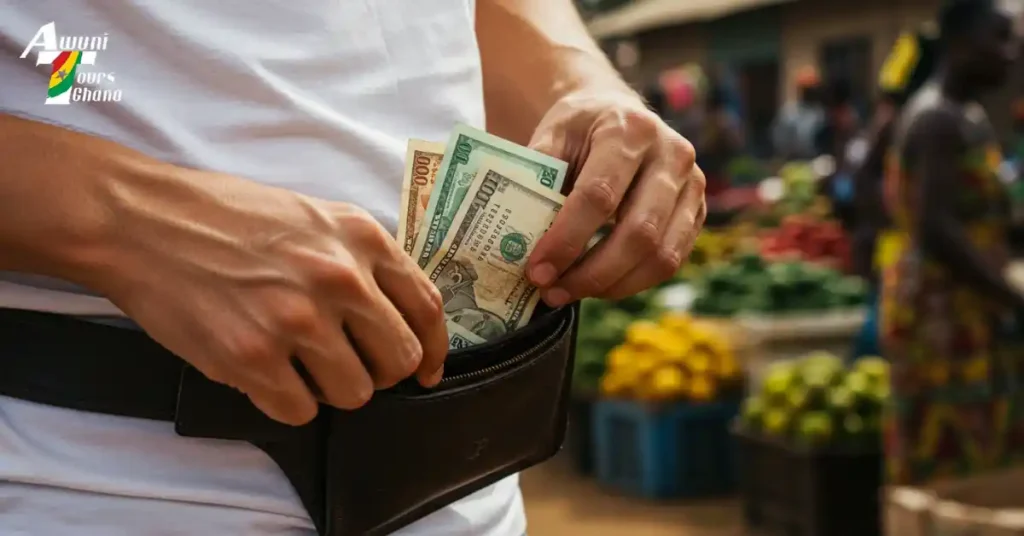
  • Carry only the money you need for the day.
  • Keep your cash in different spots (belt pouch, inside bag, pocket).
  • Don’t flash your phone or wear expensive jewelry.
  • Use bank ATMs, not those on street corners.

Good to know: Many places don’t accept cards, especially outside big cities. Always keep small Ghanaian cedi bills with you.

3. Getting Around Safely

Public transport in Ghana includes buses, taxis, and tro-tros (shared minivans). While tro-tros are cheap, they may be crowded and don’t always follow road rules.

Getting Around Safely in Ghana

Follow these travel tips:

  • Always agree on the taxi fare before you start your ride.
  • Use trusted apps like Yango from hotel-approved areas.
  • Avoid travelling long distances at night, as some roads are dark and rough.
  • Wear your seatbelt and avoid overcrowded buses.

These safety tips for traveling also apply to walking: cross roads carefully, wear light at night, and keep your phone and wallet close.

4. Health Tips Before and During Your Trip

Before your tour Ghana, talk to your doctor. You’ll need a Yellow Fever shot to enter. Malaria is common, so plan.

Health Tips Before and During Your Trip to ghana

1. Get Travel Insurance

Buy good travel insurance that covers:

  • Medical problems
  • Stolen items
  • Canceled flights

2. Take Care of Your Body and Mind

  • Visit your doctor before your trip.
  • Rest when needed, Ghana’s climate can feel very hot.
  • Pack your regular medicines.

3. Bring Your Medications

  • Take extra doses in case of delays.
  • Keep them in their original boxes.
  • Carry a doctor’s note for strong medications.

4. Know the Health Risks

  • Take anti-malaria pills.
  • Use mosquito repellent.
  • Drink bottled or boiled water.
  • Don’t eat raw food from street stalls.

5. Where to Go for Medical Help

Big cities like Accra and Kumasi have private hospitals. Smaller towns may not.

  • Ask your hotel to help if you feel unwell.
  • Save emergency numbers on your phone.

5. Be Careful with Your Belongings

Ghana is generally safe, but don’t make yourself an easy target. Most problems come from leaving things unattended.

Be Careful with Your Belongings while travelling to ghana, africa

Keep your things safe by doing this:

  • Don’t leave phones, bags, or wallets on tables or in plain view.
  • Lock your hotel room door, even when inside.
  • Keep a digital copy of your passport and travel papers online.

Real-life tip: In busy areas like Makola Market, walk with your bag in front of you and zipped up tight.

6. Protect Yourself from the Sun and Bugs

Ghana’s weather is warm and sunny most of the year. But the heat and mosquitoes can be tough if you’re not prepared.

Protect Yourself from the Sun and Bugs while traveling to ghana

Here’s how to stay safe outdoors:

  • Wear sunscreen every morning.
  • Apply mosquito repellent, especially before evening.
  • Sleep under a mosquito net if provided.
  • Wear light, long sleeves in the evening to protect your skin.

7. Respect Local Laws and Culture

Ghana is a peaceful country, and people are friendly, but there are still rules and customs you should follow to avoid problems.

Respect Local Laws and Culture in ghana

1. Follow Local Rules

  • Don’t take photos of police stations, military areas, or airports.
  • Don’t carry or use drugs. Ghana has strict drug laws.
  • Avoid public displays of affection, especially for same-sex couples, as it may not be accepted in some places.

2. If You Have Dual Citizenship

  • If you hold a Ghanaian passport, use it to enter and leave the country.
  • Learn the rules about dual citizenship before your trip to avoid confusion at the airport.

3. Respect Local Customs

  • Greet people politely with a smile.
  • Use your right hand when giving or receiving things; it’s a sign of respect.
  • Wear simple clothes, especially when visiting villages, churches, or mosques.

8. Watch the Weather and Warnings

Before you travel, it’s a good idea to check for any updates or safety alerts about Ghana. These can change depending on the weather or health situations. Ghana has a rainy season, where some roads may flood, and a dry season, which is hot and dusty. If you’re planning day trips or long drives, it’s easier to get around during the dry months, so it’s worth knowing the best times to travel to avoid the rain and make the most of your trip.

Watch the Weather and Warnings before travelling to ghana

9. Trust Your Gut and Avoid Scams

Sometimes, a person may act too friendly or pushy, such as trying to sell you something or offering help without warning.

Trust Your Gut and Avoid Scams in ghana

What to do:

  • Be polite, but say no and walk away if it feels strange.
  • Don’t give money or personal info to strangers.
  • Only book tours through trusted websites or your hotel.
  • Avoid deals that sound too good to be true; they usually are.

Street-smart tip: If someone calls you “sister” or “brother” and insists on guiding you, kindly decline unless they are with a known group or your hotel.

10. Choose Safe Places to Stay

Most guesthouses and hotels in Ghana are safe, clean, and friendly. But location and service matter.

Choose Safe Places to Stay in ghana

Look for:

  • Guest reviews that mention cleanliness and helpful staff.
  • Hotels with security guards or 24/7 reception.
  • Places near main roads, not in hidden areas.

Good habit: Let someone know where you’re staying and share your travel plans.

Ghana is a beautiful country with kind people, a rich history, and amazing places to see. Like anywhere in the world, it’s important to stay smart and prepared while traveling. By following these travel safety tips, you can enjoy your trip to Ghana without stress.

Keep your belongings safe, respect local rules, protect your health, and trust your gut. Whether you’re exploring the markets, relaxing on the beach, or joining a Ghana tour, being careful helps you have a better time.

We built Awuni Tours Ghana on the belief that true exploration requires absolute peace of mind, which is why we manage every behind-the-scenes variable long before you arrive. By leveraging our deep, established relationships with community leaders and traditional elders across the regions, we provide a secure layer of local protection and insider access that solo travelers simply cannot replicate.

Our team constantly monitors real-time environmental updates and shifting seasonal patterns on the ground, allowing us to pivot your schedule seamlessly if unexpected situations arise. When you journey with us, you are never left to navigate the unknown alone; you are a welcomed guest cared for by a dedicated network committed to keeping you completely secure

FAQs

 Is Ghana a Safe Country to Visit?

Yes, Ghana is a safe country to visit, especially compared to many other places in West Africa. Most travelers have a great time with no problems. But that doesn’t mean you should let your guard down.

Can I drink tap water in Ghana?

It’s better not to. Tap water can upset your stomach if you’re not used to it. Stick to bottled or filtered water. Don’t use ice unless you’re sure it’s made from clean water.

What should I do if I feel unwell in Ghana?

Go to a local clinic or hospital. Many cities have good health centers. Bring travel insurance and carry some basic medications, such as painkillers or rehydration salts.

How do I avoid scams while traveling in Ghana?

Be polite, but don’t trust strangers who act too pushy or offer “too good” deals. Always book tours through trusted websites or hotels (such as Awuni Tours Ghana), and never share personal info or money with people you have just met.

What kind of clothes should I pack for Ghana?

Light, loose clothes work best. Ghana is hot and sunny, so wear cotton, bring sunglasses, sunscreen, and a hat. In some places, it’s respectful to dress modestly, cover shoulders and knees.

Articles You May Like:

Best Time to Visit Ghana

When Is the Best Time to Visit Ghana? Climate, Temperature, and Seasonal Guide

Ghana is a place that stays warm all year and welcomes visitors with open arms. From golden beaches and buzzing markets in Accra to national parks full of wildlife, there’s always something to see. But the weather changes from month to month, and knowing the right time to visit can make your trip smoother and more fun.

In this guide, you’ll find out the best time to visit Ghana, what the weather is like each month, and when festivals and wildlife are at their best. Whether you’re looking for dry days, cooler nights, or local celebrations, this seasonal guide covers it all.

Best time to visit Ghana

A Month-by-Month Guide on When to Go to Ghana

Ghana is a warm, vibrant country with different travel experiences throughout the year. Whether you’re visiting for sunny beach days, colourful festivals, or quiet nature escapes, each month offers something unique. This seasonal guide breaks down the climate, temperature, and key events on a month-by-month basis.

December to March – Best for Festivals, Wildlife, and Sunshine

This is the best time to visit Ghana Africa if you want dry days, great roads, and exciting events. These months are part of the dry season, with little to no rain. Travel is easier, and the weather feels cooler (though still warm) due to the Harmattan winds, which bring dry, dusty air blowing in from the Sahara.

December to March- best time to visit ghana

December is a favourite in Accra, with festivals like Afrochella bringing music, food, art, and dancing. Locals say this is the best time to visit Ghana, especially to explore the coast, enjoy the nightlife, or relax on the beach.

If you’re coming during this peak season, don’t miss our Ghana Packing Checklist, so you’re fully prepared for warm days and cultural events.

If you love animals, plan a trip between December and March. This is the best time of year to visit Ghana for wildlife viewing. In places like Mole National Park, elephants and other animals gather around watering holes, making them easier to spot.

April – Light Rain Begins

April marks the beginning of the rainy season, mostly in southern Ghana. It’s still warm, but rain can fall in the afternoon. If you’re okay with a bit of rain, April is a peaceful time to travel with fewer crowds. It’s a calm start to the rainy season, and everything begins turning green again.

April- best time of year to go to ghana

If you’re traveling to Ghana for the first time, this month gives you a nice mix of sunshine and greenery.

May – Heavy Showers Begin

May sees more consistent rainfall, particularly in the south. Expect heavy showers that might last for a few hours. Roads in the countryside can get muddy or flooded, but many areas are still reachable.

Tourism slows down during this time, so if you’re looking for quieter experiences and lower prices, this could work in your favour. Just come prepared with waterproof shoes and light rain gear.

travelling to ghana in May

It’s a good time to visit the best places in Ghana, especially indoor or cultural sites like museums, palaces, and historic forts.

June – Lush, Green, and Rainy

June is a full-on rainy month in the south. It rains often, but the country looks beautiful. If you don’t mind a few wet days, you’ll enjoy how fresh and green Ghana becomes.

visiting ghana in June

The Ghana temp stays warm, around 26°C (78.8°F) to 30°C (86°F). It’s a lovely time for people who enjoy nature and don’t need perfect weather every day.

July – Short Dry Break in the South

July gives a short dry break in southern Ghana. There’s still some rain, but it’s less intense. Travel gets easier, and it’s a nice month to explore the coast or go shopping in Accra’s busy markets.

July – Short Dry Break in the South

Photography is better this month too, fewer cloudy days and lots of life around.

August – Still Dry in the South, Rainy in the North

August is a mix. The south stays a little dry, while the north like Tamale sees more rain. If you remain in the southern cities, it’s a good time for beach trips and day tours. The humidity is lower than in the rainy months.

This is a nice time for travellers who want to explore and still enjoy dry weather.

travelling in August for Ghana Africa

August is a great time for cost-conscious travellers—fewer crowds often mean better deals on flights and accommodation. If you’re curious about trip expenses, check out our guide on Ghana travel costs to plan smart and stretch your budget.

September – Rains Return

In September, the rain comes back, especially in southern Ghana. It’s still hot and humid, and you’ll see more thunderstorms. Roads may be slower, but the views are amazing. Trees and plants are at their greenest.

September month visit to ghana

If you want peace, this is a great month to visit with lower prices and fewer crowds.

October – End of the Rain

October marks the end of the rainy season in the south. Showers happen, but they don’t last long. Travel is easier, and the average temperature in Ghana stays between 25°C and to 31°C.

October - time to visit ghana africa

You’ll still enjoy greenery, but without too much rain. It’s a good time to take day trips and explore smaller towns.

November – Dry Season Starts Again

November is the start of the dry season. The Harmattan returns, so the air becomes drier, and the skies can appear dusty. But it’s easier to travel again, especially if you’re heading to Mole National Park or planning safaris in the north.

November-  seasonal guide to go to ghana

November is perfect if you want sunshine without the holiday rush. It’s a quiet, warm month, ideal for early travellers.

Best Time to Visit Ghana Based on Your Travel Plans

  • For festivals, sunshine, and easy travel: December to March is the best choice.
  • For green landscapes and fewer crowds: Consider April to July.
  • For quiet travel before the high season: October and November offer great balance.
  • For wildlife spotting and nature: Plan your trip between December and March.

No matter when you go, the Ghana climate is warm and welcoming year-round. Just check the forecast, pack for the season, and enjoy everything this beautiful country has to offer.

Ghana isn’t just a place, it’s a feeling. Whether you’re chasing music in the streets of Accra, spotting elephants in the wild, or enjoying calm coastal evenings, the timing of your trip can shape your entire experience.

If you’re someone who loves sunshine, local culture, and smooth travel days, Visit Ghana is when the skies are dry and the festivals are in full swing. But if you’re curious about green landscapes and a quieter atmosphere, the rainy season has its charm too.

FAQs

What is the hottest month in Ghana?

March is the hottest month in Ghana. Temperatures nudge 30°C (86°F) on the south coast but can top 40°C (104°F) further north.

What is the climate like in Ghana?

The Ghana climate is tropical, which means it’s warm all year round. The country has two main seasons: a dry season (from November to March) and a rainy season (from April to October). The Harmattan winds in the dry season bring cooler, dusty air, especially in the north.

Is Accra weather different from other parts of Ghana?

Yes. Accra weather is slightly more humid and coastal. The north (like Tamale) is usually drier and hotter. Rain starts earlier in the south and ends later than in the north.

Can I visit Ghana during the rainy season?

Yes, but be prepared for short heavy rains, especially from May to June. The scenery is beautiful and green, and there are fewer tourists, making it a peaceful time to explore.

What’s the best time to go to Ghana for wildlife?

If you want to see animals like elephants, antelope, and monkeys, the best time to go to Ghana for wildlife is during the dry season from December to March. It’s easier to spot animals around watering holes.

Articles You May Like:

Kingdom of Ghana

8 Reasons to Visit the Kingdom of Ghana

The Kingdom of Ghana is one of the most beautiful and welcoming countries in West Africa. It’s full of rich culture, friendly people, amazing food, and stunning places to visit. Whether you want to relax, enjoy local culture, or experience something new, Ghana has something for everyone.

Many travelers ask, “Why travel to the kingdom of Ghana?” The answer is that it’s safe, and rich with historic landmarks, dense rainforests, beautiful coastlines, and full of unforgettable experiences. From warm smiles to peaceful beaches, Ghana has a special way of making you feel at home.

Kingdom of Ghana

Why Visit the Kingdom of Ghana?

From the moment you arrive to the kingdom of Ghana, the legendary spirit of welcome is a tangible, everyday reality, inviting you to slow down, share a communal table, and experience a profound sense of belonging that leaves a permanent mark on how you view the world. Visiting the kingdom of Ghana is to experience a culture that fundamentally redefines how human beings connect with one another.

1- Friendly People

When you visit a new country, it feels really good to be treated kindly. On the kingdom of Ghana trip, you’ll feel safe and comfortable because of the welcoming nature of the people. When you go there, people will smile at you, greet you, and often say “Akwaaba”, which means “Welcome.”

The Kingdom of Ghana: Friendly People: reason why travel to ghana

Ghanaian people are respectful and like to help visitors. If you need directions, talk to locals, or learn about their daily lives, people will happily assist you. Also, because English is the official language, you can easily talk to people and understand signs and menus.

2- Cultural Experiences

The kingdom of Ghana has many different groups (tribes), and each group has its own language, clothes, music, and festivals. This makes Ghana’s culture very interesting and exciting. People travel to experience new cultures and traditions, and Ghana is the perfect place for that.

The Kingdom of Ghana Cultural heritages
  • Festivals: Almost every town has a big celebration every year. People wear traditional clothes at these festivals, play drums, dance, and eat together. Some examples are the Homowo Festival in Accra and the Aboakyer Festival in Winneba.
  • Clothes: People wear Ghanaian traditional clothing like the famous Kente cloth, with bright colors and beautiful patterns. Kente is a special fabric made by hand. Each of its colors and designs has a meaning.
  • Music and Dance: Music is a big part of life in Ghana. You will hear drums, singing, and dancing at weddings, parties, and even in the streets. Traditional music mixes with modern styles like Highlife and Afrobeats.

3- Ghana’s Amazing History

The kingdom of Ghana has an important place in the story of the African diaspora. Many people from Africa were taken from Ghana and sent across the ocean to America and Europe as slaves.

  • Cape Coast Castle and Elmina Castle: These are old buildings by the ocean. A long time ago, many enslaved Africans were kept here before they were taken away by ship. You can visit these places, walk inside, and learn about what happened. It is a very emotional experience.
  • Year of Return (2019): In 2019, Ghana invited people worldwide to reconnect with their roots through the Year of Return campaign. Thousands of people came, and now many more are still visiting each year.
The Kingdom of Ghana’s Amazing History

So, if you want to understand African history and connect to your ancestry, a trip to the kingdom of Ghana, Africa, are the best way to do it.

4- Nature and Wildlife

The kingdom of Ghana is not just about cities. It has rainforests, rivers, waterfalls, parks, and wild animals. If you love nature, hiking, or animal watching, Ghana tourism offers many unforgettable places to explore.

The Kingdom of Ghana Nature and Wildlife
  • Kakum National Park is a big forest with a special bridge high up in the trees, called a canopy walkway. You can walk across it and see the forest from above.
  • Mole National Park is where you can go on a safari, a trip to see animals in the wild. You might see elephants, monkeys, and antelopes.
  • Wli Waterfalls is the highest waterfall in Ghana and the tallest in West Africa. You can hike there and enjoy the cool air and the beautiful view.
  • Volta Region is known for its lush green landscapes, beautiful waterfalls, and peaceful atmosphere.

5- Different Beaches

The kingdom of Ghana has a long coastline with many beautiful beaches where you can relax, swim, or enjoy fresh seafood. 

  • Labadi Beach: Labadi Beach in Accra is a popular beach with music, food, horse rides, and dancing.
  • Busua and Axim: Quiet beaches, great for swimming or learning how to surf. You can also stay in beach resorts or simple guesthouses.
  • Ada Foah: Ada Foah is a peaceful place where a river meets the ocean. You can kayak, go fishing, or enjoy boat rides.
The Kingdom of Ghana Different Beaches

Because of the warm and tropical Ghana climate, it’s important to pack lightweight clothes to wear on the beaches. You can use our Ghana packing list to help you get ready for your trip. 

6- Delicious and Unique Food

Ghanaian food is tasty, spicy, and full of flavor. You can try many different meals, often made with rice, cassava, yam, or plantains. If you love trying new foods, Ghana African food will surprise you. Some popular dishes include:

  • Jollof Rice: A famous West African dish. It’s rice cooked in tomato sauce with spices, served with meat or fish.
  • Fufu: A soft, stretchy dough made from cassava or yam, eaten with soup. You can use your fingers to eat it.
  • Waakye: It is a mix of rice and beans, which is served with many side options like eggs, meat, and spaghetti.
  • Kelewele: This spicy fried plantain is a type of tasty snack or side dish.
The Kingdom of Ghana Delicious and Unique Food

7- Safe and Peaceful Country

It’s important to feel safe when traveling. The kingdom of Ghana is fourth safest country in Africa. It has a stable government and peaceful people. You can walk around cities and towns, take public transport, and meet locals without any worry. Of course, like anywhere in the world, you should be careful with your belongings and follow basic safety rules. But overall, traveling to Ghana is a great experience for most visitors.

The Kingdom of Ghana is a Safe and Peaceful Country

8- Affordable and Easy to Travel

The kingdom of Ghana is a good place to visit, even if you don’t have a lot of money. Everything is very easy to arrange. You can find:

  • Cheap food at local spots.
  • Budget hotels, guesthouses, or hostels.
  • Easy transport, like shared vans called trotros, or taxis.
  • If you’re going far (like from Accra to the north), you can take a bus or a domestic flight. 
The Kingdom of Ghana is Affordable and Easy to Travel

The kingdom of Ghana is more than just a travel destination; it’s a place full of history, culture, and natural beauty. Whether you’re walking through colorful markets, exploring waterfalls, dancing at festivals, or learning about deep history, every part of Ghana offers something special. With friendly people, rich traditions, and so many amazing places to visit, there’s no better time to plan a trip to Ghana.

FAQs

Is Ghana safe for tourists?

Yes, Ghana is one of the safest countries in Africa for travelers. The people are friendly, and the country is peaceful and welcoming.

How much does a trip to Ghana cost?

Ghana trip costs depends on your travel style, and vary accordingly. You can enjoy good food, transport, and hotels at fair prices.

What is the climate like in Ghana?

The Ghana climate is warm and tropical all year round. There are dry and rainy seasons, but it’s usually sunny and pleasant.

Are there travel packages available for Ghana?

Yes, Awuni Tours Ghana offer Ghana travel packages that include airfare, tours, hotels, and transport to make planning your trip easier.

Articles You May Like: