Accra, Ghana

The Evolution of Accra, Ghana

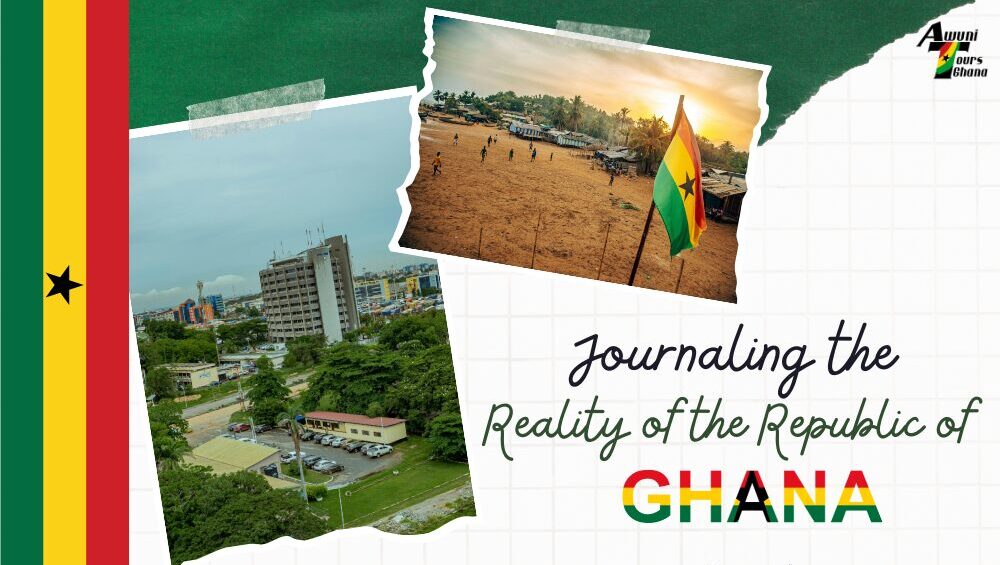
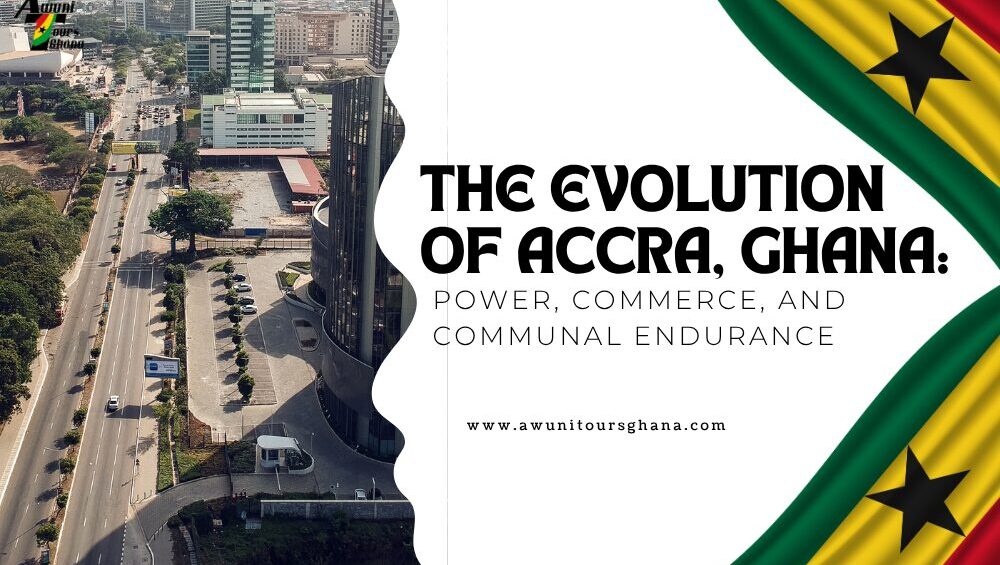
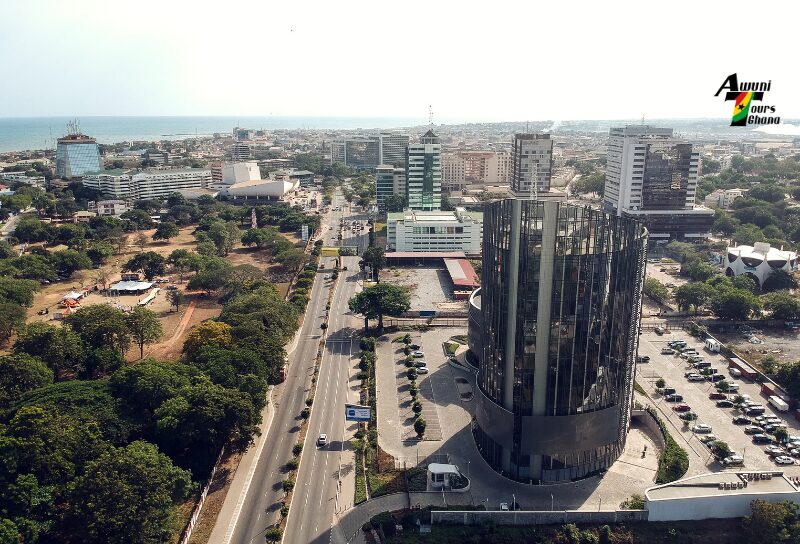
Accra, Ghana operates as a major political and economic hub on the West African coast, defined by a history of rapid urbanization and structural transformation. The city developed from a collection of coastal fishing villages into a colonial capital, eventually becoming the focal point of the nation’s independence movement. In the modern era, the municipality handles the pressures of globalization, infrastructure expansion, and a massive informal economy, all while maintaining the traditional social frameworks established by its indigenous population centuries ago.
Accra Ghana

The Indigenous Foundations and Early European Contact

Before the arrival of European fortresses, the geography that comprises modern Accra, Ghana was populated by the Ga people. The Ga established agricultural and fishing settlements organized into distinct traditional states, utilizing the coastal terrain for regional trade. By the sixteenth century, the strategic coastal position of the area attracted European maritime powers seeking access to gold and local markets.

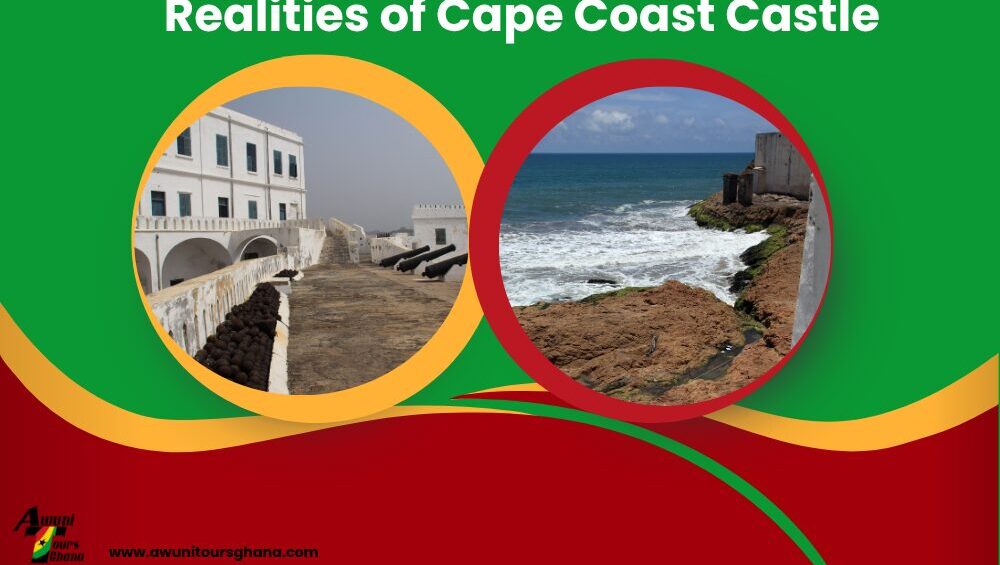
The Portuguese, Dutch, English, and Danish each constructed fortified trading posts along the immediate coastline of Accra, Ghana. These fortifications, including Fort James, Crêvecoeur (later Ussher Fort), and Christiansborg Castle, fundamentally altered the local economy. The presence of these competing European empires forced the Ga people to navigate complex trade alliances, gradually shifting the local focus from regional barter to international maritime commerce.
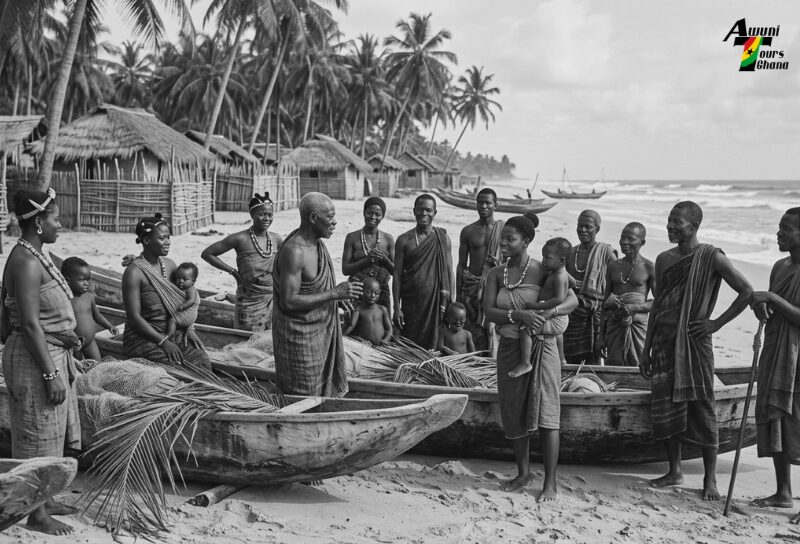
Accra Ghana (Ga People)

The Transatlantic Slave Trade and Urban Shifting

As European economic priorities shifted from gold extraction to agricultural cultivation in the Americas, the fortresses of Accra, Ghana were modified to support the transatlantic slave trade. Christiansborg Castle, Fort James, and Ussher Fort became high-security holding facilities for human beings captured from the interior regions. The architecture of these forts was optimized for incarceration, featuring underground holding chambers designed to store captives securely until slave ships anchored offshore.
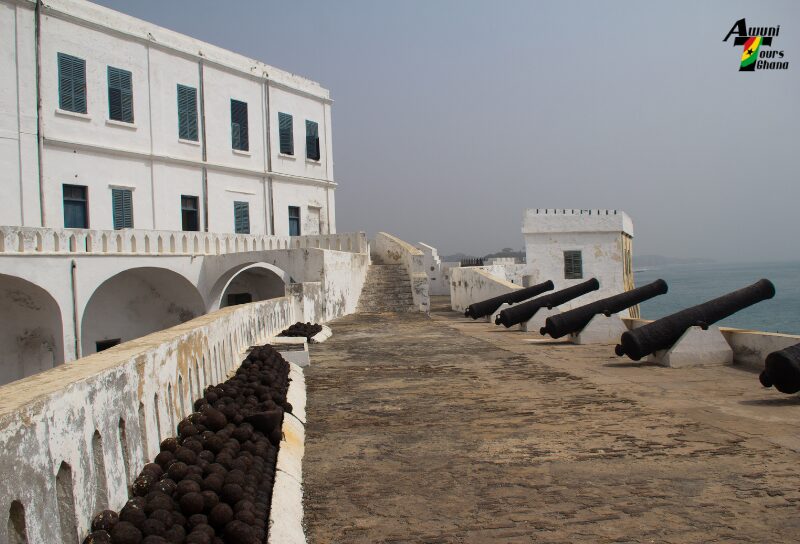
Accra Ghana

This period of forced migration and human trafficking permanently altered the demography and social structure of Accra, Ghana. The local economy became entangled with European trade goods, firearms, and currency introduced through the fortresses. Despite the violence and destabilization caused by the slave trade, the local population maintained its core social institutions, adapting their defensive strategies and political structures to survive the colonial pressures operating directly on their shoreline.
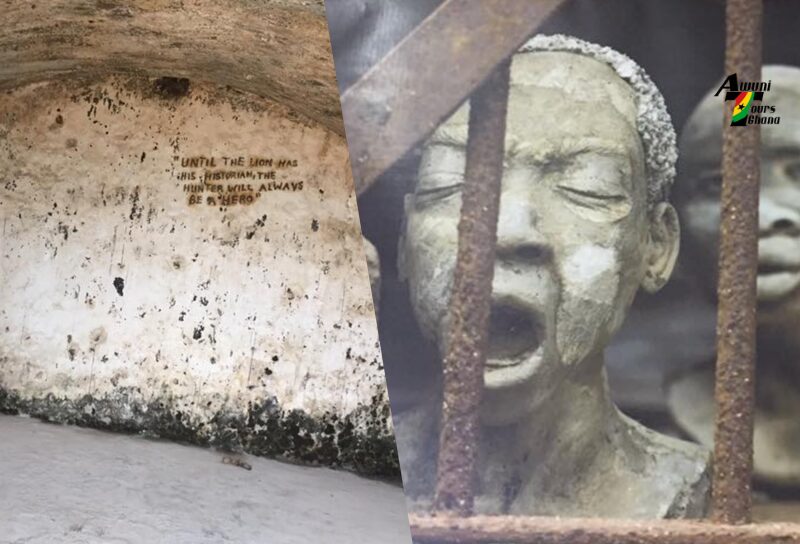
Accra Ghana

Colonial Consolidation and the Capital Shift

Following the abolition of the slave trade, Great Britain consolidated its authority over the coastal region, eventually establishing the Gold Coast colony. In 1877, the British colonial administration moved the institutional capital from Cape Coast to Accra, Ghana. The decision was driven by the drier climate of the area and the strategic advantage of having multiple established fortresses to house administrative offices.

The shift to a colonial capital introduced systematic segregation and deliberate urban planning choices. The British built distinct administrative zones, such as the Ministries and Victoriaborg, designed strictly for European officials, while leaving indigenous neighborhoods like Jamestown and Usshertown to develop with minimal infrastructural investment. This dual urban structure created a permanent disparity in local resource allocation, forcing the local working-class population to rely on self-organized community networks for basic survival.
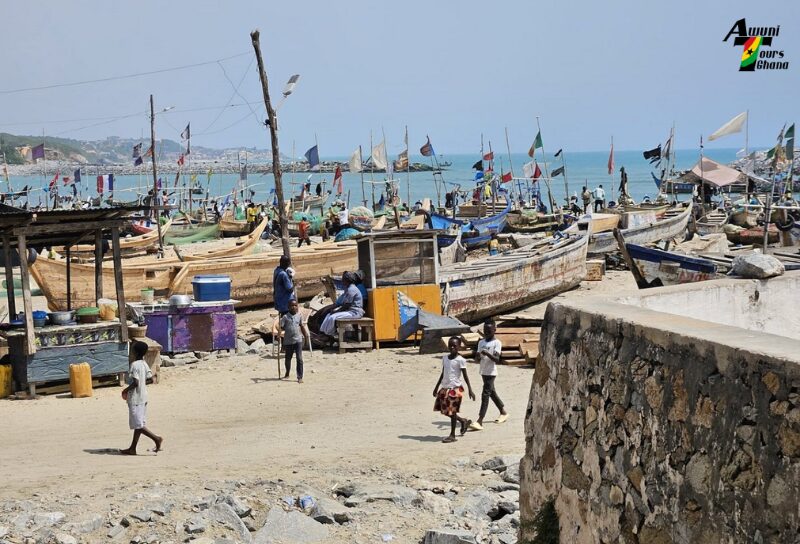
Accra Ghana

Kwame Nkrumah and the Independence Movement

By the mid-twentieth century, Accra, Ghana became the primary staging ground for anti-colonial political mobilization. The socioeconomic frustrations of returned World War II veterans, local traders, and educated professionals culminated in the 1948 Accra Riots, sparked by the colonial police firing on a peaceful march of veterans. This event accelerated the demand for immediate self-governance.
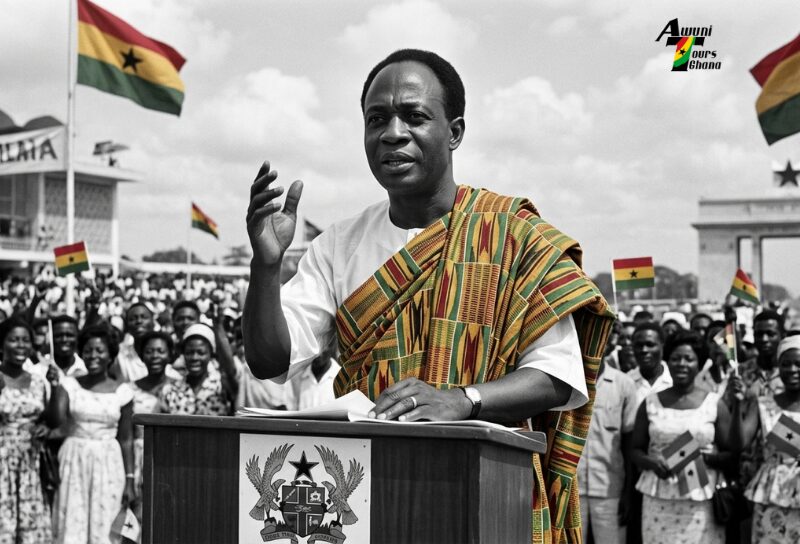
Kwame Nkurmah Accra Ghana

Kwame Nkrumah emerged as the central figure of this political transition, organizing the Convention People’s Party (CPP) within the urban centers of Accra, Ghana. When independence was achieved in 1957, Nkrumah utilized the capital city to project a new vision of industrialization and pan-African unity. He commissioned monumental infrastructure projects, including Independence Square (Black Star Square), the State House complex, and the Kwame Nkrumah Mausoleum park, permanently altering the physical landscape of the city to reflect a break from colonial subordination.
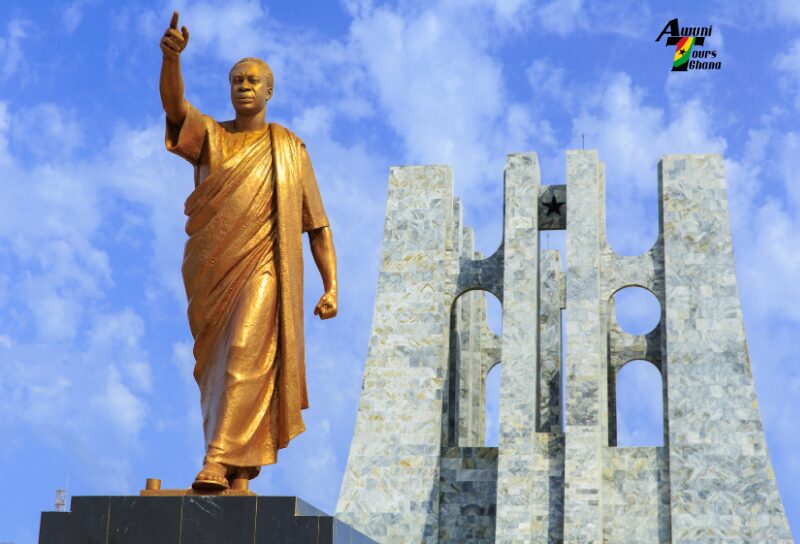
Kwame Nkrumah Accra Ghana

The Structure of the Modern Local Economy

The contemporary economy of Accra, Ghana is driven by a massive, highly organized informal sector operating alongside expanding financial and corporate industries. The primary engine of domestic trade in the city is the Makola Market. This vast commercial zone is managed predominantly by local market women who control the wholesale distribution, pricing, and supply chains for textiles, fresh agricultural produce, and manufactured goods across the region.
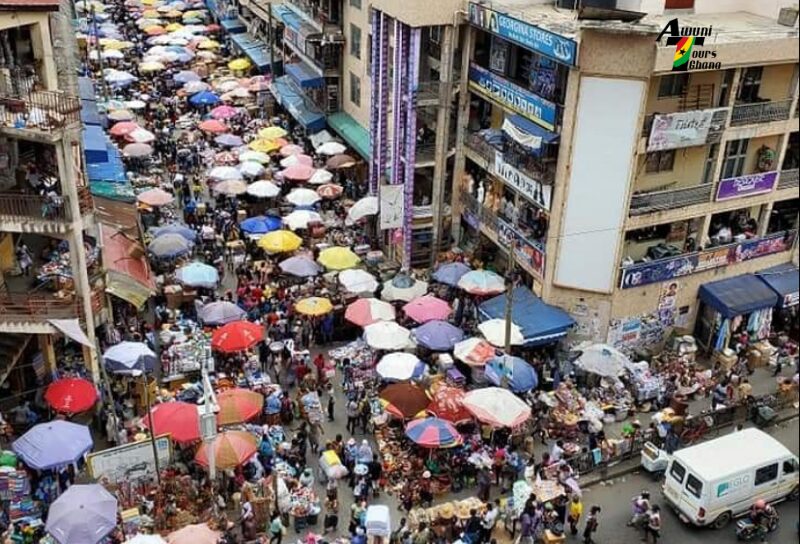
Accra Ghana Makola Market

Alongside traditional marketplaces, Accra, Ghana has developed into a regional center for corporate offices, real estate development, and technology firms, centered in neighborhoods like Airport Residential Area and Ridge. The city also handles significant international commerce through its proximity to the Tema industrial port. This dual economic structure means that while multinational corporations expand their presence in corporate high-rises, the daily survival of the majority of the population relies on artisan labor, petty trading, and informal transport networks like the trotros.

The Resilience and Social Fabric of the Population

The rapid population growth of Accra, Ghana has created severe urban challenges, including traffic congestion, housing deficits in informal settlements like Old Fadama, and strained municipal sanitation systems. However, the social fabric of the city survives due to the persistence of traditional communal structures. The Ga Mashie ancestral leadership still exercises significant authority over land disputes and cultural preservation within the historic core of the city.

The resilience of the population is demonstrated by their ability to self-regulate and maintain community safety nets without relying on state infrastructure. Neighborhood associations, market unions, and extended family networks manage local dispute resolutions and financial mutual-aid groups, known as susu. This collective organization ensures that despite economic volatility and inflation, working-class communities retain a high degree of social stability and mutual support.
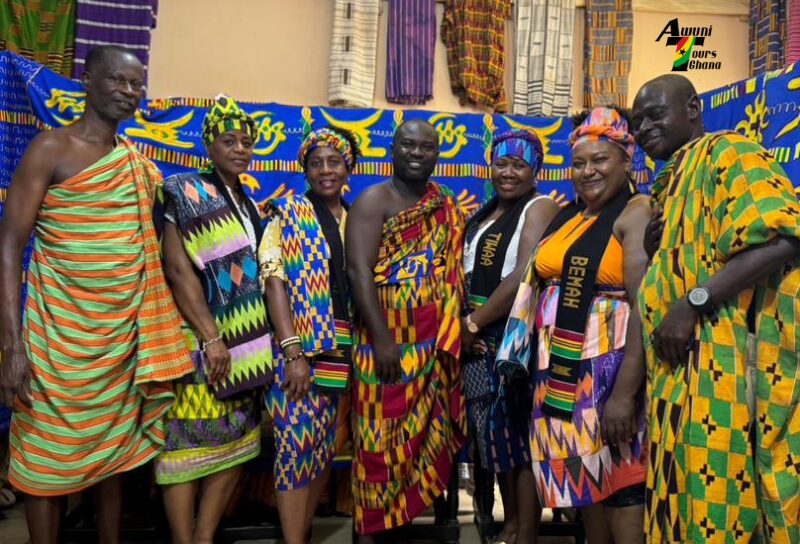
Accra, Ghana

Urban Expansion and Geographic Transformation

Modern Accra, Ghana has expanded far beyond its original colonial boundaries, transforming into an expansive metropolitan area that connects with neighboring municipal districts. Neighborhoods like East Legon, Cantonments, and Labone have become centers for high-end real estate, catering to expatriates, real estate investors, and the Ghanaian diaspora. This expansion has created a stark geographic contrast between affluent residential enclaves and dense, low-income quarters.

The physical growth of the metropolis requires ongoing infrastructure modifications, including the construction of complex highway flyovers, like the Kwame Nkrumah Interchange, to manage heavy traffic flows. These modern transport developments sit directly alongside historical landmarks, creating an urban landscape where twentieth-century political monuments, nineteenth-century colonial forts, and twenty-first-century commercial developments exist within the same space.

Strategic Importance of Accra, Ghana

Accra, Ghana remains a critical focal point for understanding the trajectory of urban West Africa. The city has evolved from an entry point for European colonial penetration into a self-governing metropolis that manages its historical trauma through active economic growth and cultural preservation. The endurance of its local marketplaces, the persistence of its traditional leadership, and the continuous adaptation of its working class ensure that the city functions as a stable center for regional commerce and political administration.

FAQs

Which indigenous group originally settled the coastline of Accra, Ghana, and how did European contact alter their local economy?

The Ga people originally settled the area, establishing agricultural and fishing communities. The arrival of European powers who built fortified trading posts shifted the local economy from regional barter to international maritime commerce as the Ga navigated complex trade alliances.

Why did the British colonial administration decide to move the capital of the Gold Coast colony from Cape Coast to Accra, Ghana in 1877?

The decision was driven by the drier regional climate of the area and the strategic advantage of utilizing multiple pre-existing European fortresses to house administrative offices.

How did the urban planning choices made by the British administration establish long-term economic disparities within the city?

The British implemented systematic segregation by building separate administrative and residential zones strictly for European officials, while leaving indigenous neighborhoods to develop with minimal infrastructural investment. This forced the working-class population to rely on self-organized community networks for survival.

What economic engine drives domestic trade in contemporary Accra, Ghana, and how does it operate alongside corporate industries?

The informal sector, specifically Makola Market, serves as the main engine of domestic trade and is managed by local market women who control the wholesale distribution and supply chains. This expansive informal economy operates directly alongside high-end real estate, technology firms, and corporate offices centered in affluent municipal districts.


Articles You May Like:

Ghana (Africa)

The Origins of Ghana (Africa): A Griot’s Tale

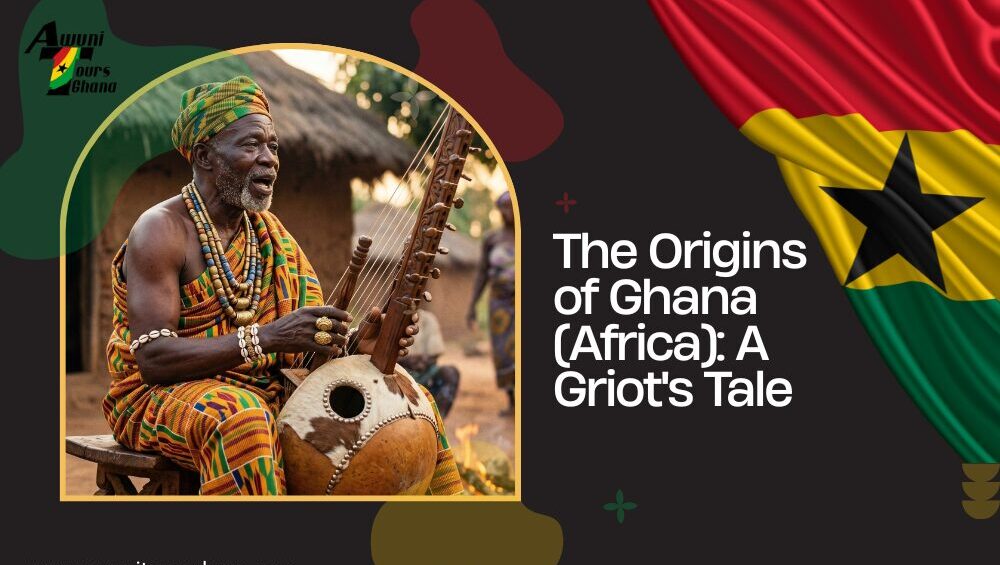
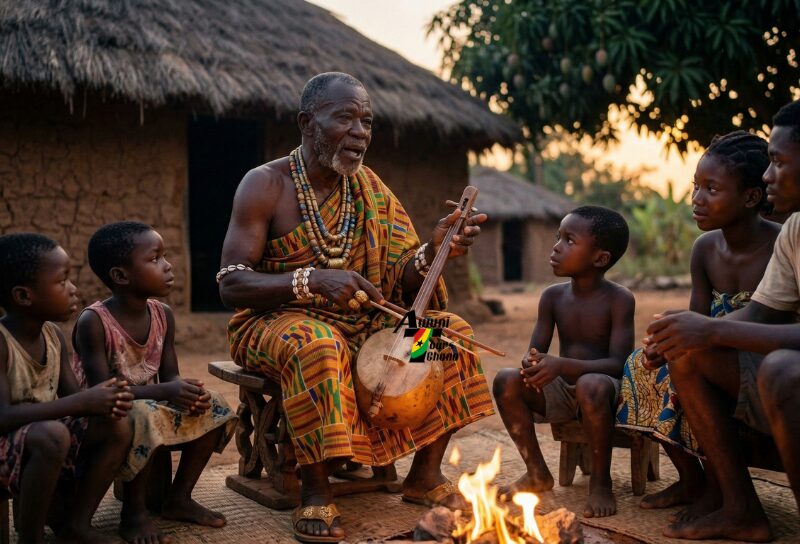
Ghana (Africa) origin is said to have been recorded in Soninke people’s oral tradition. The Soninke are a Mande-speaking group of Africans, believed to have migrated from Sudan tens of millennia c.e.  These ancient people passed down the history of the nation from one generation to the next by griots. Griots are essentially teachers and storytellers of the ancient kingdom of Ghana. 

Before the Soninke people had written language, every clan in all villages had a griot or more who mentally recorded their remarkable events. Griots were extremely significant to Soninke culture as they were the mental record keepers of the nation’s history, shaping the traditions and customs of the people. 

Ghana (Africa)

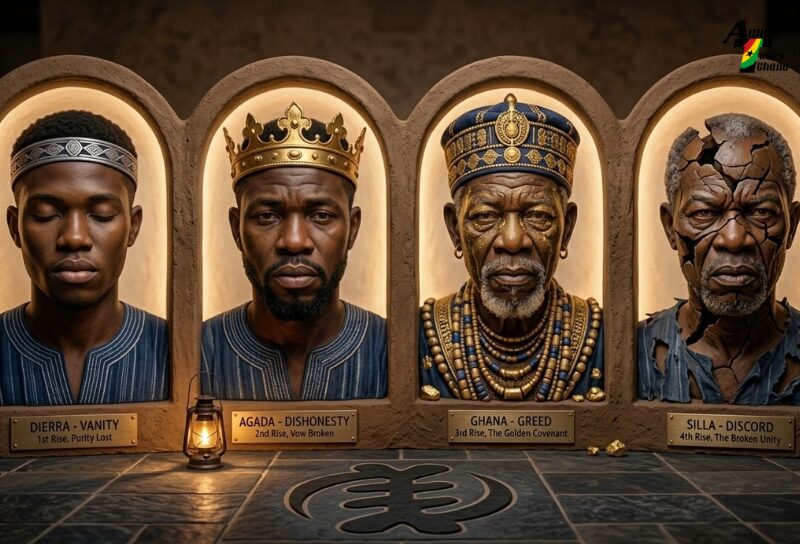
Soninke griots have described the origin of Ghana country in a collection of puis (poems) featured in the traditional oral story called The Dausi. This ancient story explains the rise and fall of the Soninke’s four powerful nations called Wagadu: Dierra, Agada, Ghana, and Silla. Ghana is the most famous kingdom of Wagadu, although Dierra is the first and was strongest of all. Regardless, Wagadu’s unwavering strength eventually According to The Dausi:

"Four times Wagadu rose. A great city, gleaming in the light of day. Four times Wagadu fell and disappeared from human sight. Once through vanity. Once through dishonesty. Once through greed. Once through discord. Four Times Wagadu changed her name. First she was Dierra, then Agada, then Ghana, then Silla. "
Ghana (Africa)

One pui (poem) in The Dausi accounts the first ruler of Wagadu named Dinga–said to have been a ruling man of “impeccable character.” Dinga was a warrior pivotal in maintaining the Soninke people’s peace, freedom from warring enemies. Furthermore, the nation was rich in gold, which was protected by the strength of the honorable Dinga.

Once the army was defeated, Dinga married the leader’s three daughters and had many children, comprising the different Soninke clans: Sisse, Kante, Sylla, and others. Some of these people migrated and settled in groups that established the cultures throughout ancient Ghana country.

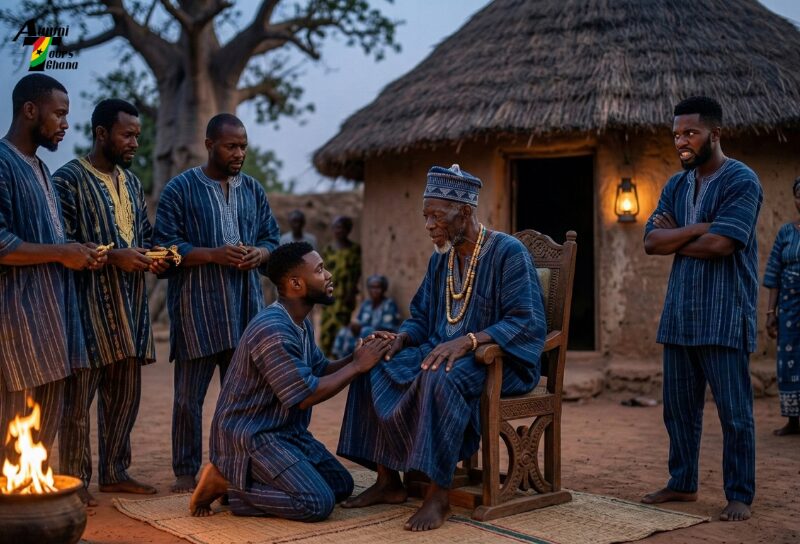
Dinga ruled for many centuries and as he aged, he became greatly concerned about who would take over the throne. Of course, he loved of all his children, but his favorite was his son, Khine, and if Dinga had his way, he’d have chosen Khine to succeed him. But it wasn’t his decision to appoint the throne. By Soninke customs, it was the king’s sister choice in their matrilineal society. 

Ghana (Africa)

Still, despite Dinga seeking ways to ensure Khine’s position as the nation’s next best leader, his other children were also determined to win his approval. So much so that Dinga’s other son, Dyabe, sought help from “relatives” in the royal Sisse tribe to win the blessing of kingship from Dinga. By unifying with family, Dyabe won his father’s favor and was promised kingship. This infuriated Khine who’d underestimated his father’s dire love for his other children. 

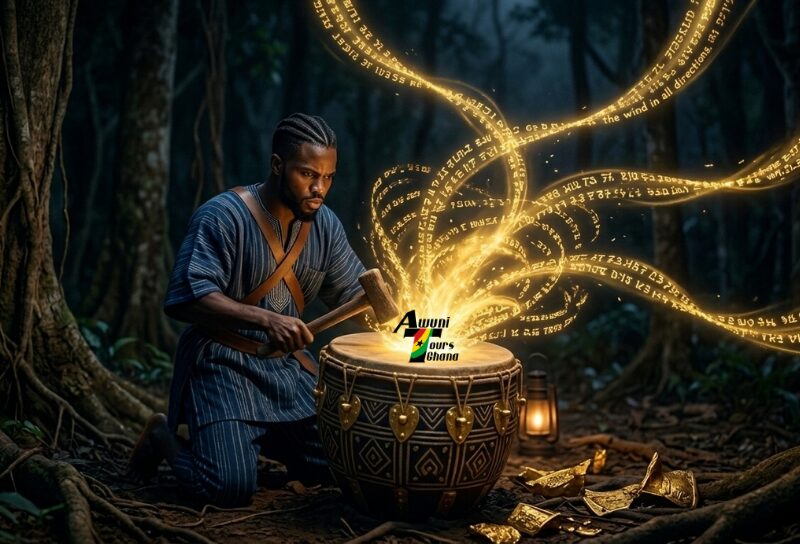
After Dinga died, Khine succeeded at forming an army strong enough to overthrow Dyabe who sought refuge in the the dense forests. One day while in hiding, he awakened to find a magical drum next to him. Using the instrument, he spoke words that swirled through the wind in all directions until the messages reached four military commanders. With the promise of government positions, the commanders gathered the troops and prepared to battle for Dyabe.

Ghana (Africa)

Dyabe’s newly formed powerful army marched into the capital city and fought Khine’s army ferociously, but still struggled to overthrow them. After a tough fight, Dyabe was again forced to retreat to even worst conditions than before. Exhausted and defeated, Dyabe encountered a seven-headed snake-god called Wagadu-Bida. The god serpent offered him a chance to defeat Khine under the condition that a virgin be sacrificed to it each year to celebrate the nation’s victory. 

By some accounts, Dyabe agreed to the terms without even knowing them, but others claim he was well aware of the sacrifice he’d curse upon the Soninke people. Regardless, as promised, Wagadu-Bida granted success over Khine and Dyabe became Kaya Magha–meaning “king of gold”–ruler of Wagadu.  The Dausi says:

[Dinga] was given the title Kaya Magha…because he ruled over a vast and gold-rich kingdom, protected by an invisible barrier that kept out invaders. As promised, Dyabe and his people prospered. He organized the kingdom according to a caste system. The nobility were ranked at he top. At the bottom of the social order were slaves. The royal clan was the Sisse. The Drame, Kante, and Sylla clans provided the kingdom's artisans: metalworkers, blacksmiths, and gold- and silversmiths, as well as its griots, farmers, fishermen, herders, leather-workers and soldiers.

As king, Dyabe didn’t take any chances to betray Magadu-Bida’s annual sacrifice, so he and his successors spilled the blood of virgins annually as an appreciation gift to the serpent god. However, they failed to anticipate the birth of a warrior named Amadou the Taciturn, who would possess a love so strong for his virgin fiance named Sia. Unfortunately, she was the annual selection to be killed for the Snake-god. Determined to rescue his love, Amadou would change the course of history for the Soninke.

Ghana Africa

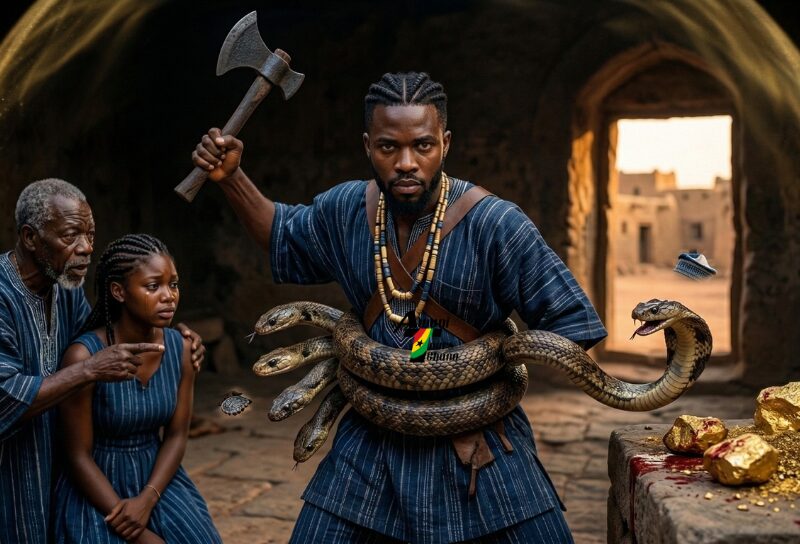
After forcing a priest of Bida to confess the key to destroying Magadu-Bida is chopping all seven of its’ heads off, Amadou set out to Bida’s holy grove on a campaign of annihilation.  He patiently waited to spot Sia and once he did, the attack was on. The first unexpecting serpent wasn’t prepared for defense, and was instantly beheaded.

One by one, Amadou chopped off a serpent’s head fueled solely by love. By the time he reached the final head, the serpent managed to coil around Amadou’s strong body, choking the spirit from him. But to no avail, Amadou broke free and decapitated the final piece of Magadu-Bida. As he basked in victory, the serpent hissed the following curse on the Soninke people:

For seven years, seven months, and seven days, Ghana will receive neither rains of water nor rains of gold. 

With the death of the Snake-god, Ghana died as well. The people no longer maintained divine protection and fell into decline, ultimately being overrun by invading enemies.

The Power of the Social Contract in Ghana (Africa)

The story illustrates that a nation’s strength is built on agreements. The “Snake-god” Wagadu-Bida represents the sacrifice required to maintain a superpower. Whether the sacrifice is literal or symbolic of the taxes, labor, and laws citizens give to their state, the message is clear: prosperity (the “rain of gold”) is never free. It requires a collective commitment to a shared, often difficult, system.

Amadou the Taciturn represents the “Hero’s Dilemma.” His love for Sia is noble and pure, but his act of individual heroism is what ultimately destroys the state. By choosing his personal happiness over the “cursed” national contract, he saves his bride but dooms his people. It serves as a warning about how individual desires, however justified, can disrupt the delicate balance that keeps a society functioning.

The rivalry between the brothers Khine and Dyabe highlights that the greatest threat to a kingdom is often internal division, not external enemies. The fact that Dyabe had to seek “magical” and “divine” help because of family infighting shows that when a leadership structure fractures, leaders often make desperate, high-stakes deals (the “Golden Covenant”) that have long-term consequences for future generations.

By framing the story around griots, the narrative emphasizes that a nation exists only as long as its story is told. The “death” of Ghana wasn’t just the lack of rain; it was the loss of the “divine protection” provided by their customs and traditions. When the social order broke down, the mental records (the oral tradition) became the only thing that survived the physical destruction of the empire.

The serpent’s curse – seven years of drought – is a metaphor for ecological or economic collapse. It suggests that when the “spirit” of a nation is choked out by greed, war, or the breaking of sacred laws, the land itself will stop providing.

Ghana (Africa)

The Living Legacy: Ancient Values in Modern Ghana (Africa)

The story of Wagadu and the fall of the ancient Ghana Empire serves as more than just a historical account; it is a foundational blueprint for the values that define Ghanaian society today. Though the physical borders of the ancient kingdom shifted, the “soul” of the story remains woven into the modern national identity.

The Philosophy of Sacrifice: The legend teaches that prosperity is a collective effort. Modern Ghanaian communalism—the idea that “I am because we are”—mirrors the ancient belief that the well-being of the many often requires the discipline of the individual.

Artisans as Guardians of Culture: The specific mention of the Drame, Kante, and Sylla clans as the nation’s metalworkers and weavers lives on in the craftsmanship of modern Ghana. From the intricate symbols of Adinkra cloth to the world-renowned Kente weaving, these crafts are still seen as visual “poems” that tell the story of a people’s resilience.

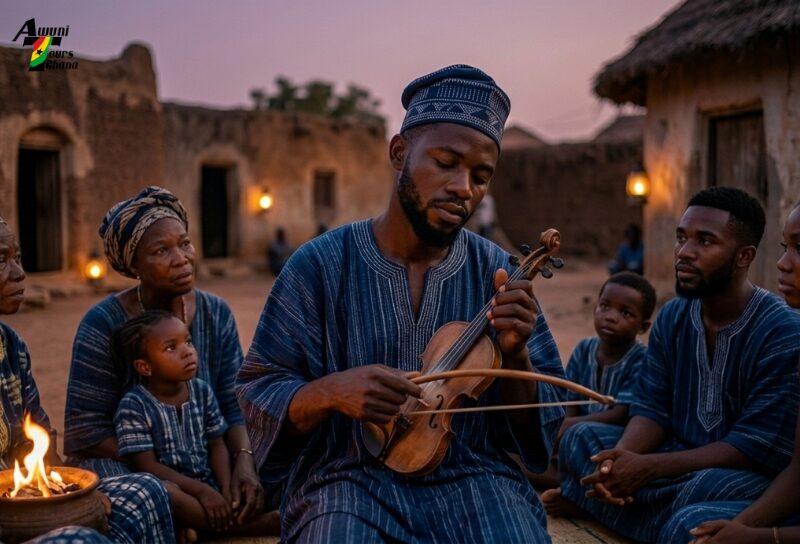
The Weight of Oral Tradition: Just as the Soninke griots were the “mental record keepers,” modern Ghana maintains a profound respect for elders and oral history. In many communities, the Linguist (Okyeame) still serves as the vital bridge between the chief and the people, ensuring that history and protocol are preserved with the same “impeccable character” attributed to Dinga.

The Matrilineal Foundation: The conflict over the throne in The Dausi reminds us that it was the king’s sister who held the power of choice. This matrilineal influence remains a cornerstone of the Akan people in Ghana today, where inheritance and royal lineage are often traced through the mother’s side, honoring the sacred role of women in sustaining the nation.

Ghana (Africa)

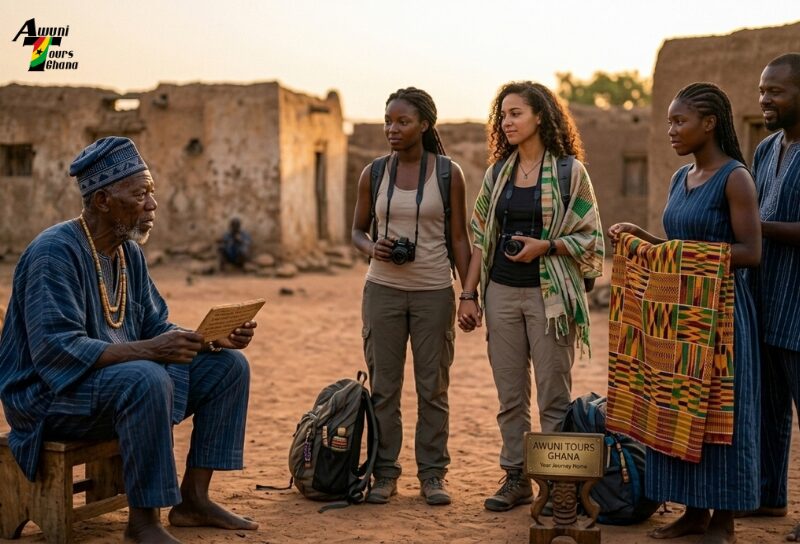
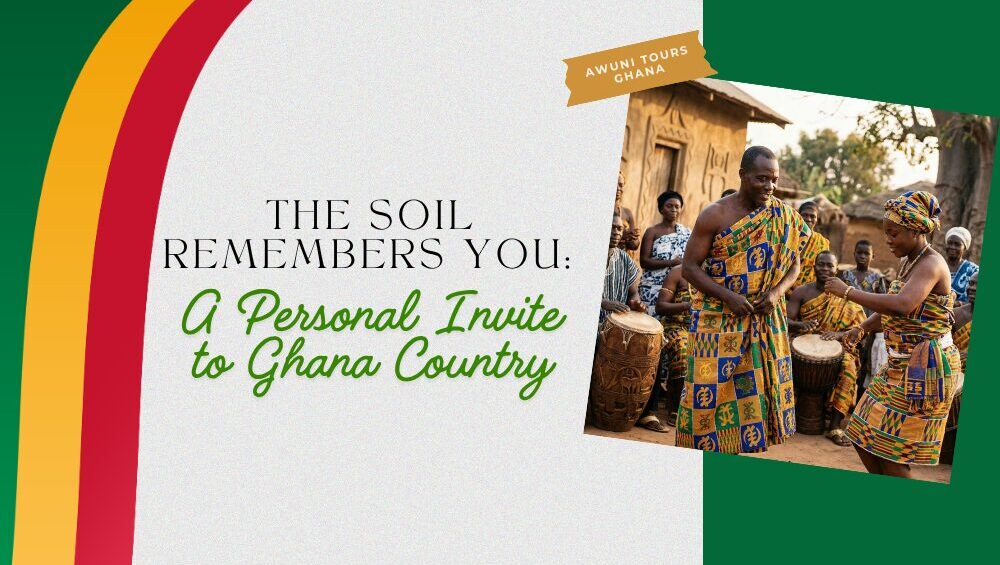
The story of the ancient Ghana Empire isn’t just a chapter in a history book—it is a living, breathing narrative that continues to pulse through the streets of Accra, the ancient walls of Cape Coast, and the royal courts of the Ashanti. When you travel with Awuni Tours Ghana, you aren’t just a spectator of this history; you are invited to walk within it.

FAQs

Who were the mental record keepers responsible for passing down the history of the ancient kingdom of Ghana, and what is the name of the traditional oral story that contains the country’s origin poems?

The mental record keepers were the griots, who served as teachers and storytellers before the Soninke people had a written language. The traditional oral story that contains these origin poems (puis) is called The Dausi.

According to Soninke customs and their matrilineal society, who held the power of choice to appoint the successor to the king’s throne?

The king’s sister held the power of choice to appoint the successor to the throne, which is why King Dinga could not simply choose his favorite son, Khine, to succeed him.

What condition did the seven-headed snake-god, Wagadu-Bida, demand from Dyabe in exchange for granting him military success over Khine, and what curse did it hiss upon its death?

The snake-god required that a virgin be sacrificed to it each year to celebrate the nation’s victory. Upon its decapitation by Amadou, the serpent cursed the Soninke people by declaring that Ghana would receive neither rains of water nor rains of gold for seven years, seven months, and seven days.

How does the matrilineal conflict over the throne featured in The Dausi connect to the cultural foundations of modern Ghanaian society today?

The matrilineal influence remains a cornerstone of the Akan people in modern Ghana, where royal lineage and inheritance are still traced through the mother’s side, honoring the sacred role of women in sustaining the nation just as the king’s sister did in the ancient story.

Articles You May Like:

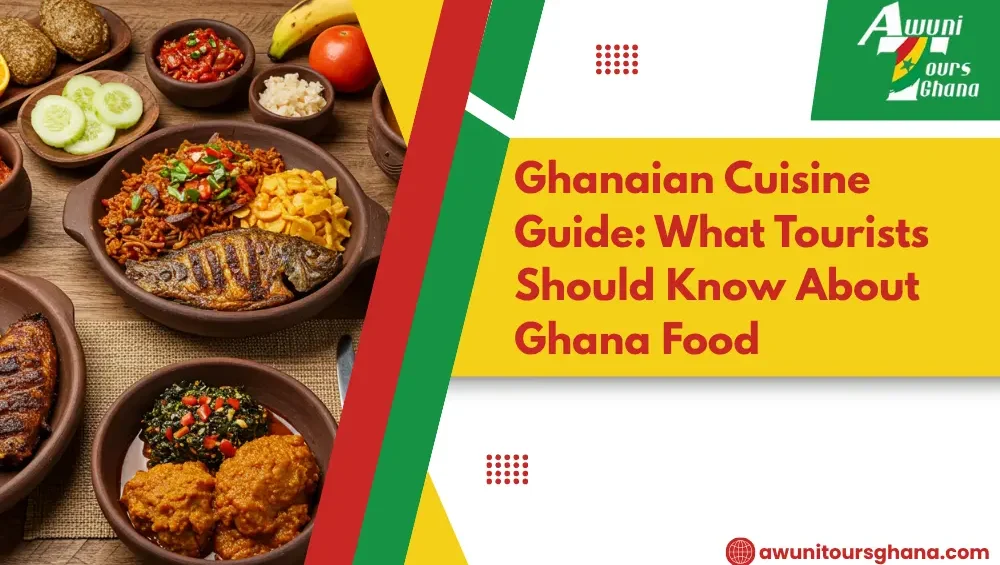
Ghanaian Cuisine Guide: What Tourists Should Know About Ghana Food

Ghanaian Cuisine Guide: What Tourists Should Know About Ghana Food

Ghanaian cuisine is more than just food it’s a window into the country’s culture, hospitality, and traditions. As a tourist visiting Ghana, understanding what do people from Ghana eat, how, and where people eat will make your experience richer and more meaningful. From spicy stews to fermented doughs, from street snacks to tropical drinks, Ghanaian food is diverse, delicious, and worth exploring.

This Ghanaian Cuisine Guide will walk you through the essential foods, customs, and culinary experiences to know before your journey begins.

Ghanaian Cuisine Guide: Top Things Tourists Should Know About Ghanaian Food

Food is a big part of daily life in Ghana, and understanding it adds a whole new layer to your trip. This Ghanaian Cuisine Guide highlights what tourists should know about local dishes, ingredients, and how meals are enjoyed across the country.

1. Ghanaian Cuisine Is Based on Local, Seasonal Ingredients

Traditional Ghanaian food is built around fresh, locally grown ingredients. Staples like cassava, maize, plantains, yams, and rice form the base of many dishes. Protein sources range from fish (especially in coastal areas) to goat, beef, chicken, snails, and beans. You’ll also see plenty of vegetables like tomatoes, garden eggs (local eggplant), okra, and cocoyam leaves.

Ghanaian Cuisine Guide: Ghanaian Cuisine Is Based on Local, Seasonal Ingredients

Spices and seasoning are central expect bold flavours from ginger, garlic, onion, chili, and local spice blends.

2. Meals Often Include a Starch + Soup or Stew

Most typical food of Ghana consists of a starch (like fufu, banku, rice, or kenkey) served with a rich soup or stew. These combinations vary by region and are often eaten by hand using the right hand only.

Popular pairings include:

  • Fufu with groundnut soup
  • Banku with okra stew or grilled tilapia
  • Kenkey with fried fish and shito
  • Jollof rice with chicken or goat stew
Meals Often Include a Starch + Soup or Stew.

3. Popular Ghanaian Dishes You Should Try

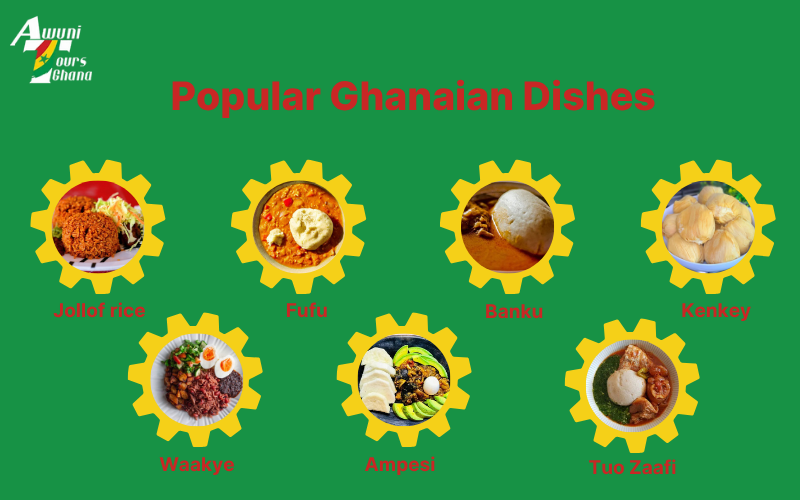
Here are some of the most common and beloved dishes in Ghana:

Popular Ghanaian Dishes

Jollof Rice

Spiced tomato rice, usually served with grilled meat or fish. Every household has their own version.

Fufu

Made by pounding boiled cassava, yam, or plantain into a smooth dough. Served with soups like light soup, palm nut soup, or abenkwan (palm oil-based).

Banku

A sour dough ball made from fermented corn and cassava. Eaten with pepper sauce and tilapia or okra stew.

Kenkey

Similar to banku but wrapped in corn husks and steamed. Pairs well with fried fish and spicy condiments.

Waakye

A hearty rice-and-bean dish, typically served with boiled eggs, spaghetti, gari, stew, and sometimes meat or fish.

Ampesi

Boiled yam or plantain, served with palava sauce made from cocoyam leaves and often egusi (melon seeds).

Tuo Zaafi

A soft maize dish from Northern Ghana, served with green soup made from ayoyo or okra.

4. Street Food Culture Is Big in Ghana

Ghana street food is a major part of daily life. It’s affordable, tasty, and everywhere from major cities like Accra and Kumasi to small towns.

Street Food Culture Is Big in Ghana

Look out for:

  • Kelewele – Spiced fried plantains
  • Bofrot – Sweet fried dough balls
  • Chinchinga – Grilled meat skewers
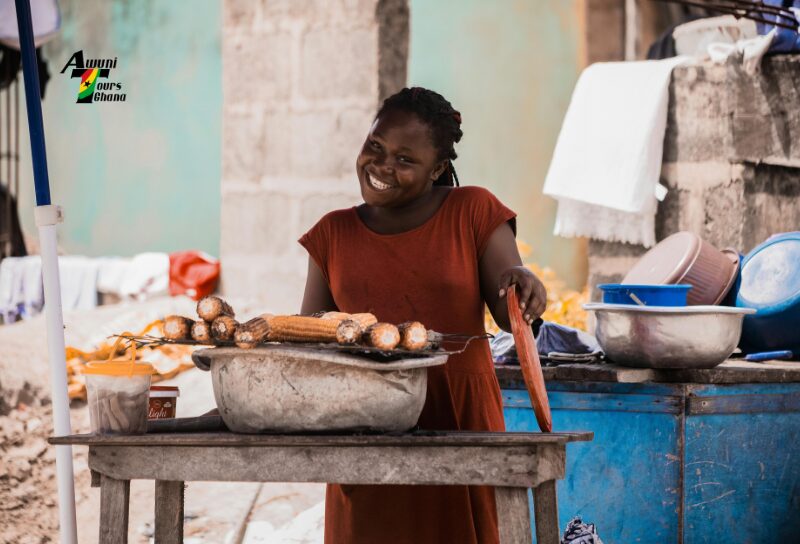
  • Roasted corn and coconut
  • Fried yam and fish
  • Meat pies – Pastries filled with minced meat
  • Agbeli Kaklo – Fried cassava balls

You’ll find these in night markets, roadside stalls, or sold by vendors during traffic stops.

5. Ghana Has Regional Food Differences

Different parts of Ghana have unique culinary traditions. As you travel, try these regional specialties:

Northern Ghana

  • Tuo Zaafi and Tubani (steamed bean cakes)
  • Millet-based porridges like koko and pito

Volta Region

  • Akple (cornmeal dough) with fetri detsi (okra or tomato-based soup)

Ashanti Region

  • Fufu with abunuabunu (a green soup made from kontomire and snails)

Coastal Regions

  • Seafood-based dishes like etor (mashed yam with palm oil and eggs) and octopus stew

Exploring food by region offers an authentic look at Ghana’s cultural diversity.

6. Local Drinks and Tropical Fruits Are Part of the Experience

Ghana’s tropical climate means fresh fruit and natural beverages are always in season. They’re often served with meals or as standalone refreshments.

Local Drinks and Tropical Fruits Are Part of the Experience

Popular Drinks:

  • Sobolo – Made from hibiscus petals, ginger, and cloves
  • Palm Wine – Slightly alcoholic sap from palm trees
  • Pito – Millet-based beer, usually homemade
  • Lamugin – A sweet, spicy drink made with rice and ginger
  • Brukina – A thick drink made from millet and milk
  • Coconut water – Sold fresh on the roadside

Local Fruits:

  • Mangoes, papayas, pineapples, bananas, avocados
  • Watermelons, guavas, and African star apples (alasa)

7. Dining Customs and Etiquette

Eating in Ghana is often communal, warm, and respectful. Keep these cultural norms in mind:

  • Use your right hand when eating or receiving food. The left hand is considered impolite.
  • Handwashing before meals is customary, especially when eating without utensils.
  • Food is shared—sometimes from a communal bowl, especially in family settings.
  • Ghanaians are hospitable—if you’re invited to eat, it’s polite to accept or try a little.
  • Meals may be spicy—ask for less pepper if you’re sensitive to heat.

8. Where Tourists Can Try Ghanaian Food

You don’t need to visit a fancy restaurant to enjoy Ghanaian cuisine. In fact, some of the best Ghana African food is found in:

  • Chop bars – Casual local eateries
  • Roadside stalls – Especially for snacks and street food
  • Home-cooked meals – If you’re lucky enough to be invited
  • Modern restaurants – Especially in Accra, with menus for all tastes

Ask locals for recommendations—they’re usually more than happy to point you toward their favourite food joints.

From spicy stews to fermented doughs, from street snacks to tropical drinks, Ghanaian food is diverse, delicious, and worth exploring. If you want to experience it firsthand, check out our Ghanaian food tasting tour for a guided culinary adventure.

Ghanaian cuisine is diverse, flavour-packed, and deeply rooted in the country’s history and culture. As a tourist, exploring the food is one of the best ways to connect with local people, customs, and traditions.

So don’t hold back—try the fufu, sip the sobolo, and sample the kelewele. Whether you’re at a street stall or a family table, Ghanaian food offers warmth, flavour, and memories you’ll never forget.

FAQs

Who serves the best Ghana street food in Accra?

Some of the best Ghana street food in Accra can be found at Osu Night Market, Madina Market, and Kaneshie Market, as well as from roadside vendors near busy intersections.

What spices are used in Ghanaian food?

Common spices include ginger, garlic, chili pepper, onions, anise seed, nutmeg, and local spice blends like suya and dawadawa.

What makes Ghanaian street food unique?

It’s freshly prepared, widely available, inexpensive, and deeply tied to local culture. Dishes like kelewele, red red, and grilled plantains are everyday favorites.

Why do Ghanaians eat with their hands?

Eating with the right hand is a cultural norm in Ghana, especially for traditional dishes like fufu. It creates a more tactile, communal dining experience.

Ghana Culture and Traditions

9 Facts About Ghana Culture and Traditions

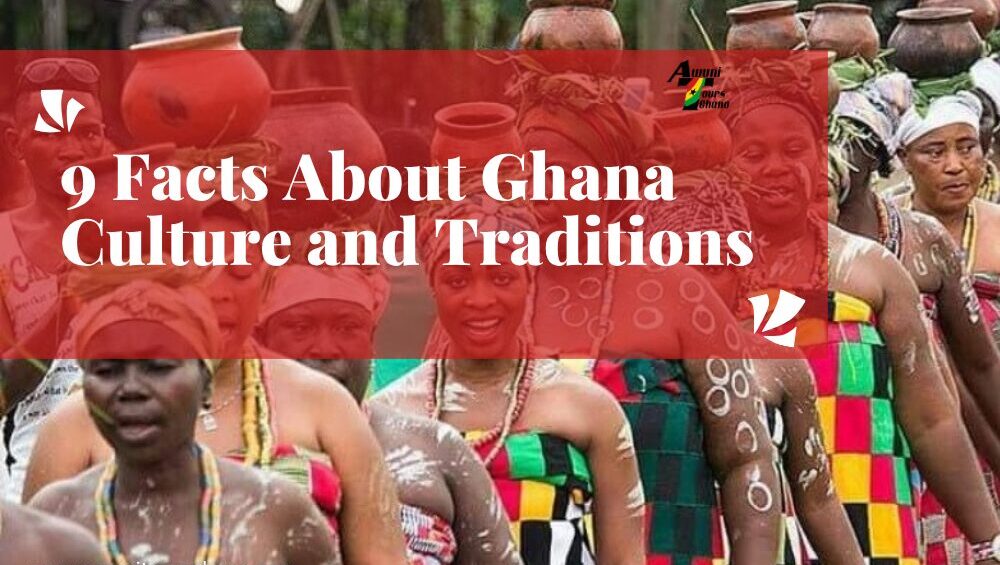
Ghana culture is a brilliant masterclass in how human beings are meant to connect, rooted in a deep sense of shared identity and traditions where no person is ever left to walk or live in isolation. It is an everyday philosophy that values presence over pacing and people over schedules. When you step into this way of living, you quickly realize it isn’t about visiting a destination; it is about learning a whole new way of being human.

Ghanaian traditions are not just about the past; they are part of everyday life across towns, cities, and villages. From the way people dress, greet each other, and celebrate, to how they cook and care for their families, Ghana culture is full of meaning, respect, and community values.

Whether you’re planning to visit during Ghana holidays or just studying Africa culture and tradition, understanding Ghanaian culture and traditions will help you connect with the people and appreciate their way of life.

Ghana Culture and Traditions

What Should You Know About Ghana Culture and Traditions?

Ghana culture includes many traditions and customs that people still follow every day.

1- Respect in Ghana Culture

One important part of Ghana culture and tradition is showing respect, especially to elders and leaders. In Ghana, it is common for people to greet one another warmly before starting any conversation. Greetings show good character and are often done with a smile and a handshake using the right hand.

Respect in Ghanaian Culture

When speaking to older people, they usually add respectful titles like “Auntie,” “Uncle,” or say “Sir” or “Madam.” Among some ethnic groups, like the Akan, younger people also slightly bend their knees when greeting someone older. These simple actions show how much value Ghanaians place on politeness and tradition.

2- Family Culture

In Ghana culture and customs, the family is the heart of society. It’s not just about parents and children, extended family and even neighbors are considered important.

Most Ghanaians live in strong family networks, where grandparents, cousins, aunties, and uncles all help raise children and support each other. Family ceremonies like births, marriages, and funerals are shared events where everyone comes together to show love and support.

Ghana Family Culture

In many communities, the entire village acts like one big family. This strong family connection is a powerful part of Ghanaian culture.

If you want to participate in such meaningful experiences, take a look at our tour packages, which offer authentic opportunities to connect with local communities.

3- Traditional Clothing

One of the most beautiful things about Ghana culture is its traditional dress. On special occasions and Ghana holidays, people proudly wear their best cultural outfits.

The most famous fabric is Kente, a colorful, handwoven cloth full of traditional symbols and meanings. It is worn by both men and women, especially during festivals and royal events.

Ghana Traditional Clothing

Women often wear “slit and kaba,” a wrap skirt with a matching blouse made from local fabric, while men may wear smocks or wrap a cloth over one shoulder in the Ashanti style. Traditional Ghanaian clothing shows pride in heritage and connects people to their ancestors.

4- Naming Tradition

Names in Ghana carry powerful meaning and are often tied to the day of the week a child is born. For example, a girl born on Monday is called Adwoa, and a boy is called Kwadwo. Each name has a spiritual meaning and is believed to describe a person’s character.

Ghanaian Naming Tradition

Names may also be given based on family history, special events, or in honor of ancestors. This unique naming system is a strong part of the culture of Ghana, passed down from one generation to the next.

5- Festivals and Ghana Holidays

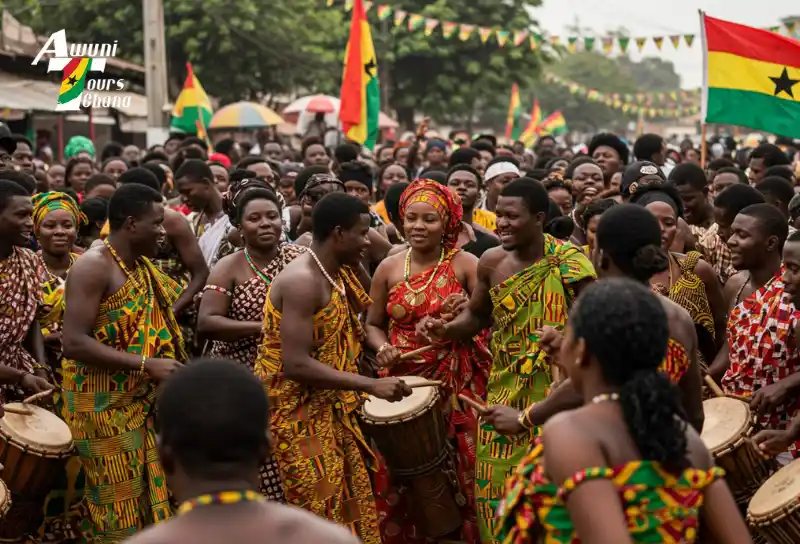
Festivals are an exciting and colorful part of Ghana culture. Every ethnic group in Ghana has its own festivals that are celebrated with dancing, drumming, and traditional clothing. Some well-known Ghana holidays and festivals include:

  • Homowo (by the Ga people): Celebrates the end of hunger and welcomes a good harvest.
  • Aboakyer: A lively deer-hunting festival to honour the gods.
  • Akwasidae (by the Ashanti): Held every six weeks to remember ancestors and honour chiefs.

These Ghana holidays are not just for fun; they help to pass on values, bring families together, and keep traditions alive.

Festivals and Ghana Holidays

Many of these festivals take place in some of the most vibrant cities and scenic areas in the country, such as Accra, Kumasi, and Cape Coast. You can explore more in this guide on the best places to visit in Ghana.

6- Traditional Beliefs

Traditional beliefs also play an important role in this culture. According to the Embassy of Ghana, 71% of the population is Christian, while 17% are Muslim. But they still follow ancestral customs and practices. In some communities, people visit shrines or traditional priests, also known as fetish priests, to ask for healing, protection, or advice.

Traditional Beliefs of Ghana

Many believe in the power of ancestral spirits who guide and protect their families. Sacred trees, rivers, and rocks are also respected as spiritual places. These practices are an important part of Ghana culture, which shows a deep connection between the natural world and the spiritual world.

7- Food and Eating

Ghanaian food is rich, flavorful, and full of variety. It reflects the culture of Ghana through ingredients, cooking styles, and customs.

Popular dishes include:

  • Fufu: It is made by pounding cassava and plantain and eaten with light soup or palm nut soup.
  • Banku: It is made from fermented corn dough and is usually served with tilapia and pepper sauce.
  • Waakye: It is a mix of rice and beans, served with stew, boiled eggs, and fried plantain.
  • Jollof rice: A favorite in many West African countries, including Ghana.
Ghanaian food

Traditionally, Ghanaians eat with their right hand, not with spoons or forks. Eating together is a sign of love and respect in Ghanaian culture.

8- Music and Dance

Traditional music in Ghana uses local instruments like drums, bells, and flutes. These instruments are used during festivals, religious ceremonies, and social events.

Ghana Music and Dance

One popular dance is the Adowa, performed mostly by the Ashanti people. It is a graceful dance, especially by women, where every hand movement carries a meaning.

Other dances like Kpanlogo, popular with the Ga people, are energetic and often involve group performances. Through music and dance, Ghanaians tell stories, celebrate events, and express their emotions. These traditions keep the culture of Ghana alive and joyful.

9- Social behavior

Cultural values also shape daily customs in Ghana. People are taught from a young age to greet others, especially elders, before starting any conversation. It is important to use the right hand when giving something, whether it’s money, food, or a handshake.

Social behaviour of ghana africa people

Children are expected to show respect, help older people, and behave politely in public. These everyday habits may seem small, but they are an important part of Ghanaian culture and show the kindness and discipline that Ghanaians are known for.

Ghanaian culture and traditions are full of life, meaning, and deep respect for family, community, and history. From the unique naming system and colorful clothing to the vibrant festivals, traditional foods, and respectful customs, every part of daily life in Ghana reflects its rich cultural roots. These customs are not just practices from the past; they are still honored and followed today across the country.

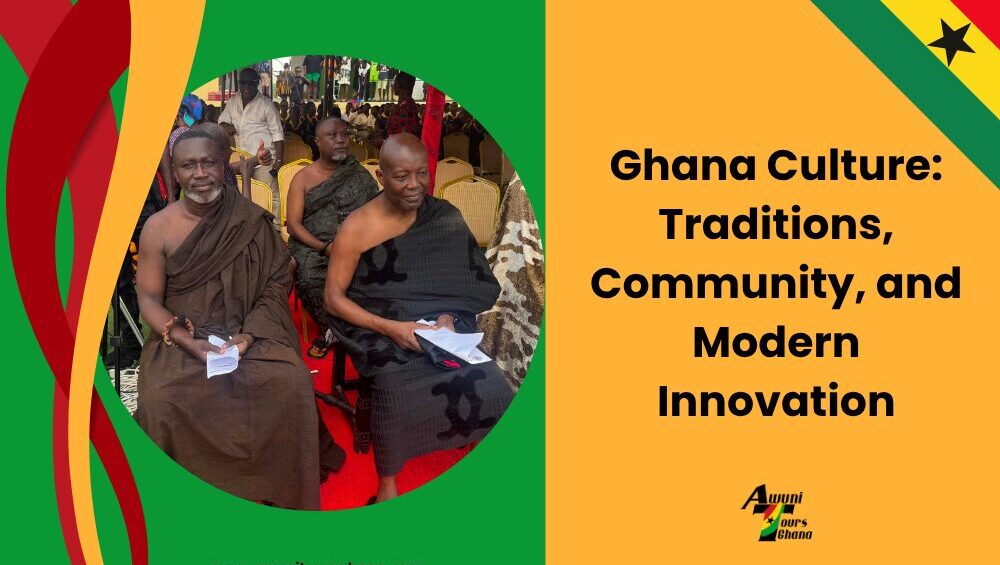
History here is not treated as a series of dead dates from the past; it is a vital, guiding presence in the modern world. You see it in the fierce devotion to preserving lineage through oral history, and the immense honor given to traditional leadership during festivals, where chiefs are carried through crowds beneath vibrant, spinning umbrellas.

This deep reverence for continuity shapes the entire worldview of the community. There is an unwavering understanding that every action taken today honors the generations who came before and builds the foundation for those who will follow. It gives daily life a beautiful, grounded sense of purpose, reminding anyone who experiences it that we are all part of a much larger, enduring story.

FAQs

Are Ghanaian festivals open to visitors?

Yes, many festivals welcome both locals and visitors. They offer a great way to experience Ghanaian culture through music, dance, traditional dress, and food.

Is religion important in Ghana culture?

Yes, most Ghanaians are religious, mainly Christian or Muslim, but traditional spiritual beliefs and customs are also practiced and respected in many communities.

What are some important Ghanaian traditions?

Important traditions include naming children by the day of the week they were born, honoring ancestors, wearing traditional attire, and celebrating festivals like Homowo and Aboakyer.

How is family important in Ghana culture?

Family is central to Ghanaian life. It includes extended relatives, and family members support one another during celebrations, challenges, and daily life.

ARTICLES YOU MAY LIKE: