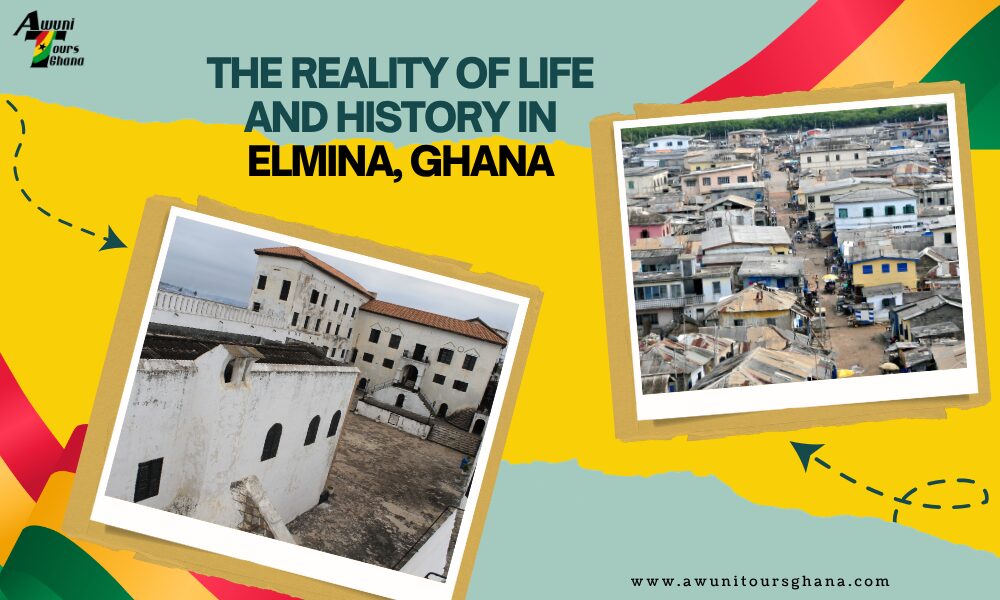
Elmina, Ghana does not function like a museum, even though centuries of global history are anchored to its coastline. It is a dense, working-class fishing port where structural economic challenges and historical trauma exist alongside the daily grind of making a living from the ocean. To look at Elmina, Ghana simply as a tourist stop is to miss the point entirely. The town runs on a highly competitive marine economy and a social structure that has survived multiple colonial occupations, systemic exploitation, and modern environmental pressures.
The Foundation and Origin of Elmina, Ghana
Long before any European ships anchored off the coast, the indigenous local population established a settlement known as Anomansah, which translates directly to an inexhaustible drink. The name originated because of a reliable freshwater stream on the peninsula, which served as a critical resource situated between a salty coastal lagoon and the sea.
Local oral tradition attributes the discovery of this stream to a hunter named Kwaa Amankwaa during a severe regional drought, whose exclamation of discovery, “Menya,” eventually developed into Edinaman, the official traditional name of the state.
When Portuguese traders arrived on the coast in 1482, their immediate focus was extracting the heavy volume of gold possessed by the local population. They designated the territory Costa da Mina, meaning the gold coast, which over centuries of linguistic adaptation by subsequent colonial powers and locals became Elmina, Ghana. Today, the town’s early identity remains embedded in its geography, where ancient Fante governance structures operate directly alongside the physical infrastructure left behind by centuries of foreign occupation.
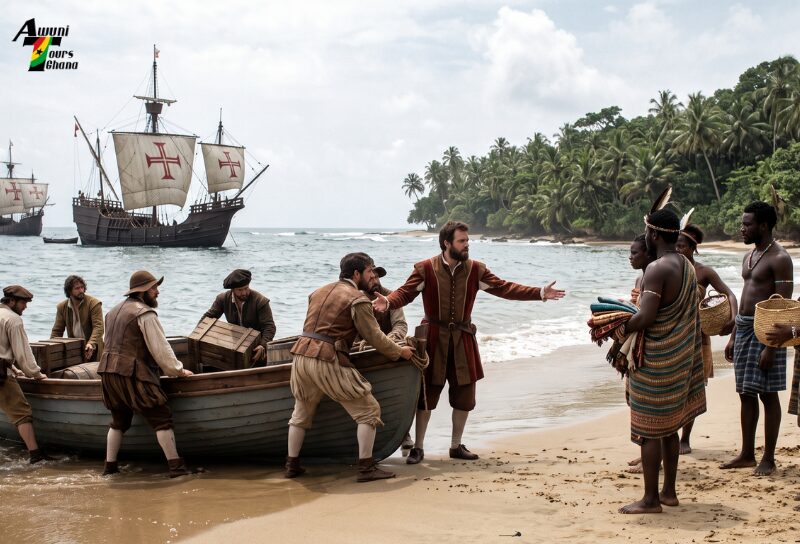
The Strategic Expansion of Elmina Castle
The construction of St. George’s Castle, which eventually became globally known as Elmina Castle, marked the first permanent European military and trade structure in sub-Saharan Africa. The Portuguese built the initial fort using pre-cut stones shipped directly from Europe to defend their gold trade monopoly against rival nations. The strategic value of this specific location in Elmina, Ghana made it a constant target for competing European empires looking to dominate West African trade routes.
In 1637, the Dutch West India Company captured the fortress from the Portuguese after launching a successful artillery attack from the high ground of nearby St. Jago Hill. Once the Dutch took control, they heavily modified the architecture of Elmina Castle to reinforce its security and change its primary commercial function. They dug deep defensive moats out of the solid rock, built reinforced drawbridges, and expanded the lower storage areas to transition the site from a gold repository into a highly secure holding facility for the transatlantic slave trade.
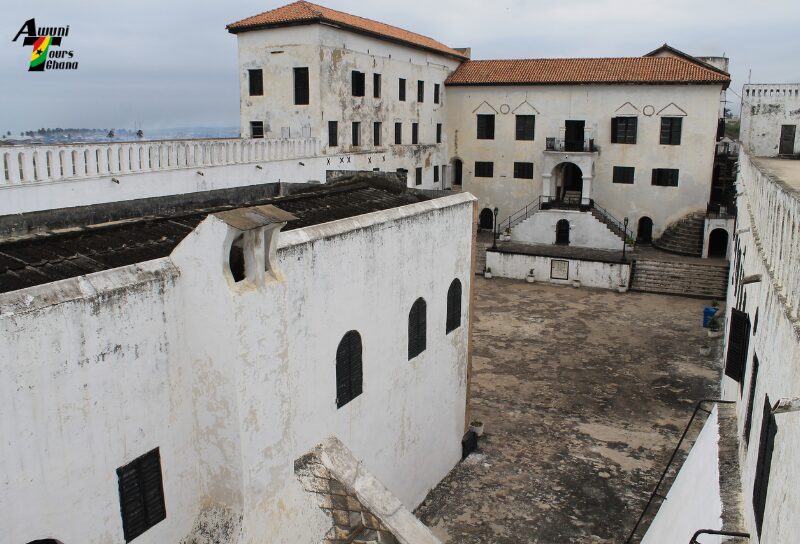
The Brutal Architecture of the Slave Dungeons
The internal layout of Elmina Castle was designed to enforce a strict physical and social hierarchy between the European occupiers and the captive population. The upper levels of the stone fortress featured high-ceilinged, well-ventilated residential quarters, administrative offices, a church, and open-air balconies for the Dutch governors and soldiers. These spaces were intentionally elevated to catch the ocean breezes and maintain total distance from the operations occurring directly below.
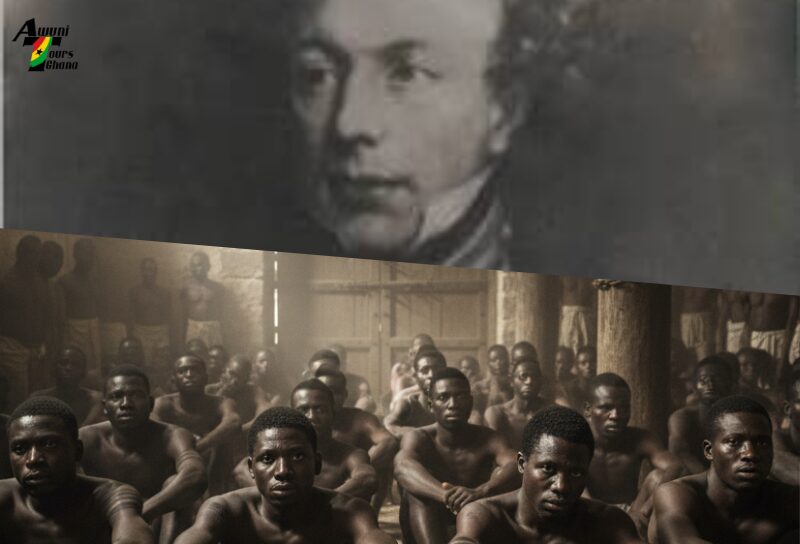
Beneath the living quarters lay the underground dungeons, where hundreds of African men and women were held in complete darkness and isolation. These unventilated stone cells lacked basic sanitation, drainage, or natural light, forcing captives to endure suffocating heat and rapid outbreaks of disease while waiting for ships to arrive. The physical reality of this confinement culminated at the Door of No Return, a small, narrow portal cut directly into the thick exterior seawall. This exit forced captives directly into small boats on the rocky Atlantic shore, completely cutting them off from their families, their culture, and their homeland.
The Asafo Companies and Local Resilience
Despite centuries of foreign occupation, the social fabric of Elmina, Ghana was never broken because of the endurance of the Asafo companies. These are traditional military organizations within the Fante culture that historically defended the town from external threats, managed internal security, and coordinated emergency operations. Each specific neighborhood within Elmina, Ghana is governed by its own Asafo company, which maintains a distinct identity, flag, and hierarchy that operates independently of modern state politics.
The visual markers of this system are the Posubans, which are large, permanent concrete shrines built by the different Asafo companies throughout the town. Rather than mimicking European designs, these shrines use bold, heavy concrete sculptures of warriors, ships, and animals to display visual proverbs regarding neighborhood strength and historical survival. The presence of the Posubans proves that the traditional social structure of Elmina, Ghana remained intact despite centuries of colonial pressure, preserving indigenous governance into the modern era.
The Modern Harbor Economy of Elmina, Ghana
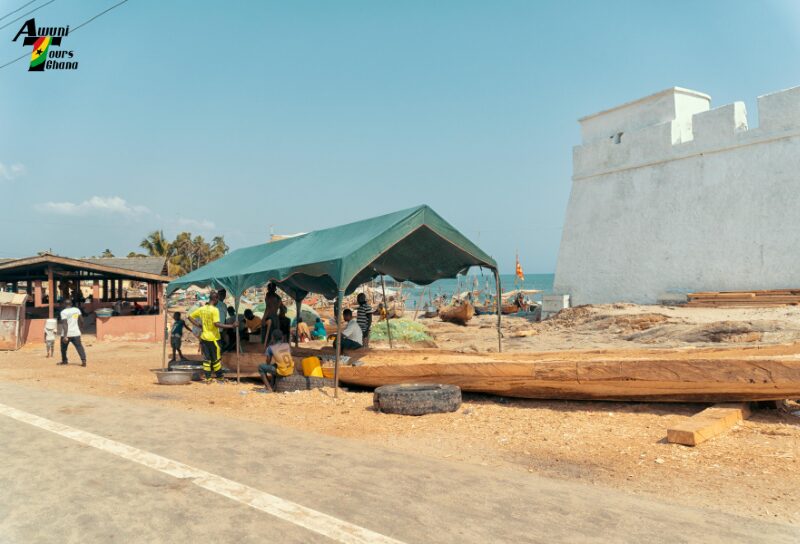
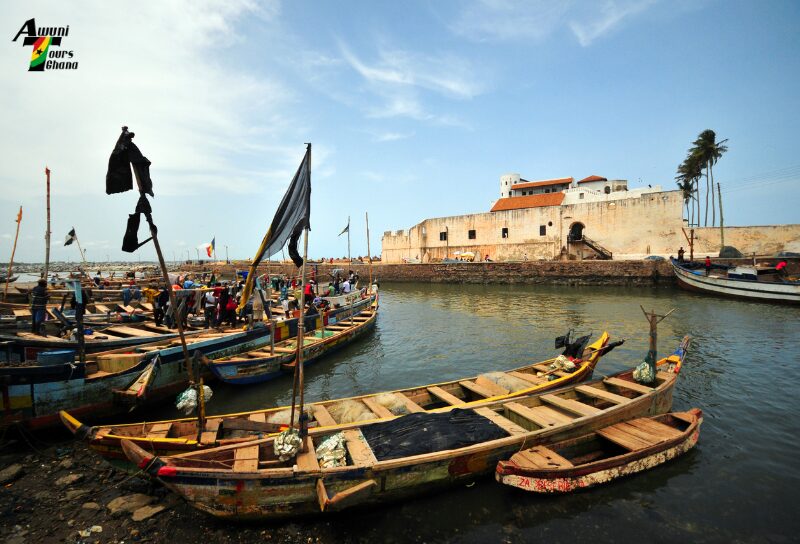
The actual financial survival of Elmina, Ghana takes place at the landing docks along the Benya Lagoon, which functions as one of the largest artisan fishing ports in West Africa. The local fishing fleet consists of large, heavy canoes carved out of solid silk-cotton tree trunks harvested from the inland forests. These boats are built to withstand the heavy swells of the open ocean and are operated by crews of local men who spend days at sea using traditional netting techniques to secure their catch.
When the vessels return to the harbor, the financial control of the catch shifts entirely to local market women, known as fish mothers. These women manage the harbor finances, dictate the daily wholesale prices, and control the distribution network for fish throughout the region. The fish that is not sold immediately for fresh consumption is moved directly to large brick smoking ovens situated behind the residential quarters. This fishing industry is highly repetitive and physically demanding, serving as the primary source of employment and income for the vast majority of households in Elmina, Ghana.
Regular Daily Life and Local Realities
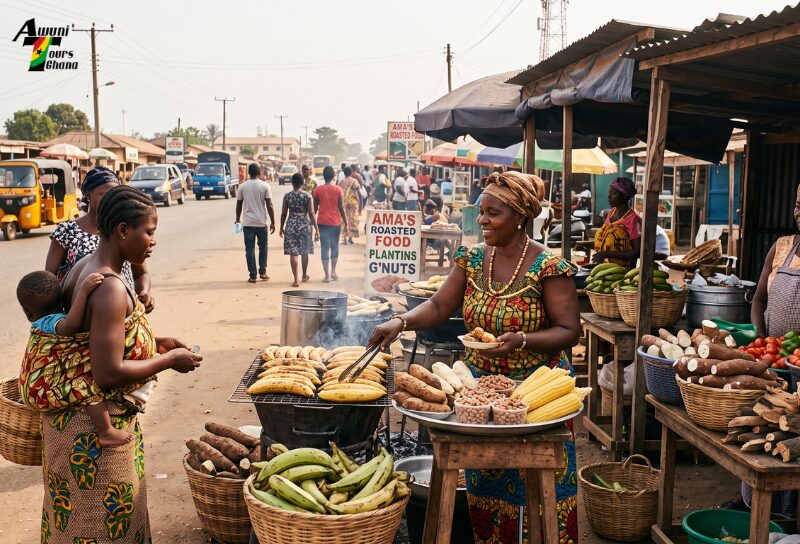
Away from the harbor and the historical sites, the daily routine in Elmina, Ghana follows a practical, localized pattern. During the heat of the afternoon, the pace of outdoor work slows down, and residents utilize shaded doorframes and communal spaces for recreation. It is common to see older men managing complex strategies over wooden oware boards, while roadside vendors sell basic staples like roasted plantains, fresh kenkey, and fried fish to school children and workers returning from the docks.
The food culture in Elmina, Ghana is tied directly to the daily output of the ocean. The standard local dish is Fante fante, a heavy, highly spiced fish stew prepared using fresh palm oil, local tomatoes, onions, and hot chili peppers. It is eaten almost daily alongside kenkey or tatale. Because the economy is so intertwined with the ocean, residents are highly discerning about the quality of seafood, and meals are prepared strictly around what the local boats landed earlier that morning.
Environmental and Structural Challenges
Modern Elmina, Ghana faces severe environmental and economic pressures that directly threaten the traditional way of life. Industrial overfishing by large foreign trawlers in the deep waters of the Gulf of Guinea has depleted local fish stocks, forcing Ghanaian fishermen to travel much further out into dangerous waters in their wooden canoes to secure a basic living. At the same time, coastal erosion and rising sea levels present ongoing challenges to the structural integrity of the beachfront properties and the harbor walls.
While tourism focused on Elmina Castle brings international visitors and school groups through the area, the local municipal assembly faces constant scrutiny regarding the allocation of resources. Community leaders are continually pushing to ensure that the revenue generated from historical tourism is directly reinvested into improving public education, road infrastructure, and sanitation systems within the local fishing neighborhoods. To address these issues, local youth groups have increasingly used public murals along the lagoon bridge to advocate for environmental cleanup and plastic waste reduction to preserve their harbor for future generations.
A visit to Elmina, Ghana offers a direct encounter with a town that refuses to separate its history from its daily survival. Touring this coastline allows you to confront the brutal realities of the transatlantic slave trade at Elmina Castle while observing how the local population has preserved its indigenous Fante governance and Asafo culture through centuries of foreign pressure.
Beyond the historical monuments, spending time here connects you to the raw energy of the Benya Lagoon harbor, where the traditional fishing economy operates with the same intensity today as it did generations ago. Ultimately, visiting Elmina, Ghana is not about viewing a curated museum display; it is about experiencing a resilient, working-class community where monumental history and everyday African life exist side by side.
FAQs
What does the original indigenous name “Anomansah” mean, and how did it originate?
Anomansah translates directly to “an inexhaustible drink.” It was named for a reliable freshwater stream found on the peninsula that served as a critical resource between the salty coastal lagoon and the sea.
Why did the Dutch modify the architecture of Elmina Castle after capturing it from the Portuguese in 1637?
The Dutch heavily modified the architecture—digging deep defensive moats out of solid rock, building reinforced drawbridges, and expanding lower storage areas—to reinforce its security against rival European nations and to transition the site into a holding facility for the transatlantic slave trade.
What role do the concrete shrines known as Posubans play in the community?
Posubans serve as permanent community centers and monuments for the individual Asafo companies (traditional military organizations). They feature bold concrete sculptures that display visual proverbs regarding neighborhood strength and historical survival, proving that indigenous governance structures remained intact despite colonial pressure.
What major economic and environmental challenge do artisan fishermen in Elmina currently face?
Industrial overfishing by large foreign trawlers in the deep waters of the Gulf of Guinea has severely depleted local fish stocks, forcing local fishermen to travel much further out into dangerous Atlantic waters in their small wooden canoes just to secure a basic living.