
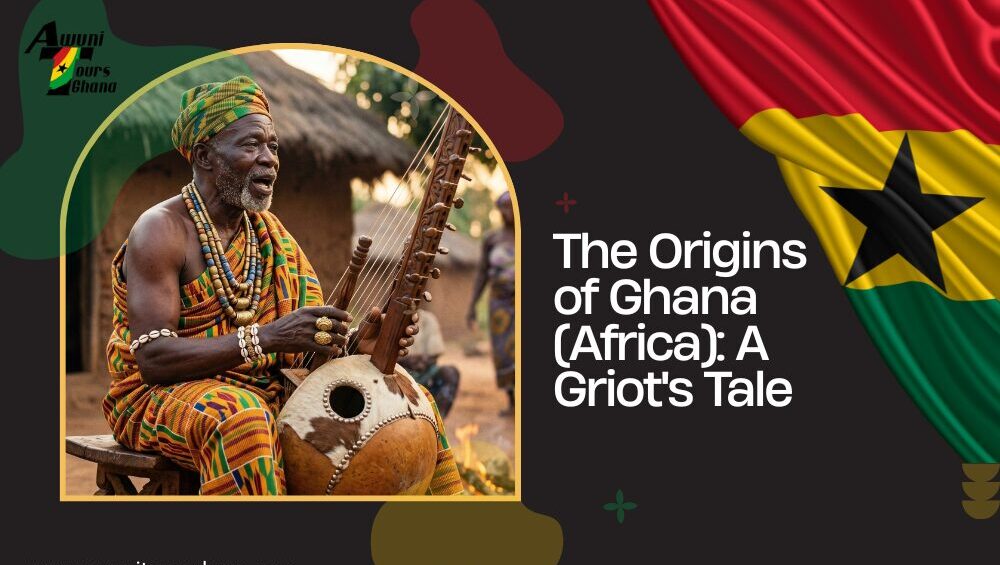
The Origins of Ghana (Africa): A Griot’s Tale
Ghana (Africa) origin is said to have been recorded in Soninke people’s oral tradition. The Soninke are a Mande-speaking group of Africans, believed to have migrated from Sudan tens of millennia c.e. These ancient people passed down the history of the nation from one generation to the next by griots. Griots are essentially teachers and storytellers of the ancient kingdom of Ghana.
Before the Soninke people had written language, every clan in all villages had a griot or more who mentally recorded their remarkable events. Griots were extremely significant to Soninke culture as they were the mental record keepers of the nation’s history, shaping the traditions and customs of the people.
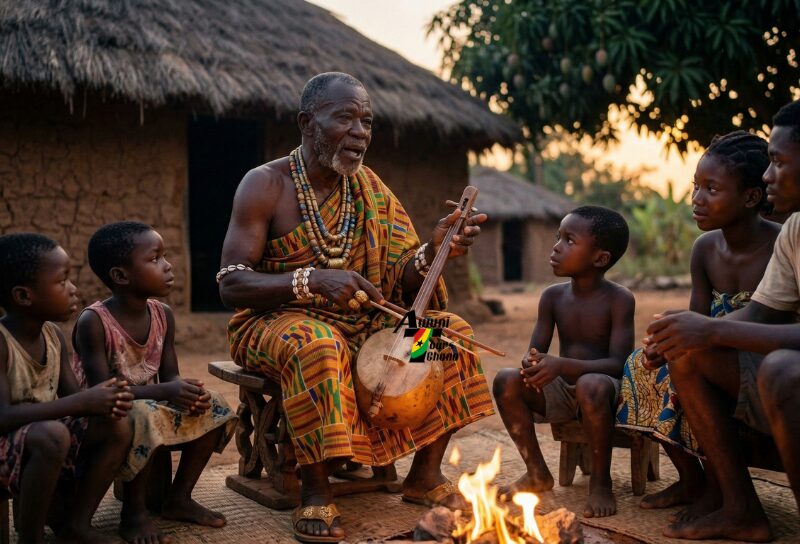
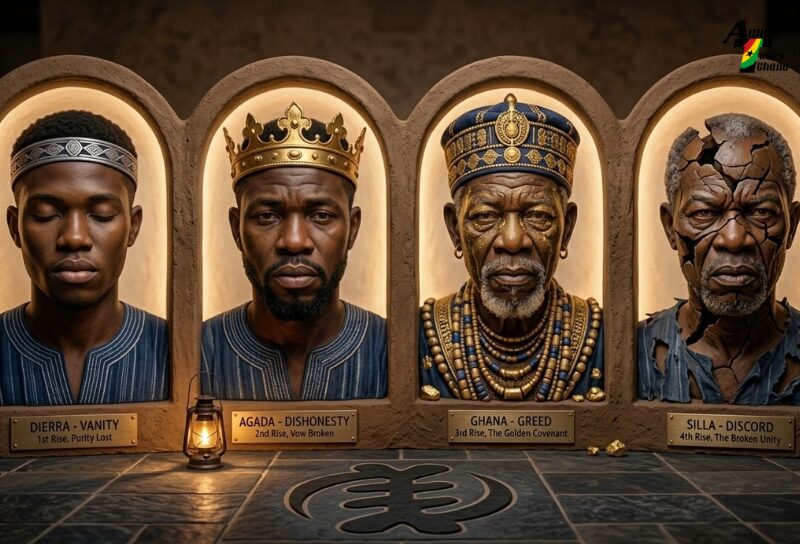
Soninke griots have described the origin of Ghana country in a collection of puis (poems) featured in the traditional oral story called The Dausi. This ancient story explains the rise and fall of the Soninke’s four powerful nations called Wagadu: Dierra, Agada, Ghana, and Silla. Ghana is the most famous kingdom of Wagadu, although Dierra is the first and was strongest of all. Regardless, Wagadu’s unwavering strength eventually According to The Dausi:
"Four times Wagadu rose. A great city, gleaming in the light of day. Four times Wagadu fell and disappeared from human sight. Once through vanity. Once through dishonesty. Once through greed. Once through discord. Four Times Wagadu changed her name. First she was Dierra, then Agada, then Ghana, then Silla. "
One pui (poem) in The Dausi accounts the first ruler of Wagadu named Dinga–said to have been a ruling man of “impeccable character.” Dinga was a warrior pivotal in maintaining the Soninke people’s peace, freedom from warring enemies. Furthermore, the nation was rich in gold, which was protected by the strength of the honorable Dinga.
Once the army was defeated, Dinga married the leader’s three daughters and had many children, comprising the different Soninke clans: Sisse, Kante, Sylla, and others. Some of these people migrated and settled in groups that established the cultures throughout ancient Ghana country.
Dinga ruled for many centuries and as he aged, he became greatly concerned about who would take over the throne. Of course, he loved of all his children, but his favorite was his son, Khine, and if Dinga had his way, he’d have chosen Khine to succeed him. But it wasn’t his decision to appoint the throne. By Soninke customs, it was the king’s sister choice in their matrilineal society.
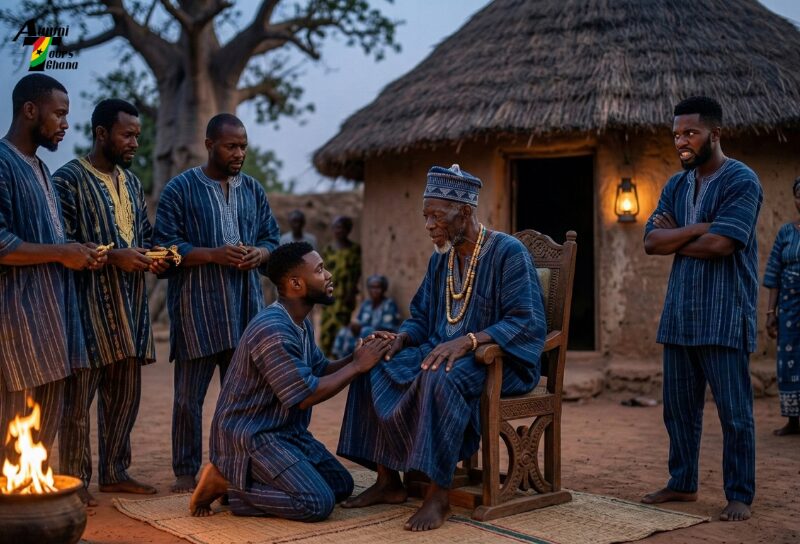
Still, despite Dinga seeking ways to ensure Khine’s position as the nation’s next best leader, his other children were also determined to win his approval. So much so that Dinga’s other son, Dyabe, sought help from “relatives” in the royal Sisse tribe to win the blessing of kingship from Dinga. By unifying with family, Dyabe won his father’s favor and was promised kingship. This infuriated Khine who’d underestimated his father’s dire love for his other children.
After Dinga died, Khine succeeded at forming an army strong enough to overthrow Dyabe who sought refuge in the the dense forests. One day while in hiding, he awakened to find a magical drum next to him. Using the instrument, he spoke words that swirled through the wind in all directions until the messages reached four military commanders. With the promise of government positions, the commanders gathered the troops and prepared to battle for Dyabe.
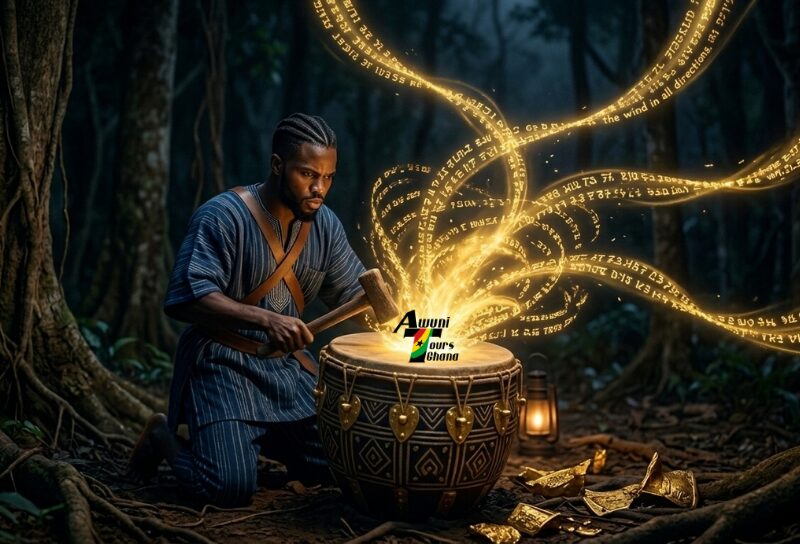
Dyabe’s newly formed powerful army marched into the capital city and fought Khine’s army ferociously, but still struggled to overthrow them. After a tough fight, Dyabe was again forced to retreat to even worst conditions than before. Exhausted and defeated, Dyabe encountered a seven-headed snake-god called Wagadu-Bida. The god serpent offered him a chance to defeat Khine under the condition that a virgin be sacrificed to it each year to celebrate the nation’s victory.
By some accounts, Dyabe agreed to the terms without even knowing them, but others claim he was well aware of the sacrifice he’d curse upon the Soninke people. Regardless, as promised, Wagadu-Bida granted success over Khine and Dyabe became Kaya Magha–meaning “king of gold”–ruler of Wagadu. The Dausi says:
[Dinga] was given the title Kaya Magha…because he ruled over a vast and gold-rich kingdom, protected by an invisible barrier that kept out invaders. As promised, Dyabe and his people prospered. He organized the kingdom according to a caste system. The nobility were ranked at he top. At the bottom of the social order were slaves. The royal clan was the Sisse. The Drame, Kante, and Sylla clans provided the kingdom's artisans: metalworkers, blacksmiths, and gold- and silversmiths, as well as its griots, farmers, fishermen, herders, leather-workers and soldiers.
As king, Dyabe didn’t take any chances to betray Magadu-Bida’s annual sacrifice, so he and his successors spilled the blood of virgins annually as an appreciation gift to the serpent god. However, they failed to anticipate the birth of a warrior named Amadou the Taciturn, who would possess a love so strong for his virgin fiance named Sia. Unfortunately, she was the annual selection to be killed for the Snake-god. Determined to rescue his love, Amadou would change the course of history for the Soninke.
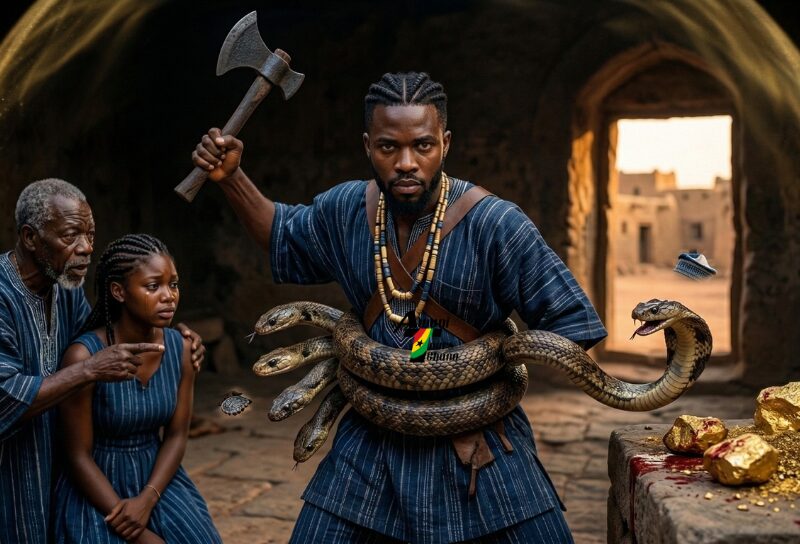
After forcing a priest of Bida to confess the key to destroying Magadu-Bida is chopping all seven of its’ heads off, Amadou set out to Bida’s holy grove on a campaign of annihilation. He patiently waited to spot Sia and once he did, the attack was on. The first unexpecting serpent wasn’t prepared for defense, and was instantly beheaded.
One by one, Amadou chopped off a serpent’s head fueled solely by love. By the time he reached the final head, the serpent managed to coil around Amadou’s strong body, choking the spirit from him. But to no avail, Amadou broke free and decapitated the final piece of Magadu-Bida. As he basked in victory, the serpent hissed the following curse on the Soninke people:
For seven years, seven months, and seven days, Ghana will receive neither rains of water nor rains of gold.
With the death of the Snake-god, Ghana died as well. The people no longer maintained divine protection and fell into decline, ultimately being overrun by invading enemies.
The Power of the Social Contract in Ghana (Africa)
The story illustrates that a nation’s strength is built on agreements. The “Snake-god” Wagadu-Bida represents the sacrifice required to maintain a superpower. Whether the sacrifice is literal or symbolic of the taxes, labor, and laws citizens give to their state, the message is clear: prosperity (the “rain of gold”) is never free. It requires a collective commitment to a shared, often difficult, system.
Amadou the Taciturn represents the “Hero’s Dilemma.” His love for Sia is noble and pure, but his act of individual heroism is what ultimately destroys the state. By choosing his personal happiness over the “cursed” national contract, he saves his bride but dooms his people. It serves as a warning about how individual desires, however justified, can disrupt the delicate balance that keeps a society functioning.
The rivalry between the brothers Khine and Dyabe highlights that the greatest threat to a kingdom is often internal division, not external enemies. The fact that Dyabe had to seek “magical” and “divine” help because of family infighting shows that when a leadership structure fractures, leaders often make desperate, high-stakes deals (the “Golden Covenant”) that have long-term consequences for future generations.
By framing the story around griots, the narrative emphasizes that a nation exists only as long as its story is told. The “death” of Ghana wasn’t just the lack of rain; it was the loss of the “divine protection” provided by their customs and traditions. When the social order broke down, the mental records (the oral tradition) became the only thing that survived the physical destruction of the empire.
The serpent’s curse – seven years of drought – is a metaphor for ecological or economic collapse. It suggests that when the “spirit” of a nation is choked out by greed, war, or the breaking of sacred laws, the land itself will stop providing.
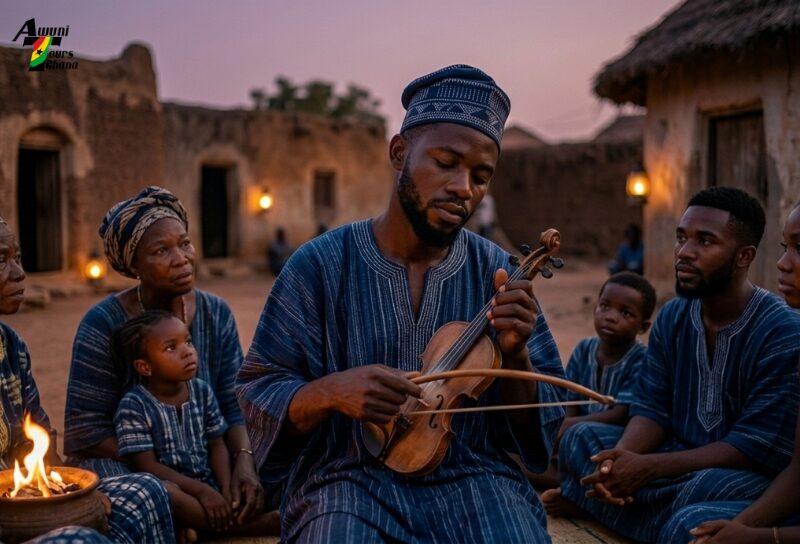
The Living Legacy: Ancient Values in Modern Ghana (Africa)
The story of Wagadu and the fall of the ancient Ghana Empire serves as more than just a historical account; it is a foundational blueprint for the values that define Ghanaian society today. Though the physical borders of the ancient kingdom shifted, the “soul” of the story remains woven into the modern national identity.
The Philosophy of Sacrifice: The legend teaches that prosperity is a collective effort. Modern Ghanaian communalism—the idea that “I am because we are”—mirrors the ancient belief that the well-being of the many often requires the discipline of the individual.
Artisans as Guardians of Culture: The specific mention of the Drame, Kante, and Sylla clans as the nation’s metalworkers and weavers lives on in the craftsmanship of modern Ghana. From the intricate symbols of Adinkra cloth to the world-renowned Kente weaving, these crafts are still seen as visual “poems” that tell the story of a people’s resilience.
The Weight of Oral Tradition: Just as the Soninke griots were the “mental record keepers,” modern Ghana maintains a profound respect for elders and oral history. In many communities, the Linguist (Okyeame) still serves as the vital bridge between the chief and the people, ensuring that history and protocol are preserved with the same “impeccable character” attributed to Dinga.
The Matrilineal Foundation: The conflict over the throne in The Dausi reminds us that it was the king’s sister who held the power of choice. This matrilineal influence remains a cornerstone of the Akan people in Ghana today, where inheritance and royal lineage are often traced through the mother’s side, honoring the sacred role of women in sustaining the nation.
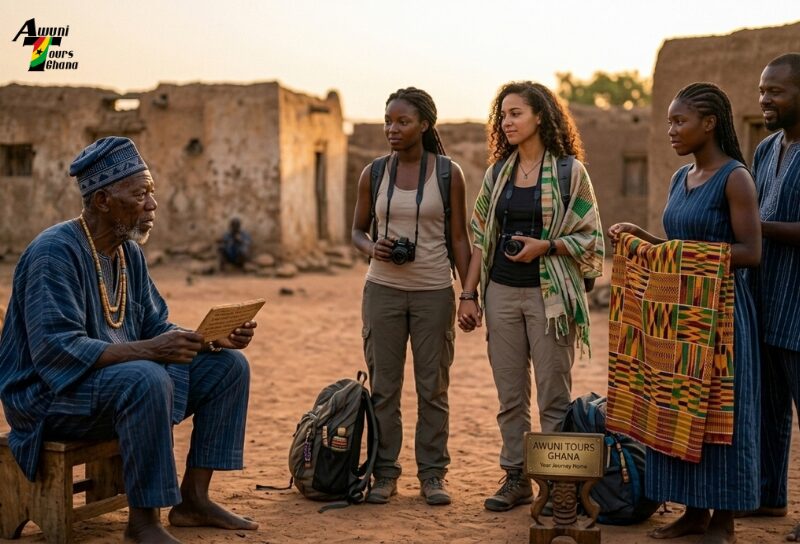
The story of the ancient Ghana Empire isn’t just a chapter in a history book—it is a living, breathing narrative that continues to pulse through the streets of Accra, the ancient walls of Cape Coast, and the royal courts of the Ashanti. When you travel with Awuni Tours Ghana, you aren’t just a spectator of this history; you are invited to walk within it.
FAQs
Who were the mental record keepers responsible for passing down the history of the ancient kingdom of Ghana, and what is the name of the traditional oral story that contains the country’s origin poems?
The mental record keepers were the griots, who served as teachers and storytellers before the Soninke people had a written language. The traditional oral story that contains these origin poems (puis) is called The Dausi.
According to Soninke customs and their matrilineal society, who held the power of choice to appoint the successor to the king’s throne?
The king’s sister held the power of choice to appoint the successor to the throne, which is why King Dinga could not simply choose his favorite son, Khine, to succeed him.
What condition did the seven-headed snake-god, Wagadu-Bida, demand from Dyabe in exchange for granting him military success over Khine, and what curse did it hiss upon its death?
The snake-god required that a virgin be sacrificed to it each year to celebrate the nation’s victory. Upon its decapitation by Amadou, the serpent cursed the Soninke people by declaring that Ghana would receive neither rains of water nor rains of gold for seven years, seven months, and seven days.
How does the matrilineal conflict over the throne featured in The Dausi connect to the cultural foundations of modern Ghanaian society today?
The matrilineal influence remains a cornerstone of the Akan people in modern Ghana, where royal lineage and inheritance are still traced through the mother’s side, honoring the sacred role of women in sustaining the nation just as the king’s sister did in the ancient story.